Okay, so as you can see, Catholics were not banned or discouraged from reading the Bible at home. Somehow you seem to have misunderstood your friend. <snip>
Well, they were banned from individual interpretation and the national language bibles were on the "index of forbidden books" (That's how you call it in english?). But the situation has changed now after Vatican council 2.
But said Catholic person clearly told me that in the 50s and 60s reading the bible at home by laymen was discouraged by the church and that it was difficult to obtain a non-protestant bible to begin with. Her parents wanted to get a bible in the local language and couldn't get a catholic one. They had to ask a friendly priest to get one for them as a favor, but it was an "under-the-table" deal by her own words.
She told me that by the late 60s and early 70s things changed and that it became easier to buy the new testament in the local language and the church was fine with that. But the old testament remained very hard to get and this changed only in the late 80s.
She also stressed to me that that today its even seen as pious to own a bible, but she made it clear that its been a long process to get to this point. But the focus remains on mass and scripture interpretation at the church within church piety groups like Opus Dei or "rebirth in the holy spirit movement" etc. Most regular parishoners do not belong to such groups. So bible study remains a group activity at the church and even that is mostly in piety groups.
That's her take on it, she's a devout Catholic from here.
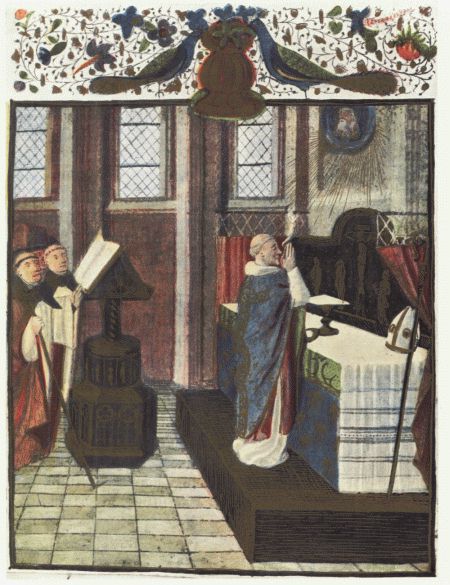
The Catholic mass, which is the ritual celebrating the Eucharist and receiving communion, was the only part of the Catholic Church service in Latin. It's not that long, about 5 minutes or so. The rest of the church service (a service lasts about an hour) was always in English or whatever the native language until the 60s-70s, when the whole thing was put in English.
The Catholic mass has nothing to do with reading the Bible. It's just a Catholic ritual that was traditionally in Latin. <snip>
That's not what she told me. Maybe here they did it a bit differently, as it was a country with prety much just catholics, greek catholics and eastern orthodox?
What she told me is that the mass in the 50s and early 60s was in Latin. The only parts that were in the national language was preaching (sermon), "parish news", pious songs and reading the bible (evangelion). The way she told me the priests always reads a new passage every week, but that its done in yearly cycles - so that you will hear the same passage next year. These are specifically chosen passages that fit into specific moments of the liturgical year and they don't cover the whole bible.
Greek, not Latin, was the original language of the Bible.<snip>
Wasn't Aramaic the original language of most of the new testament?
Just because the mass was in Latin is no reason to assume Catholics were ever discouraged from reading the Bible at home. The Catholic version of the Bible is the King James edition and no other editions are considered legitimate. The King James (English) version of the Bible has been available since 1611 and all Catholics were encouraged to own it and study it at home, too. There were other versions before that, though, and other, more simplified versions that have been used since.
I don't disagree, but in the countries I'm speaking of (Hungary, Poland) English was not used and wasn't widely taught until the 1990s.
The first Polish bible that was translated directly from hebrew, aramaic and greek originals is the so called "Millenium Bible" that came out in 1965.
Oh, and I should add -It was mandatory for Catholics to learn Latin in Catholic schools up until the 60s or 70s, when it became optional. I took Spanish instead, but a lot of my classmates took Latin.
In both Poland and Hungary, Latin was taught only in selected high schools with "humanistic" profiles. So if you were an average joe and went to a small-town high school or to grad school, you never got latin courses. Also, if you chose an elite high school but one with a medicine, biology, engineering or math profile, you would not learn latin either.
So as a result, only a part of people with high school or higehr eduction would know the language. Even fewer would know it fluently enough to read complex old texts such as the medieval latin bible.












 The sermon is about the Bible and the songs are celebration of God in our lives and that sort of thing.