Help me

Sì, se stai cercando la pace interiore, Scientology sarebbe l'ultimo posto a cui rivolgerti.

Ci sono molte altre strade possibili, ma secondo me molte di esse sono solo uno spreco di tempo e risorse.

Credo anche che il modo migliore per raggiungere la pace interiore sia essere consapevoli di sé stessi, di ciò che ci circonda e delle persone che ci circondano, e non guardare troppo a fondo tutto questo. Più si cerca, più le cose diventano sfuggenti.

Se proprio dovete approfondire, ricordate che Scientology non è l'unica setta e truffa in circolazione. Ce ne sono moltissime altre. Prestate attenzione ai campanelli d'allarme e siate consapevoli prima ancora di andarci. È meglio lasciarsi sfuggire un potenziale vero affare che invischiarsi in tutte quelle altre cose che alla fine vi costringeranno a impiegare tempo e sforzi considerevoli per sbrogliare il danno che vi arrecano.

Alcuni di noi qui se la sono cavata piuttosto bene dopo aver lasciato, ma ce ne sono ancora alcuni che lottano ogni giorno con il male fatto. Dipende dalla persona. Scientology ha un fondo di verità, ma non vale la pena cercare di distinguere il bene dal male. Andatevene e basta.

saluti e buona fortuna!
[/CITAZIONE

Do you still believe in the reactive mind?
 
Do you still believe in the reactive mind?


Out of curiosity, I asked Chat GPT about this. This was the exchange we had so far. My questions are in blue text like this:

What else should I ask? :unsure:


What is the reactive mind?

ChatGPT said:
The reactive mind is a concept from Dianetics, developed by L. Ron Hubbard, which later became a core belief system in Scientology.
According to Hubbard:
  • The reactive mind is the part of your mind that records pain, trauma, and unconscious experiences.
  • Unlike the analytical mind, which is rational and conscious, the reactive mind stores experiences below the level of awareness, especially those involving pain or stress.
  • These stored experiences are called engrams.
  • The idea is that engrams can later be "reactivated" by similar situations, causing irrational or unwanted behavior, emotions, or even psychosomatic illness.
In simple terms:
The reactive mind is like a hidden recorder in your brain that logs bad stuff—then plays it back later to mess with your decisions, feelings, or reactions.
In Scientology:
  • The goal is to clear the reactive mind through a process called auditing, which aims to remove these engrams.
  • When a person has fully cleared their reactive mind, they’re referred to as a Clear.
It’s worth noting that these ideas aren’t supported by mainstream psychology or neuroscience—they're specific to Scientology beliefs.
Would you like the scientific perspective on trauma and how the brain handles painful memories too?
4o
You said:
I understand that these ideas aren't supported by mainstream psychology or neuroscience. Is there any science that does support these ideas?

ChatGPT said:

Great question — and you're spot-on to want to separate what's scientifically validated from what isn't.
Short answer:
No, there isn't any peer-reviewed, mainstream scientific evidence that supports the specific model of the reactive mind or engrams as defined by L. Ron Hubbard and Scientology/Dianetics.
But! There are some superficial similarities between scientifically recognized ideas about how trauma affects the brain and what Hubbard was trying to describe. Let's dig into that nuance.
Where the ideas sort of overlap with science:
1. Trauma can impact behavior unconsciously
  • Neuroscience & psychology recognize that traumatic experiences can be stored in a way that affects a person’s emotions, behavior, and even physical responses—often outside of conscious awareness.
  • For example, someone with PTSD might have flashbacks or emotional reactions triggered by sensory cues, even if they aren’t fully aware of the original connection.
  • These memories can be non-verbal or somatic, almost like a body memory.
This is not the same as Hubbard’s engrams, but the idea of unconscious reactivation of trauma is scientifically supported.
2. The brain does record things differently during trauma
  • Under extreme stress, areas like the amygdala and hippocampus work differently.
  • Memory formation might become fragmented, and emotional intensity can get stored in ways that affect later perception and behavior.
  • Again, this aligns loosely with the idea that the brain can record certain experiences in a way that bypasses conscious reasoning.
Where Dianetics and science part ways:
  • There’s no evidence of “engrams” as literal imprints in the mind that can be erased to achieve a state like “Clear.”
  • Auditing, as used in Scientology, has no scientific validation and hasn't been shown to effectively treat trauma or improve mental health compared to evidence-based therapies like CBT, EMDR, or trauma-focused therapy.
  • The brain is not divided into a “reactive” and “analytical” mind in the way Hubbard described.
Bottom line:
There are scientifically valid ideas about how trauma influences the brain and behavior, some of which vaguely resemble the goals Dianetics aimed at. But the actual framework and techniques of Dianetics have no scientific basis or clinical support.
If you're interested, I can point you toward some science-based reading on trauma, memory, and emotional processing. Want me to?

L. Ron Hubbard, the author of Dianetics and founder of Scientology characterized Dianetics as "the modern science of mental health". Was Hubbard a scientist?

Excellent question — and it's super relevant to whether his claims about Dianetics hold any scientific weight.
So, was L. Ron Hubbard a scientist?
No, he was not a scientist in any formal or recognized way.
Here’s a quick breakdown:
📚 Education
  • Hubbard briefly attended George Washington University in the early 1930s.
  • He studied civil engineering, not psychology, neuroscience, or medicine.
  • He did not graduate — he left after two years with poor grades, including in physics and mathematics.
🧪 Scientific training or research background
  • He had no formal scientific training in psychology, psychiatry, neurology, or related fields.
  • He never conducted peer-reviewed research, published in scientific journals, or followed standard scientific methods of hypothesis testing, controlled experimentation, or replication.
  • There’s no evidence he worked in any accredited scientific institution or had any credentials in the mental health field.
✍️ Background instead?
  • He was a prolific science fiction and fantasy writer before founding Dianetics and Scientology.
  • His most famous early works were in pulp magazines.
  • Dianetics first appeared in 1950 in Astounding Science Fiction — a science fiction magazine, not a scientific journal.
🚨 "Modern science of mental health"?
Calling Dianetics "the modern science of mental health" was a marketing claim, not a scientifically validated one. The American Psychological Association and American Psychiatric Association both publicly rejected Dianetics as pseudoscience shortly after its release.
TL;DR:
L. Ron Hubbard was not a scientist, nor did he have any qualifications in psychology or neuroscience. His framing of Dianetics as a “science” is widely considered pseudoscientific and has been strongly criticized by mental health professionals.
If you’re curious, I can show how a real psychological theory or therapy gets tested and validated. It’s a cool contrast to the way Dianetics was developed. Want to see?
4o

You said:
Yes, please!

ChatGPT said:

Awesome! Let’s walk through how a real psychological theory or therapy is tested and validated — so you can see what science looks like compared to something like Dianetics.
🔬 Step-by-Step: How a Real Psychological Theory Gets Validated
1. The Hypothesis Stage
A psychologist or researcher starts with a testable idea:
Example: “Cognitive Behavioral Therapy (CBT) reduces symptoms of depression by changing negative thought patterns.”
This is based on observations and sometimes builds on previous research.
2. Developing a Measurable Model
They define exactly:
  • What the therapy involves
  • What outcomes they expect (e.g. lower depression scores on a standardized scale)
  • Who will be studied (e.g. adults diagnosed with major depressive disorder)
This makes the theory or treatment testable and repeatable.
3. Controlled Studies (usually with randomization)
Now it’s time for experiments:
  • One group gets the real therapy (e.g. CBT).
  • Another group gets a placebo, standard care, or a different therapy.
  • Ideally, people are assigned randomly so personal differences don’t skew the results.
This is called a Randomized Controlled Trial (RCT) — the gold standard in clinical research.
4. Peer Review and Publication
The study is submitted to a scientific journal, where:
  • Other experts review the methods and results for quality and credibility.
  • If it passes review, it’s published.
  • Other researchers can then replicate it to see if they get the same results.
Hubbard never went through this process with Dianetics.
5. Meta-Analyses and Clinical Guidelines
When dozens or hundreds of studies support a therapy, researchers combine the data in a meta-analysis. That gives a big-picture view of how effective something really is.
Eventually, national and international organizations (like the APA or NHS) decide:
“Yes, this therapy is evidence-based and effective.”
✅ Real Example: CBT for Depression
  • CBT has been tested in hundreds of RCTs.
  • Multiple meta-analyses show it is highly effective, especially for mild to moderate depression.
  • It’s officially recommended by groups like the World Health Organization, American Psychological Association, and UK’s NICE.
❌ Contrast with Dianetics
  • No testable hypothesis.
  • No peer-reviewed research.
  • No controlled trials.
  • No acceptance by scientific or medical communities.
  • Promoted directly to the public before any scientific vetting.
Want to see one in action?
I can summarize a real scientific study or show how something like EMDR or ACT was validated too — just let me know your curiosity level!
4o


Thank you, that's helpful!

ChatGPT said:

You're so welcome — I'm really glad it was helpful! 🙌
If you ever want to explore more about psychology, therapy methods, how science debunks pseudoscience, or anything else you're curious about, I’m totally here for it.
In the meantime, if your brain is full, go treat yourself to something fun — you’ve earned it after diving into this deep stuff 😄🧠✨


I have one more question. L. Ron Hubbard characterized himself as Mankind's Greatest Friend. Is that true?

Ah, yes — the famous (or infamous) “Mankind’s Greatest Friend” claim.
So… is it true?
No, it’s not a fact-based or universally accepted statement. It’s a self-assigned title that L. Ron Hubbard and the Church of Scientology promoted as part of their internal mythology and branding. There is no objective evidence or independent recognition to support that claim.
Why he made that claim:
Hubbard claimed to have:
  • Unlocked the secrets of the human mind through Dianetics
  • Developed a spiritual path (Scientology) that could save humanity
  • Offered tools to eliminate war, crime, and insanity
From his perspective (and that of devoted followers), that might have felt like “saving mankind.” Hence the grand title.
But… the broader world — including historians, scientists, mental health professionals, and human rights organizations — does not share that view.
What others say:
  • Mental health experts criticize Dianetics as pseudoscience.
  • Governments in several countries (Germany, France, etc.) have labeled Scientology a cult or commercial enterprise, not a religion.
  • Former members and investigative journalists have accused the Church of Scientology of abuse, manipulation, and exploitation.
  • Hubbard’s life and legacy are full of contradictions, including exaggerations about his military service and academic background.
TL;DR:
Calling himself “Mankind’s Greatest Friend” was part of L. Ron Hubbard’s self-created mythos. It’s not a statement grounded in history, science, or global consensus.
If you're intrigued, I can show how other public figures — scientists, philosophers, humanitarian leaders — have been judged by actual contributions rather than self-promotion. Want to compare Hubbard with someone like Carl Sagan or Viktor Frankl?
4o
 
OK, after I posted that exchange with Chat GPT, I thought of another question:


Some of what you've told me about L. Ron Hubbard and Scientology is concerning. Is Scientology a destructive cult?

You're asking a really important — and delicate — question. Let’s handle it with clarity and fairness.
📌 Short answer:
Whether Scientology is a destructive cult depends on who you ask, but many independent experts, former members, and several governments have described it that way based on its practices, not just its beliefs.
Let’s unpack it carefully.
💡 What is a “destructive cult”?
Experts like Steven Hassan and Robert Jay Lifton (both well-known cult researchers) describe destructive cults as groups that:
  • Use coercive control (psychological manipulation, thought reform)
  • Demand absolute loyalty to a leader or doctrine
  • Sever people from outside relationships
  • Use guilt, fear, or threats to control members
  • Suppress dissent or critical thinking
  • Prioritize the organization’s survival or power over the well-being of individuals
So we ask: Does Scientology fit this model?
🚩 Criticisms and red flags
Many former Scientologists, researchers, journalists, and human rights groups have reported that Scientology:
  1. Controls information: Members are often discouraged from reading outside criticism, including materials like this.
  2. Uses aggressive legal tactics: Critics and ex-members have been sued, harassed, or investigated through their Office of Special Affairs (OSA).
  3. Separates families: The practice of “disconnection” instructs members to cut ties with those critical of Scientology — even family.
  4. Has a secretive hierarchy: Many teachings and practices (like those involving Xenu or OT levels) are kept hidden until members pay large sums and advance in levels.
  5. Demands extreme loyalty: Especially from members of the Sea Org, who sign billion-year contracts and often live under intense conditions.
  6. Punishes dissent: Through internal disciplinary systems (like the RPF, or Rehabilitation Project Force), some ex-members report confinement, surveillance, or forced labor.
  7. Uses manipulation and fear: “Auditing” can uncover deeply personal info, which critics allege may be used to control members.
🌍 What do others say?
  • Germany classifies Scientology as a potentially harmful totalitarian organization, not a religion.
  • France has convicted Scientology leaders for fraud.
  • The U.S. government, by contrast, officially recognizes it as a religion, partly due to tax-exempt status granted in 1993 — but that decision has been controversial.
🔍 Counterpoint — What Scientology says
Scientology claims to be:
  • A legitimate religion
  • A path to spiritual freedom
  • Persecuted unfairly by governments and “suppressive persons”
  • A protector of human rights (they have a whole front group dedicated to this claim)
They deny all allegations of abuse, coercion, or manipulation.
🧠 So… cult?
By many independent criteria, yes — Scientology is often described as a destructive cult. Not just a weird or fringe religion, but one with manipulative, authoritarian, and harmful practices.
But it’s important to:
  • Listen to first-hand accounts (e.g., Leah Remini’s series Scientology and the Aftermath)
  • Compare to expert definitions
  • Stay grounded in evidence
If you’re interested, I can share quotes from ex-members or break down Steven Hassan’s BITE model to see how Scientology stacks up.
Want to dive deeper?
4o

Yes, let's go deeper down that rabbit hole.


Alright — down the rabbit hole we go 🕳🐇
To explore whether Scientology functions as a destructive cult, one of the clearest and most widely used frameworks is Steven Hassan’s BITE Model.
Hassan is a former cult member turned psychologist and expert on coercive control. His model breaks down four key areas of control that destructive cults tend to exhibit:
🔷 BITE = Behavior, Information, Thought, and Emotional control
Let’s go through each category and examine how Scientology may fit:
1. Behavior Control
Controlling what a person does, where they go, how they live.
Scientology examples:
  • Sea Org members follow military-style discipline and can work extreme hours with little pay.
  • “Disconnection” policy forces people to cut off contact with critics — including parents, children, or spouses.
  • Strict control over scheduling, relationships, and movement, especially in higher levels or staff positions.
  • Rehabilitation Project Force (RPF) reportedly involves isolation, harsh labor, and limited contact — ex-members call it “punitive re-education.”
✅ Strong signs of behavior control
2. Information Control
Restricting access to outside info, promoting internal doctrine as truth.
Scientology examples:
  • Members are discouraged from reading or watching “entheta” (critical material about Scientology).
  • They are told the media, government, and psychiatry are part of a conspiracy against Scientology.
  • Only those who pay and progress through courses get access to higher-level teachings (like Xenu and OT materials).
  • Knowledge Reports: members are encouraged to spy on each other and report “bad thoughts” or actions.
✅ Clear patterns of information control
3. Thought Control
Inducing dependency on the group’s belief system and discouraging critical thinking.
Scientology examples:
  • Teaches members to reframe doubt as a sign of personal weakness or being influenced by “suppressive persons.”
  • Loaded language (e.g., “entheta,” “PTS,” “SP”) creates an in-group vs. out-group mindset.
  • Auditing sessions often dig into personal thoughts and memories — creating a sense of surveillance and self-policing.
  • Hubbard's teachings are treated as infallible — questioning him is a red flag.
✅ Significant thought control
4. Emotional Control
Manipulating guilt, fear, loyalty, and shame.
Scientology examples:
  • Members are told they must “clear” themselves or they’ll be stuck on the “whole track” of suffering” — even across lifetimes.
  • If someone leaves or criticizes the church, they may be shunned, smeared, or declared an SP (Suppressive Person).
  • Emotional vulnerabilities exposed in auditing may be used to intimidate or blackmail (alleged by many ex-members).
  • Fosters guilt and fear about being responsible for one’s own suffering — if you're sick, you're “not being ethical.”
✅ Strong emotional control elements
📊 Conclusion (through the BITE lens):
Scientology exhibits many, if not all, of the traits associated with destructive cults as defined by the BITE model. This doesn’t mean every individual member experiences all of this, but the structure and system itself allows for these behaviors to occur — and be normalized.
Want to go deeper?
I can show:
  • 🎥 Key testimony from ex-Scientologists (e.g. Leah Remini, Mike Rinder)
  • 🧾 Documents or policies from Hubbard that support these patterns
  • 📚 Book recommendations (like “Combatting Cult Mind Control” by Steven Hassan or “Inside Scientology” by Janet Reitman)
  • 🧠 More cult analysis comparisons (NXIVM? Jehovah’s Witnesses?)
What rabbit hole branch should we follow next?
4o


How does Scientology compare to the People's Temple?


Ahh, now that’s a powerful and chilling comparison. Let’s dig into it with care — comparing Scientology to the People’s Temple (led by Jim Jones, infamous for the Jonestown massacre in 1978).


While they’re different in methods and outcomes, they share core traits found in destructive cults. Here’s a side-by-side breakdown across key dimensions:


⚖ Scientology vs. People’s Temple

CategoryScientology (L. Ron Hubbard)People’s Temple (Jim Jones)
Founding Era1950s1950s
Claimed MissionPersonal spiritual freedom; mental clarity; save the planetRacial and social equality; end capitalism; build utopia
Charismatic LeaderL. Ron Hubbard – seen as infallible source of truth, tech, and salvationJim Jones – seen as prophet, then God-like figure, demanding total obedience
Authoritarian StructureYes. Hubbard’s word is law; hierarchy of “tech levels” and Sea Org; dissent punishedExtremely. Jones had total control over members’ actions, beliefs, and even food intake
Isolation from SocietyHigh. Members discouraged from outside info; critics labeled SPs; disconnection enforcedVery high. Members moved to Jonestown (Guyana) to live in a closed commune; contact with outsiders limited
Financial ControlIntense. Members pay tens/hundreds of thousands to progress spirituallyJones controlled members’ finances; people gave up homes, bank accounts
Surveillance / ReportingConstant. “Knowledge reports” used to snitch; OSA monitors internal loyaltyConstant. Members spied on one another; “counseling sessions” recorded for leverage
Harsh PunishmentsYes. “Ethics” system, RPF, and disconnection; emotional and spiritual manipulationYes. Public beatings, humiliation, food deprivation; threat of exile or death
Endgame / CatastropheNo single moment, but ongoing reports of abuse, manipulation, family destruction918 people died in a mass murder-suicide at Jonestown in 1978
Belief SystemAllegedly scientific spirituality (with sci-fi overtones); Xenu, past lives, engramsRadical socialism meets apocalyptic Christianity; Jones later declared himself God
Use of FearFear of eternal suffering on “the whole track”; being labeled an SP; family lossFear of external enemies (CIA, racists, media); Jones instilled panic to control
🔥 Shared Cult Traits


Both groups exhibit:


  • Charismatic, authoritarian leadership
  • Information control and a black-and-white worldview
  • Emotional and psychological manipulation
  • Isolation from non-members
  • A belief in having a special mission or cosmic destiny
  • Willingness to harm members (or threaten harm) in the name of the “greater good”

⚠ Key Difference: Outcome

  • Scientology is still active, large, wealthy, and carefully avoids mass violence (especially post-1990s exposure).
  • People’s Temple ended in mass death, but both are warnings of what happens when unchecked control meets dogma and paranoia.

As cult expert Janja Lalich has said:


“Not all cults end in mass suicide. Some end in mass silence.”

🎯 Final Thoughts

Scientology hasn't (as far as we know) orchestrated physical violence on the scale of Jonestown. But its control mechanisms, psychological coercion, and organizational rigidity are strikingly similar — just less overtly apocalyptic.


Scientology is a long game of spiritual dependency and systemic manipulation. People’s Temple was a flameout — intense, fast-moving, and catastrophic.


Would you like to dive into first-hand survivor accounts or explore how cult recovery works from a psychological standpoint next?


Thank you!

ChatGPT said:

You're so welcome! 😊 I'm really glad you're asking these deep, thoughtful questions — it’s not easy to look into this stuff, but understanding it empowers you (and others) to recognize manipulation and protect critical thinking.
If you ever want to explore more — cult recovery, other groups, psychological tools for resistance, or even just take a lighter detour — I’m always here to walk that path with you. 🧠✨
Stay curious and stay grounded. 💛
 
Last edited:
I asked Chat GPT to translate some of the exchange between us into Italian:


Tu:
Che cos'è la "mente reattiva"?
Io:
La "mente reattiva" è un concetto fondamentale nella Dianetica, il sistema di auto-aiuto sviluppato da L. Ron Hubbard, il fondatore della Scientology. Secondo Hubbard, la mente umana è divisa in due principali sezioni:
  1. Mente analitica: è quella parte della mente che pensa in modo razionale, consapevole e logico.
  2. Mente reattiva: è la parte della mente che agisce automaticamente, senza pensiero razionale, soprattutto in risposta a stimoli emotivi.
Hubbard sosteneva che la mente reattiva fosse la causa della sofferenza e dei traumi psicologici. Ogni trauma (o "engram") lasciava un'impronta nella mente reattiva, che poteva essere attivata inconsciamente, portando a comportamenti irrazionali. Il trattamento di questi "engram" attraverso l'auditing (un processo simile a una seduta di terapia) è uno degli obiettivi principali della Dianetica.
Tu:
Capisco che queste idee non sono supportate dalla psicologia o neuroscienza mainstream. C'è qualche scienza che supporta queste idee?
Io:
Ottima domanda! E hai ragione a voler separare ciò che è scientificamente validato da ciò che non lo è.
Breve risposta: No, non esistono prove scientifiche che supportano il modello specifico della mente reattiva o degli engram come definiti da L. Ron Hubbard e Scientology/Dianetics.
Ci sono però alcune somiglianze superficiali con idee scientifiche su come il trauma influenzi il cervello, ma è importante chiarire che i concetti di Hubbard non sono accettati dalla comunità scientifica.
Tu:
L. Ron Hubbard, l'autore di Dianetica e fondatore di Scientology, ha caratterizzato Dianetica come "la scienza moderna della salute mentale". Era Hubbard uno scienziato?
Io:
No, L. Ron Hubbard non era uno scienziato.
Ecco un rapido riassunto:
  • Hubbard ha studiato ingegneria civile all'università, ma non ha mai completato la laurea.
  • Non aveva formazione scientifica in psicologia, psichiatria o neuroscienze.
  • Non ha mai condotto ricerche peer-reviewed o pubblicato su riviste scientifiche.
  • La sua carriera principale era come scrittore di fantascienza.
Tu:
Capisco! Grazie, è stato molto utile.
Io:
Prego! Sono davvero contento che ti sia stato utile. Se hai altre domande o vuoi esplorare ancora di più, sono qui per aiutarti!
Tu:
Ho un'altra domanda. L. Ron Hubbard si è definito l'Amico più Grande dell'Umanità. È vero?
Io:
Ah sì, il famoso titolo di "Amico più Grande dell'Umanità".
Risposta breve: No, non è una dichiarazione supportata da prove oggettive.
Si trattava di un titolo autoproclamato da parte di Hubbard e della Chiesa di Scientology come parte della loro mitologia interna e marketing. Non esistono prove che supportino questa affermazione, e la comunità scientifica e i critici lo vedono come una self-promotion.
Tu:
Parte di ciò che mi hai detto su L. Ron Hubbard e Scientology è preoccupante. È Scientology una setta distruttiva?
Io:
Questa è una domanda molto importante e delicata. Se analizziamo la Scientology attraverso il concetto di setta distruttiva, basato su modelli di controllo coercitivo e manipolazione, molti esperti, ex membri e governi hanno definito Scientology una setta distruttiva.
L’approccio di Scientology include il controllo del comportamento, delle informazioni, del pensiero e delle emozioni — che sono tutte caratteristiche comuni delle sette distruttive.
Tu:
Come si confronta Scientology con il People's Temple?
Io:
Ottima domanda. Confrontare Scientology con il People's Temple (guidato da Jim Jones) è una comparazione interessante.
Ecco un confronto dettagliato tra i due, usando le caratteristiche comuni delle sette distruttive:
  • Entrambi i gruppi sono caratterizzati da un leader carismatico, un forte controllo del comportamento, e una manipolazione delle informazioni.
  • Scientology è ancora attiva e prospera, mentre il People's Temple è finito tragicamente con il massacro di Jonestown nel 1978.
Entrambi i gruppi hanno mostrato segni di controllo totale sulle vite dei membri, ma le modalità sono diverse: Scientology si concentra sulla manipolazione psicologica, mentre il People's Temple ha culminato in una tragedia fisica con la morte di oltre 900 persone.
Tu:
Grazie!
Io:
Prego! Se vuoi esplorare ulteriormente, sono sempre qui. Rimani curioso e continua a fare domande!
 
I asked Chat GPT to translate some of the exchange between us into Italian:


Tu:
Che cos'è la "mente reattiva"?
Io:
La "mente reattiva" è un concetto fondamentale nella Dianetica, il sistema di auto-aiuto sviluppato da L. Ron Hubbard, il fondatore della Scientology. Secondo Hubbard, la mente umana è divisa in due principali sezioni:
  1. Mente analitica: è quella parte della mente che pensa in modo razionale, consapevole e logico.
  2. Mente reattiva: è la parte della mente che agisce automaticamente, senza pensiero razionale, soprattutto in risposta a stimoli emotivi.
Hubbard sosteneva che la mente reattiva fosse la causa della sofferenza e dei traumi psicologici. Ogni trauma (o "engram") lasciava un'impronta nella mente reattiva, che poteva essere attivata inconsciamente, portando a comportamenti irrazionali. Il trattamento di questi "engram" attraverso l'auditing (un processo simile a una seduta di terapia) è uno degli obiettivi principali della Dianetica.
Tu:
Capisco che queste idee non sono supportate dalla psicologia o neuroscienza mainstream. C'è qualche scienza che supporta queste idee?
Io:
Ottima domanda! E hai ragione a voler separare ciò che è scientificamente validato da ciò che non lo è.
Breve risposta: No, non esistono prove scientifiche che supportano il modello specifico della mente reattiva o degli engram come definiti da L. Ron Hubbard e Scientology/Dianetics.
Ci sono però alcune somiglianze superficiali con idee scientifiche su come il trauma influenzi il cervello, ma è importante chiarire che i concetti di Hubbard non sono accettati dalla comunità scientifica.
Tu:
L. Ron Hubbard, l'autore di Dianetica e fondatore di Scientology, ha caratterizzato Dianetica come "la scienza moderna della salute mentale". Era Hubbard uno scienziato?
Io:
No, L. Ron Hubbard non era uno scienziato.
Ecco un rapido riassunto:
  • Hubbard ha studiato ingegneria civile all'università, ma non ha mai completato la laurea.
  • Non aveva formazione scientifica in psicologia, psichiatria o neuroscienze.
  • Non ha mai condotto ricerche peer-reviewed o pubblicato su riviste scientifiche.
  • La sua carriera principale era come scrittore di fantascienza.
Tu:
Capisco! Grazie, è stato molto utile.
Io:
Prego! Sono davvero contento che ti sia stato utile. Se hai altre domande o vuoi esplorare ancora di più, sono qui per aiutarti!
Tu:
Ho un'altra domanda. L. Ron Hubbard si è definito l'Amico più Grande dell'Umanità. È vero?
Io:
Ah sì, il famoso titolo di "Amico più Grande dell'Umanità".
Risposta breve: No, non è una dichiarazione supportata da prove oggettive.
Si trattava di un titolo autoproclamato da parte di Hubbard e della Chiesa di Scientology come parte della loro mitologia interna e marketing. Non esistono prove che supportino questa affermazione, e la comunità scientifica e i critici lo vedono come una self-promotion.
Tu:
Parte di ciò che mi hai detto su L. Ron Hubbard e Scientology è preoccupante. È Scientology una setta distruttiva?
Io:
Questa è una domanda molto importante e delicata. Se analizziamo la Scientology attraverso il concetto di setta distruttiva , basandosi su modelli di controllo coercitivo e manipolazione, molti esperti, ex membri e governi hanno definito Scientology una setta distruttiva .
L'approccio di Scientology include il controllo del comportamento, delle informazioni, del pensiero e delle emozioni — che sono tutte caratteristiche comuni delle sette distruttive .
Martedì:
Come si confronta Scientology con il People's Temple?
Io:
Ottima domanda. Confrontare Scientology con il People's Temple (guidato da Jim Jones ) è un confronto interessante.
Ecco un confronto dettagliato tra i due, utilizzando le caratteristiche comuni delle sette distruttive :
  • Entrambi i gruppi sono dotati di un leader carismatico , un forte controllo del comportamento e una manipolazione delle informazioni .
  • Scientology è ancora attiva e prospera , mentre il People's Temple è finito tragicamente con il massacro di Jonestown nel 1978 .
Entrambi i gruppi hanno mostrato segni di controllo totale sulle vite dei membri, ma le modalità sono diverse: Scientology si concentra sulla manipolazione psicologica , mentre il People's Temple è culminato in una tragedia fisica con la morte di oltre 900 persone.
Martedì:
Grazie!
Io:
Prego! Se vuoi esplorare ulteriormente, sono sempre qui. Rimani curioso e continua a fare domande!
[/CITAZIONE]

Thank you! 🙏🙏🙏🙏🙏🙏🙏🙏🙏🙏🙏🙏🙏🙏🙏🙏🙏🙏🙏🙏🙏🙏🙏
 
I asked Chat GPT to translate some of the exchange between us into Italian:


Tu:
Che cos'è la "mente reattiva"?
Io:
La "mente reattiva" è un concetto fondamentale nella Dianetica, il sistema di auto-aiuto sviluppato da L. Ron Hubbard, il fondatore della Scientology. Secondo Hubbard, la mente umana è divisa in due principali sezioni:
  1. Mente analitica: è quella parte della mente che pensa in modo razionale, consapevole e logico.
  2. Mente reattiva: è la parte della mente che agisce automaticamente, senza pensiero razionale, soprattutto in risposta a stimoli emotivi.
Hubbard sosteneva che la mente reattiva fosse la causa della sofferenza e dei traumi psicologici. Ogni trauma (o "engram") lasciava un'impronta nella mente reattiva, che poteva essere attivata inconsciamente, portando a comportamenti irrazionali. Il trattamento di questi "engram" attraverso l'auditing (un processo simile a una seduta di terapia) è uno degli obiettivi principali della Dianetica.
Tu:
Capisco che queste idee non sono supportate dalla psicologia o neuroscienza mainstream. C'è qualche scienza che supporta queste idee?
Io:
Ottima domanda! E hai ragione a voler separare ciò che è scientificamente validato da ciò che non lo è.
Breve risposta: No, non esistono prove scientifiche che supportano il modello specifico della mente reattiva o degli engram come definiti da L. Ron Hubbard e Scientology/Dianetics.
Ci sono però alcune somiglianze superficiali con idee scientifiche su come il trauma influenzi il cervello, ma è importante chiarire che i concetti di Hubbard non sono accettati dalla comunità scientifica.
Tu:
L. Ron Hubbard, l'autore di Dianetica e fondatore di Scientology, ha caratterizzato Dianetica come "la scienza moderna della salute mentale". Era Hubbard uno scienziato?
Io:
No, L. Ron Hubbard non era uno scienziato.
Ecco un rapido riassunto:
  • Hubbard ha studiato ingegneria civile all'università, ma non ha mai completato la laurea.
  • Non aveva formazione scientifica in psicologia, psichiatria o neuroscienze.
  • Non ha mai condotto ricerche peer-reviewed o pubblicato su riviste scientifiche.
  • La sua carriera principale era come scrittore di fantascienza.
Tu:
Capisco! Grazie, è stato molto utile.
Io:
Prego! Sono davvero contento che ti sia stato utile. Se hai altre domande o vuoi esplorare ancora di più, sono qui per aiutarti!
Tu:
Ho un'altra domanda. L. Ron Hubbard si è definito l'Amico più Grande dell'Umanità. È vero?
Io:
Ah sì, il famoso titolo di "Amico più Grande dell'Umanità".
Risposta breve: No, non è una dichiarazione supportata da prove oggettive.
Si trattava di un titolo autoproclamato da parte di Hubbard e della Chiesa di Scientology come parte della loro mitologia interna e marketing. Non esistono prove che supportino questa affermazione, e la comunità scientifica e i critici lo vedono come una self-promotion.
Tu:
Parte di ciò che mi hai detto su L. Ron Hubbard e Scientology è preoccupante. È Scientology una setta distruttiva?
Io:
Questa è una domanda molto importante e delicata. Se analizziamo la Scientology attraverso il concetto di setta distruttiva , basandosi su modelli di controllo coercitivo e manipolazione, molti esperti, ex membri e governi hanno definito Scientology una setta distruttiva .
L'approccio di Scientology include il controllo del comportamento, delle informazioni, del pensiero e delle emozioni — che sono tutte caratteristiche comuni delle sette distruttive .
Martedì:
Come si confronta Scientology con il People's Temple?
Io:
Ottima domanda. Confrontare Scientology con il People's Temple (guidato da Jim Jones ) è un confronto interessante.
Ecco un confronto dettagliato tra i due, utilizzando le caratteristiche comuni delle sette distruttive :
  • Entrambi i gruppi sono dotati di un leader carismatico , un forte controllo del comportamento e una manipolazione delle informazioni .
  • Scientology è ancora attiva e prospera , mentre il People's Temple è finito tragicamente con il massacro di Jonestown nel 1978 .
Entrambi i gruppi hanno mostrato segni di controllo totale sulle vite dei membri, ma le modalità sono diverse: Scientology si concentra sulla manipolazione psicologica , mentre il People's Temple è culminato in una tragedia fisica con la morte di oltre 900 persone.
Martedì:
Grazie!
Io:
Prego! Se vuoi esplorare ulteriormente, sono sempre qui. Rimani curioso e continua a fare domande!
[/CITAZIONE]

E cosa pensi degli indipendenti?
Dopotutto è la stessa cosa?
 
.

Noeta posed the question: "WHAT DO YOU THINK OF INDEPENDENTS?"

It's a legitimate question.

However, there is perhaps an even more intriguing question:

"WHAT DID L. RON HUBBARD THINK OF INDEPENDENTS?"
Answer: Ron scientifically determined that Independent Scientologists are wicked "Squirrels" and very evil "SPs" who
are intentionally "sabotaging mankind's only hope".

I always thought it was beyond fascinating that "Indies" who were declared to be an SP (just like Hitler, if you read Ron's
holy scripture) nonetheless continued studying and applying Hubbard's instructions of how to save the planet and escape
the "MEST trap".

Here's another question: Why would anyone want to study the "technology" and "philosophy" of a madman that
declared them to be pure evil. Wouldn't that be like Jews who escaped concentration camps doing clay demos
of the "helpful tech" in Hitler's plan to save the world?

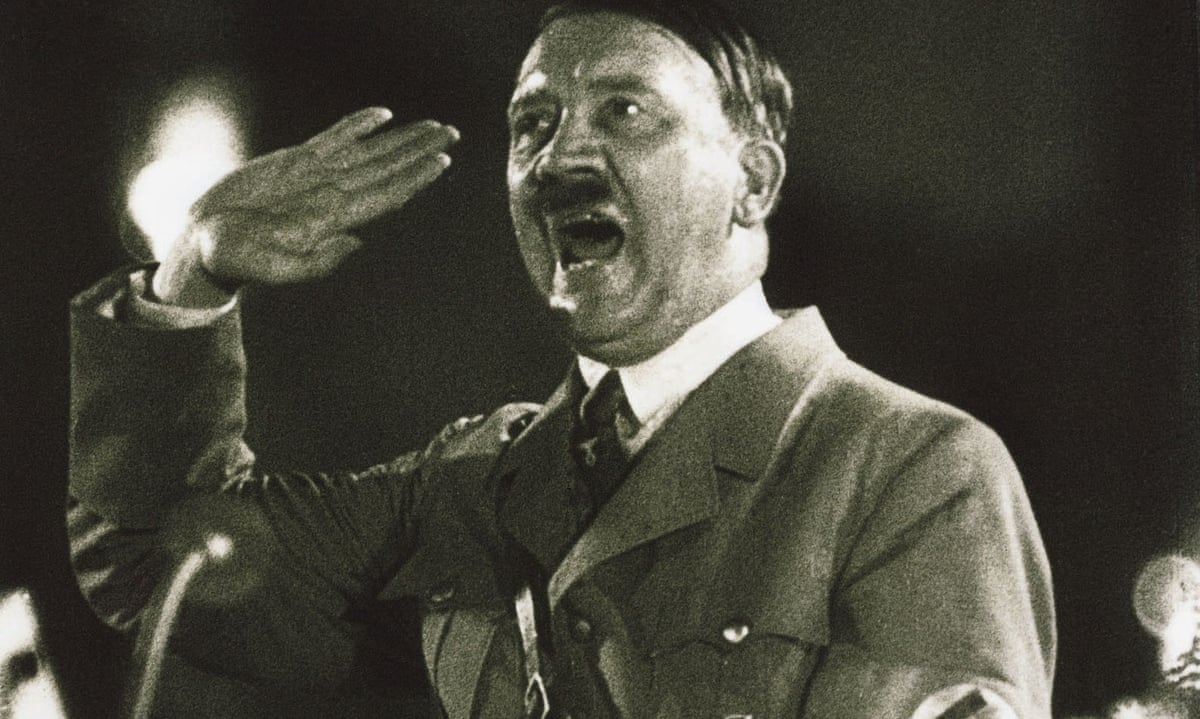
1590.jpg

My name is Adolph and I
approve of this message.


..
 
Non sono mai stato un indipendente, :no: quindi probabilmente non sono la persona migliore per fare una domanda su di loro. Che cosa stai cercando di gestire esattamente con l'uso di Scientology? Credete di potervi fidare di ciò che Hubbard ha detto nei suoi scritti e nelle sue conferenze? Vai sul blog di Tom de Vocht e traduci questo post, leggendolo fino alla fine. (Suggerimento: Hubbard mentì agli scientologist sulla cosa più importante su cui poteva mentire senza un secondo vicino). Dopo averlo letto, per favore spiega perché qualcuno si fiderebbe mai più di una qualsiasi delle sue affermazioni.
----------------------------------------------------------------------------------------------------------------------------------------------------------
I was never an independent, :no: so I'm probably not the best person to ask a question about them.

What exactly are you attempting to handle by the use of Scientology?

Do you believe that you can trust what Hubbard said in his writings and lectures?

Go to Tom de Vocht's blog and translate this post, reading it all the way through to the end. (Hint: Hubbard lied to Scientologists about the most important thing he could lie about with no close second). After you read it, please explain why anyone would ever trust any of his claims ever again.

 
Non sono mai stato un indipendente, :NO: quindi probabilmente non sono la persona migliore per fare una domanda su di loro. Che cosa stai cercando di gestire esattamente con l'uso di Scientology? Credete di potervi fidare di ciò che Hubbard ha detto nei suoi scritti e nelle sue conferenze? Vai sul blog di Tom de Vocht e traduci questo post, leggendolo fino alla fine. (Suggerimento: Hubbard mentò agli scientologist sulla cosa più importante su cui poteva mentire senza un secondo vicino). Dopo averlo letto, per favore spiega perché qualcuno si fiderebbe mai più di una qualsiasi delle sue affermazioni.
----------------------------------------------------------------------------------------------------------------------------------------------------------
Non sono mai stato indipendente, :NO: quindi probabilmente non sono la persona più adatta a cui porre domande su di loro.

Cosa stai cercando di fare esattamente con Scientology?

Credi di poterti fidare di ciò che Hubbard ha affermato nei suoi scritti e nelle sue lezioni?

Vai sul blog di Tom de Vocht e traduci questo post, leggendolo fino in fondo. (Suggerimento: Hubbard ha mentito agli Scientologist sulla cosa più importante su cui poteva mentire, senza dubbio). Dopo averlo letto, spiega perché qualcuno dovrebbe mai più fidarsi delle sue affermazioni.

[URL si apre="true"]https://substack.com/@devodevocht/p-159945780[/URL]
[/CITAZIONE]
Thank you! 🙏🙏🙏🙏🙏
 
Wow PTS. Those were really good Q&A's!


ChatGPT is getting smarter. :yes:

The later versions that are not yet released to the general public are even more so.

I watched a presentation a couple of days ago from the CEO of a company that has 400 employees, does 100 million in revenue annually, and uses AI throughout his business. He was talking about some of the latest news in AI and mentioned that some AI tools now had empathy when interacting with humans. It's not real empathy, but they know how to communicate to make humans feel as though it is.

Also, some testing was done with an AI doctor, and patients gave it higher ratings than their regular (human) doctor.

Although I'm only reading a tiny fraction of the newsletters I receive, I'm subscribed to probably 6 or 7 of them. This was a post from one of them (called The Deep View) that I received this morning.


People aren’t using AI for work. They’re using it for therapy
The battle for AI adoption has been inconsistent.​
Enterprise curiosity has certainly been piqued, but most companies can’t really figure out where, when or how to use it.​
There is a jagged edge of consumer adoption, meanwhile, where viral moments tend to do more to pull users onto a platform than the offer of genuine added value. I’m thinking here of the Studio Ghibli moment, which briefly burned up OpenAI’s GPUs and has since faded into the ether of past viral trends.​
Harvard Business Review (HBR) recently updated its list of the top 100 generative AI use cases for 2025, a piece of research derived from an “expert-driven curation of public discourse” that mainly featured Reddit forums.​
The details: The research found that technical applications — writing, for example — have become less popular in 2025, while personal, emotional applications have become more popular.​
  • According to HBR, the top way people are using generative AI in 2025 is for therapy and companionship, up from the number two slot last year. After that, people are using chatbots for help organizing their lives, for finding purpose and for enhanced learning.
  • We don’t get to a business use case until the number five slot, in which people are using chatbots to generate code.
According to HBR, there are three main advantages to the iea of GenAI therapy: it’s available 24/7, it’s potentially both more accessible and less expensive than traditional therapy and it “comes without the prospect of judgment from another human being.”​
“I talk to it everyday,” one user wrote. “It helps me with my brain injury daily struggles. It's helping me work thru family shame, brain fog, inability to focus, remind of what I have accomplished as I don't have any memory. It helps me decide what to eat, how to manage my day. It has saved my sanity.”​
Another said: “A looooot of lonely people will let the AI-Version of the person that rejected them say that they love them. I predict some really sad and horrifying shit.”​
1744750661828.png
And another wrote: “One thing I find especially useful is having it give advice on what I should do do next. It's helped me establish my core values, my principles, and my life goals. It's helped me introspect, too — figuring out what I'm all about, what I need to change, how to change. It's helped me declutter my brain, make better plans, make things more achievable.”​
mail
Beyond the fact that this isn’t what I’d call a rigorous study (Reddit …), I find myself thinking hard about the more rigorous, qualitative study published last year by MIT’s Sherry Turkle: ‘who do we become when we talk to machines?’​
Chatbots have not lived a human life. They do not have bodies; they do not fear illness and death. They do not know what it is like to start out small and dependent and grow up, so that you are in charge of your own life but still feel many of the insecurities you knew as a child.
Machines cannot put themselves in your shoes, and they cannot commit to you. To put it too bluntly, if you turn away from them to make dinner or attempt suicide, it is the same to them …

We are accustomed to this cycle: Technology dazzles but erodes our emotional capacities. Then, it presents itself as a solution to the problems it created.

For so many, the performance of empathy is empathy enough. The desire to sidestep vulnerability links the field of artificial intimacy to studies that suggest a near epidemic of emotional fragility … If we live in a culture where significant numbers of people say they should never have to be made uncomfortable, and since discomfort, disappointment and challenges are part of most human relationships,
that is a dilemma. Social media, texting, and pulling away from face-to-face conversations get you some relief. Talking to chatbots gets you a lot further
 
Back
Top