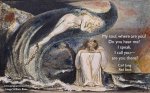
This famous quote is given alternately as
"One of the main functions of formalized religion is to protect people against a direct experience of God." I have not yet found the source for it, or either translation.
However, this may help. In
Memories, Dreams, Reflections, Jung discusses the faith of his father, and says his father was entrapped by the Church and its theological thinking; that the Church had blocked all avenues by which his father may have reached God directly.
During the years 1892-94 I had a number of rather vehement discussions with my father. He had studied Oriental languages in Gottingen and had done his dissertation on the Arabic version of the Song of Songs. His days of glory had ended with his final examination. Thereafter he forgot his linguistic talent. As a country parson he lapsed into a sort of sentimental idealism and into reminiscences of his golden student days, continued to smoke a long students pipe, and discovered that his marriage was not all he had imagined it to be. He did a great deal of good —far too much—and as a result was usually irritable. Both parents made great efforts to live devout lives, with the result that there were angry scenes between them only too frequently. These difficulties, understandably enough, later shattered my father's faith.
At that time his irritability and discontent had increased, and his condition filled me with concern. My mother avoided everything that might excite him and refused to engage in disputes. Though I realized that this was the wisest course to take, often I could not keep my own temper in check. I would remain passive during his outbursts of rage, but when he seemed to be in a more accessible mood I sometimes tried to strike up a conversation with him, hoping to learn something about his inner thoughts and his understanding of himself. It was clear to me that something quite specific was tormenting him, and I suspected that it had to do with his faith. From a number of hints he let fall I was convinced that he suffered from religious doubts. This, it seemed to me, was bound to be the case if the necessary experience had not come to him. From my attempts at discussion I learned in fact that something of the sort was amiss, for all my questions were met with the same old lifeless theological answers, or with a resigned shrug which aroused the spirit of contradiction in me. I could not understand why he did not seize on these opportunities pugnaciously and come to terms with his situation. I saw that my critical questions made him sad, but I nevertheless hoped for a constructive talk, since it appeared almost inconceivable to me that he should not have had experience of God, the most evident of all experiences. I knew enough about epistemology to realize that knowledge of this sort could not be proved, but it was equally clear to me that it stood in no more need of proof than the beauty of a sunset or the terrors of the night. I tried, no doubt very clumsily, to convey these obvious truths to him, with the hopeful intention of helping him to bear the fate which had inevitably befallen him. He had to quarrel with somebody, so he did it with his family and himself. Why didn’t he do it with God, the dark author of all created things, who alone was responsible for the sufferings of the world? God would assuredly have sent him by way of an answer one of those magical, infinitely profound dreams which He had sent to me even without being asked, and which had sealed my fate. I did not know why, it simply was so. Yes, He had even allowed me a glimpse into His own being. This was a great secret which I dared not and could not reveal to my father. I might have been able to reveal it had he been capable of understanding the direct experience of God. But in my talks with him I never got that far, never even came within sight of the problem, because I always set about it in a very unpsychological and intellectual way, and did everything possible to avoid the emotional aspects. Each time this approach was like a red rag to a bull and led to irritable reactions which were incomprehensible to me. I was unable to understand how a perfectly rational argument could meet with such emotional resistance.
These fruitless discussions exasperated my father and me, and in the end we abandoned them, each burdened with his own specific feeling of inferiority. Theology had alienated my father and me from one another. I felt that I had once again suffered a fatal defeat, though I sensed I was not alone. I had a dim premonition that he was inescapably succumbing to his fate. He was lonely and had no friend to talk with. At least I knew no one among our acquaintances whom I would have trusted to say the saving word. Once I heard him praying. He struggled desperately to keep his faith. I was shaken and outraged at once, because I saw how hopelessly he was entrapped by the Church and its theological thinking. They had blocked all avenues by which he might have reached God directly, and then faithlessly abandoned him. Now I understood the deepest meaning of my earlier experience: God Himself had disavowed theology and the Church founded upon it. On the other hand God condoned this theology, as He condoned so much else. It seemed ridiculous to me to suppose that men were responsible for such developments. What were men, anyway? “They are born dumb and blind as puppies,” I thought, “and like all God's creatures are furnished with the dimmest light, never enough to illuminate the darkness in which they grope.” I was equally sure that none of the theologians I knew had ever seen “the light that shineth in the darkness” with his own eyes, for if they had they would not have been able to teach a “theological religion,” which seemed quite inadequate to me, since there was nothing to do with it but believe it without hope. This was what my father had tried valiantly to do, and had run aground. He could not even defend himself against the ridiculous materialism of the psychiatrists. This, too, was something that one had to believe, just like theology, only in the opposite sense. I felt more certain than ever that both of them lacked epistemological criticism as well as experience.
JUNG, C. G. (1963). Memories, dreams, reflections. New York, Pantheon Books. [Download PDF]




 Great photos! I've never seen any of these before, thanks!