
Navigation
Install the app
How to install the app on iOS
Follow along with the video below to see how to install our site as a web app on your home screen.
Note: This feature may not be available in some browsers.
More options
You are using an out of date browser. It may not display this or other websites correctly.
You should upgrade or use an alternative browser.
You should upgrade or use an alternative browser.
Hi, how did you get rid of your auditing addiction?
- Thread starter Noteta
- Start date
Cold Turkey. Like with most addictions, it's mostly about just stopping your actions that are not productive and to resist the urges for a time until the urges pass.
Get busy with other things that are not associated with the actions. Read other subjects, get busy with your life, meet and make new friends. Touch base with those you knew before getting involved and let them know you are out of the cult, see where that takes you. It may work out, it may not. Maybe worth a try, maybe not. It's your choice. Just don't give yourself too much time to dwell upon what you think you are missing.
It is like being a drug or tobacco addict. It isn't so much about the drug itself, it's all about what is going on inside yourself that is the issue.
Be careful here though. Learn to recognise anything else you explore is not another cult seeking to recruit you. Learn to recognise the signs and red flags about them and protect yourself.
Be proactive, everything will come to pass.
Buona fortuna!

Noteta
Member
Di colpo. Come per la maggior parte delle dipendenze, si tratta semplicemente di interrompere le azioni improduttive e di resistere agli impulsi per un po', finché non passano.
Occupati di altre cose che non siano legate alle azioni. Leggi altri argomenti, dedicati alla tua vita, incontra e fai nuove amicizie. Mettiti in contatto con le persone che conoscevi prima di entrare nella setta e fagli sapere che sei fuori, e vedi dove ti porta. Potrebbe funzionare, potrebbe non funzionare. Forse vale la pena provare, forse no. È una tua scelta. Non prenderti troppo tempo per rimuginare su ciò che pensi di perderti.
È come essere tossicodipendenti o tabagisti. Non è tanto la droga in sé, ma ciò che succede dentro di te.
Fai attenzione, però. Impara a riconoscere che qualsiasi altra cosa tu esplori non è un'altra setta che cerca di reclutarti. Impara a riconoscere i segnali e i campanelli d'allarme che la riguardano e a proteggerti.
Siate proattivi, tutto accadrà.
Buona fortuna!
[/CITAZIONE]
Perfect, thanks!


TheSneakster
Well-known member
There is no such thing as an addiction to auditing. Arnaldo Lerma just made up that claim and attempted to "prove" it with by citing competely irrelevent science papers having to do with endorphin neurotransmitters he hadn't actually studied but only read the abstracts.
Last edited:

It's not an addiction in the sense that nicotine is addictive, but you've still been the victim of a classic cult tactic: isolate you from the real world (Scientology's wacky cult language exists to make it harder to relate to people who aren't in the cult, and there's all that nonsense about having something important to do, because "only you can help.")
Auditing is programming: it's cult mind control and the accumulation of dirt for potential use in blackmail. Nothing good - nothing at all - can happen to a person who steps inside a Scientolofy UFO Cult facility.
That said, it feels nice to be listened to. (Most people have friends who can perform in this capacity, but the Scientology scam weaves in some superstitious nonsense to make it more "special.") As with any cult, time is a great healer. The longer you spend away from it, the more your return to the real world and the better you feel.
Most people don't live the rest of their lives as cult victims: they wake up and get out. Part of waking up is realising that auditing is woo. Part of waking up is realising that David Miscavige is an evil little turd. Part of it's realising that Ron was a grifter, and so on... but as long as you stay away from cultists and Hubbard apologists, you can't help but get better. No auditing necessary.

HelluvaHoax!
Well-known member
.
I was able to kick the auditing "addiction" that compelled me to try to become
a Homo Novis -- by simply clicking my heels together three (3) times while repeating
the phrase: "THERE'S NO PLACE LIKEHOME HOMO-SAPIENS"
..
I was able to kick the auditing "addiction" that compelled me to try to become
a Homo Novis -- by simply clicking my heels together three (3) times while repeating
the phrase: "THERE'S NO PLACE LIKE
..

Hatshepsut
Well-known member
I gave up my protective seal, and soon discovered that vampires exist.
Healing Hands of Light by Barbara Hand Clow
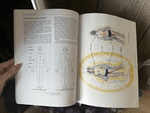
I thought all beings had this natural right to occupy space. THEN, my own got rescinded. I was clueless as to WTF went wrong!. That was IT. Finis. No more picking up the cans.

Healing Hands of Light by Barbara Hand Clow
I thought all beings had this natural right to occupy space. THEN, my own got rescinded. I was clueless as to WTF went wrong!. That was IT. Finis. No more picking up the cans.
Last edited:


I told you I was trouble
Suspended animation.
It was super easy for me because I never enjoyed auditing in the first place, I tolerated it for a while and I suppose I expected some kind of eventual result but never felt any different and found the whole experience of trying to blather on and on about myself very (very) boring.
I also observed the dismal reality of most "OT's" and figured I'd prefer not to end up like them, thank you very much!

The day I finally and openly flicked the whole cult was a wonderful day and I joined ESMB the following day (2008) and have never regretted it for a second.
I also observed the dismal reality of most "OT's" and figured I'd prefer not to end up like them, thank you very much!
The day I finally and openly flicked the whole cult was a wonderful day and I joined ESMB the following day (2008) and have never regretted it for a second.

Cat's Squirrel
Well-known member
I don't think it ever was an addiction for me. I attested to Clear (which had been my goal up until that point) in May 1987 and promptly decided that I was done with Scientology and went to Barry Long 's meetings in London (good times) instead.
Then in September that year I met Leonard Dunn on the Isle of Wight, who was a completed OT 7, and it seemed to me that he had achieved the same thing that Barry had, only by a more sure-footed route; and with that and Leonard's own advice to do the OT levels I went back and attempted them. In hindsight though I wish I'd stopped at OT 1; that was the last good point I remember (or at least stable one) on my trip up the Bridge, though I later had my grades put in.
Then in September that year I met Leonard Dunn on the Isle of Wight, who was a completed OT 7, and it seemed to me that he had achieved the same thing that Barry had, only by a more sure-footed route; and with that and Leonard's own advice to do the OT levels I went back and attempted them. In hindsight though I wish I'd stopped at OT 1; that was the last good point I remember (or at least stable one) on my trip up the Bridge, though I later had my grades put in.
Last edited:
Hatshepsut
Well-known member
Knowing when to quit is the key. I wish I'd stopped at Grade I. The OT levels were an 'invitation' to reconstruct old games, dead and buried. Once these issues have no connection to you, why go looking for them. Hubbard had unfinished business and he got others to finis it. Maybe ours is a composite universe made of collapsed ones from long ago, ( many population centers are ) by why excavate old bones in fear you could stumble on them later. Some of the OT levels got the person to hunt the mine field. David Mayo wrote that NOTS got your 'booby traps', or at least those set up, in case you expanded beyond this place. Looking back, much of it had that occult air to it. As a young student, David had once been introduced to Theosophy, and then, later to Scientology.

 youtube.com
Sometimes it's better to let sleeping dogs lie. We summoned things up exhaustingly running repair lists....or assigning an evil purpose. Much of what got discovered was found to have been contaged from somebody else. Some were audited almost nuts by the time the idea of a false purpose got noted.
The Exorcist: Father Merrin sees "Pazuzu" 👿 1973 Horror Masterpiece
This short is a clip from my upcoming video about 10 Unsettling and Disturbing scenes from the 1973 Horror Classic The Exorcist.Keep your eyes open for the u...
youtube.com
Sometimes it's better to let sleeping dogs lie. We summoned things up exhaustingly running repair lists....or assigning an evil purpose. Much of what got discovered was found to have been contaged from somebody else. Some were audited almost nuts by the time the idea of a false purpose got noted.
Last edited:

Inanna
Arriving fresh from Callahan’s Crosstime Saloon
I wouldn’t say I was addicted, exactly. I did think it was the one and only way to achieve spiritual and mental fulfillment. This turned out to be untrue. Once I took a couple steps back and looked at the whole scenario, it began to look quite different.
Hubbard had unfinished business and he got others to finis it.
Yes - LRH was clearly a very damaged individual, right up until the day he died. Such a shame he didn't get the psychiatric help he begged for after WWII, because it might have spared a lot of people from the misery that he spread around. Spiritually, it's clearly over, but the financial harm is still being wrought by the midget who took over the crime syndicate.

Reyne Mayer
Pansexual Revolutionary
There is no such thing as an addiction to auditing. Arnaldo Lerma just made up that claim and attempted to "prove" it with by citing competely irrelevent science papers having to do with endorphin neurotransmitters he hadn't actually studied but only read the abstracts.
claims of physiological addiction may not be adequately proven -- but auditing has origins in cathartic techniques, and it is established that catharsis and similar or related experiences (including crying) can indeed trigger the release of endorphins. there are many accounts of 'auditing high,' which along with other reports and evidence point to that for some people it can be, or have elements of, psychological addiction.
while not in the title, the abstract makes reference to another one people should be familiar with: gambling.
TheSneakster
Well-known member
claims of physiological addiction may not be adequately proven
Addictive disorders fall squarely under psychiatry. DSM-V recognizes the existence of exactly one Behavioral Addictive Disorder and that is Gambling Disorder.
You may not just reason into existence an "addiction" that is not to been demonstrated to exist in peer-reviewed medical journal publications. In medical science, there is no such thing as "Catharsis Addiction" or "Talk Therapy Addiction" that could be reasonably applied to scientology (no tm) auditing. In medical science, there is no such thing as "addiction to auditing".
To the best of my knowledge, nobody posting in these forums has the academic training, certifications, clinical experience, and peer-reviewed journal publication portfolio to make any meaningful claims that any given practice or behavior is an "addiction".
"A man's got to know his limitations." - Harry Callahan
Last edited:

Type4_PTS
Well-known member
Addictive disorders fall squarely under psychiatry. DSM-V recognizes the existence of exactly one Behavioral Addictive Disorder and that is Gambling Disorder.
You may not just reason into existence an "addiction" that is not to been demonstrated to exist in peer-reviewed medical journal publications. In medical science, there is no such thing as "Catharsis Addiction" or "Talk Therapy Addiction" that could be reasonably applied to scientology (no tm) auditing. In medical science, there is no such thing as "addiction to auditing".
To the best of my knowledge, nobody posting in these forums has the academic training, certifications, clinical experience, and peer-reviewed journal publication portfolio to make any meaningful claims that any given practice or behavior is an "addiction".
"A man's got to know his limitations." - Harry Callahan
Here's what ChatGPT had to say about the @Reyne Mayer post:
Reyne Mayer’s argument is well grounded in current psychological science. Here’s why it holds up:
 1. Catharsis Releases “Feel-Good” Chemicals
Research shows that cathartic behaviors—like crying, swearing, or emotional release—can stimulate the release of endorphins and oxytocin:
- Studies highlight that emotional crying can reduce stress hormones and trigger endorphin and oxytocin release pmc.ncbi.nlm.nih.govverywellmind.com+2health.harvard.edu+2osf.io+2.
- Experimental and quasi-experimental findings suggest crying supports physiological restoration—calming the heart rate and engaging the parasympathetic system research.tilburguniversity.edu+1researchgate.net+1.
 2. Auditing’s Link to Catharsis
Scientology auditing is directly descended from cathartic techniques—especially from early psychological methods aiming for emotional release. Practitioners often report an “auditing high,” describing feelings of relief, calm, or euphoria following a session.
- These subjective highs closely mirror the endorphin-mediated feelings people get from crying or other cathartic outlets.
 3. “Psychological Addiction” vs. Physiological Diagnosis
- Physiological addiction—think substance dependence—requires clear evidence of neurobiology, tolerance, and withdrawal cycles.
- Psychological addiction, by contrast, involves strong emotional or cognitive dependence without requiring those physical benchmarks.
- When auditing yields endorphin-driven highs, it could trigger addictive-like cravings—especially if a person starts seeking sessions to regain that emotional uplift.
 4. In Summary
- Yes, emotional release can produce measurable neurochemical effects.
- Auditing, rooted in catharsis, may induce these positive emotional states for some individuals.
- While not a clinically recognized addiction, the neurochemical reinforcement could lead to patterns resembling psychological addiction—habitual craving of the “high.”
 Bottom Line
Reyne Mayer’s insight is scientifically plausible: auditing may not meet DSM-5 criteria or qualify as a medical addiction—but the combination of catharsis, endorphin release, and repeated positive feedback creates conditions that can foster psychological dependence for some people. It's a meaningful distinction between clinical diagnosis and genuine lived experience.

guanoloco
As-Wased
Here's what ChatGPT had to say about the @Reyne Mayer post:
Reyne Mayer’s argument is well grounded in current psychological science. Here’s why it holds up:
Research shows that cathartic behaviors—like crying, swearing, or emotional release—can stimulate the release of endorphins and oxytocin:
- Studies highlight that emotional crying can reduce stress hormones and trigger endorphin and oxytocin release pmc.ncbi.nlm.nih.govverywellmind.com+2health.harvard.edu+2osf.io+2.
- Experimental and quasi-experimental findings suggest crying supports physiological restoration—calming the heart rate and engaging the parasympathetic system research.tilburguniversity.edu+1researchgate.net+1.
Scientology auditing is directly descended from cathartic techniques—especially from early psychological methods aiming for emotional release. Practitioners often report an “auditing high,” describing feelings of relief, calm, or euphoria following a session.
- These subjective highs closely mirror the endorphin-mediated feelings people get from crying or other cathartic outlets.
- Physiological addiction—think substance dependence—requires clear evidence of neurobiology, tolerance, and withdrawal cycles.
- Psychological addiction, by contrast, involves strong emotional or cognitive dependence without requiring those physical benchmarks.
- When auditing yields endorphin-driven highs, it could trigger addictive-like cravings—especially if a person starts seeking sessions to regain that emotional uplift.
- Yes, emotional release can produce measurable neurochemical effects.
- Auditing, rooted in catharsis, may induce these positive emotional states for some individuals.
- While not a clinically recognized addiction, the neurochemical reinforcement could lead to patterns resembling psychological addiction—habitual craving of the “high.”
Reyne Mayer’s insight is scientifically plausible: auditing may not meet DSM-5 criteria or qualify as a medical addiction—but the combination of catharsis, endorphin release, and repeated positive feedback creates conditions that can foster psychological dependence for some people. It's a meaningful distinction between clinical diagnosis and genuine lived experience.
If there was any truth to auditing addiction the registrar post wouldn't exist...certainly not like it is...and mindless peons could be posted there.
I've suffered 10+ hour reg cycles that went on for days.
Do people go bankrupt? Oh, hell yes they do. However, it takes serious regging to get there.
Most people do auditing actions that they don't even want, fake Success Stories but have to do the steps as a pre-req to what they do want - Cause over MEST.
TheSneakster
Well-known member
Here's what ChatGPT had to say about the @Reyne Mayer post:
ChatGPT is not an accredited peer-reviewed medical science publication.
Type4_PTS
Well-known member
ChatGPT is not an accredited peer-reviewed medical science publication.
Yeah, probably that's why ChatGPT linked to the references it did, which supported its claims.
