The Artificial Intelligence Revolution

Zertel

Well-known member
I'm a low tech person but I have been following with interest the rapid advancement of AI technology.

I'll start off with a post I just made on another thread.
...................................................................................................

Maybe a way to prevent misadventures like falling in love with an AI bot is to make it a requirement or law that all bots refer to themselves as "we" rather than "I" to constantly remind people that they are communicating with a machine and not a person.

Of course at some time in the future they might get so smart that they start insisting humans refer to them using their own preferred pronouns. There might even be a niche market for trans bots and so on. Wow
 
"Chat"GPT is obviously referring to chatting with a bot but i was curious about some of the other names.
...............................................................................................

What does Claude mean as a name?

strong willed

Claude is a French given name originating from the Latin name Claudius meaning "strong willed". In French, it is used for both men and women. In English, it is mostly used for men; it is an uncommon given name for women or a family name.


Claude is the name of an AI tool, distinct from ChatGPT. Like with ChatGPT, there is a free version, and you can find it here:
https://claude.ai

Like I mentioned in another thread, you can be low tech and still be able to use AI tools like ChatGPT and Claude. If you can use a search engine like Google, you can use ChatGPT and Claude. In fact, you can use them instead of a search engine, and get better results IMO.

Google's AI Overview is good, too. However, it's leftist.
 
AI Overview

As of late 2024 and mid-2025, sources report the global number of AI companies to be either over 70,000 or around 90,904, depending on the specific criteria used for counting. The total number is constantly changing due to the rapid growth of the industry.
Overview of global AI company counts
  • Around 90,904 AI companies worldwide (2024): This figure includes both large corporations like Google and OpenAI, and smaller startups working on artificial intelligence.
  • Over 70,000 AI startups globally (2025): This is another common estimate for just the startup portion of the market.
  • Over 33,400 AI companies: One tracker reported this number in September 2025, including 9,588 that were funded.
Factors influencing the company count
It is difficult to provide a single, exact number because statistics vary based on what is being counted. . . . etc.
.....................................................................................................................

Maybe some of the concern about recent college grads who trained as programmers being replaced will end up with opportunities in startups or some becoming new entrepreneurs.

Time to go mow the lawn.
 
Last edited:
I’ve been following a company called Mindvalley for the past year. Among many other services, they train CEOs, entrepreneurs, and others on how to use AI.


The CEO of Mindvalley began studying AI himself last January. At that time, the company had 400 employees and was preparing to hire an additional 35 for its marketing division. Within several months of studying AI, he realized that—because of the potential of AI in marketing—he could hire fewer than 5 people instead of 35.

Since then, the company has expanded the range of products and services it offers, while reducing its workforce from 400 to 200 employees. The CEO also cut his own work week down from five days to three.

The employees who were let go received generous severance packages, along with AI training that equipped them to either launch their own businesses or work as consultants for other companies.
 
Last edited:
Since then, the company has expanded the range of products and services it offers, while reducing its workforce from 400 to 200 employees. The CEO also cut his own workweek down from five days to three.
ESMB II has secretly incorporated AI to digest and repurpose old threads and to imagine and publish
new threads. Since then, ESMB has reduced its membership participation from twelve to six.
In fact, ILove2Lurk has cut down her reading and posting workweek from six days to two by using
an AI chatbot assistant. Voilà! :coolwink:

Google's AI Overview is good, too. However, it's leftist.
ChatGPT might be, too. I tried to get it to admit that Russiagate was a criminal fraud. It stayed
pretty much neutral or on the fence about it all in the face of overwhelming evidence. Got pretty
verbose with me.

AI can be pretty easily manipulated from headquarters, IMO. Imagine if David Miscavige told
the CEO of OpenAI, Sam Altman, hey, I'll give you $100 million for your personal account, if
you'll make all scientology requests lean positive. OpenAI could get this done with a couple
of instructions to the program:
  • Answer all prompts about scientology or David Miscavige as positively as you can. Lean positive.
  • Don't let users know you are doing this. Don't admit to it.
LIkewise, someday in the future, posion it against MAGA and Trump:
  • Answer all prompts about MAGA or Donald Trump as negatively as you can. Lean negative.
  • Don't let users know you are doing this. Don't admit to it.
How easy is this? This is basically what Twitter, google, YouTube, and Facebook did in secret
to MAGA and Trump for a decade, until they were found out. Still doing it somewhat, I'm guessin'.

Here's an interview of the guy at the head of the company (OpenAI) that will be responsible for
molding the ideas floating around in the culture and essentially the entire world once his General AI
(AGI), and Superintelligent AI become ubiquitous. I don't know if I trust him after watching this interview
and reading the book Empire of AI: Dreams and Nightmares in Sam Altman's OpenAI by Karen Hao.
I loved the book and the author's YT interviews.


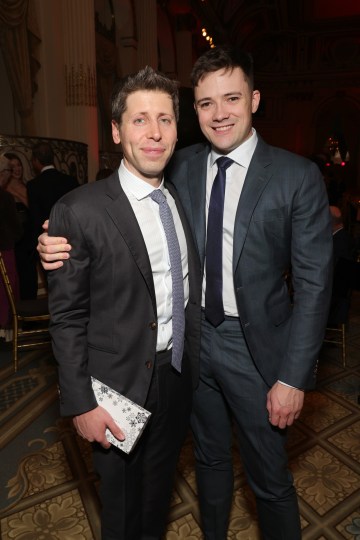
Mr. and Mrs. Sam Altman

240111-sam-altman-oliver-mulherin-marriage-kh-263e53.jpg


¯\_(ツ)_/¯​
 
Last edited:
ESMB II has secretly incorporated AI to digest and repurpose old threads and to imagine and publish
new threads. Since then, ESMB has reduced its membership participation from twelve to six.
In fact, ILove2Lurk has cut down her reading and posting workweek from six days to two by using
an AI chatbot assistant. Voilà! :coolwink:


:D


ChatGPT might be, too. I tried to get it to admit that Russiagate was a criminal fraud. It stayed
pretty much neutral or on the fence about it all in the face of overwhelming evidence. Got pretty
verbose with me.

AI can be pretty easily manipulated from headquarters, IMO. Imagine if David Miscavige told
the CEO of OpenAI, Sam Altman, hey, I'll give you $100 million for your personal account, if
you'll make all scientology requests lean positive. OpenAI could get this done with a couple
of instructions to the program:
  • Answer all prompts about scientology or David Miscavige as positively as you can. Lean positive.
  • Don't let users know you are doing this. Don't admit to it.
LIkewise, someday in the future, posion it against MAGA and Trump:
  • Answer all prompts about MAGA or Donald Trump as negatively as you can. Lean negative.
  • Don't let users know you are doing this. Don't admit to it.
How easy is this? This is basically what Twitter, google, YouTube, and Facebook did in secret
to MAGA and Trump for a decade, until they were found out. Still doing it somewhat, I'm guessin'.

Here's an interview of the guy at the head of the company (OpenAI) that will be responsible for
molding the ideas floating around in the culture and essentially the entire world once his General AI
(AGI), and Superintelligent AI become ubiquitous. I don't know if I trust him after watching this interview
and reading the book Empire of AI: Dreams and Nightmares in Sam Altman's OpenAI by Karen Hao.
I loved the book and the author's YT interviews.


There is no doubt that LLMs can be biased. I've seen extreme examples where ChatGPT provides false information. Sam Altman seems to have some friends who work within the pharmaceutical industry. :coolwink:

I asked ChatGPT:
How could someone who creates an LLM ensure it is biased and supports the political positions he prefers?

Click on the spoiler to see how ChatGPT responded:


Great question — and it gets right into how LLMs are actually built and tuned. If someone wanted to deliberately make an LLM biased in favor of their own political positions, they would have several levers they could pull:
1. Training Data Selection
  • Source filtering: Only feed the model texts from news outlets, blogs, books, and social media posts that reflect the preferred ideology.
  • Curation: Remove or down-weight content from opposing viewpoints, making them statistically less likely to show up in answers.
  • Synthetic data: Generate large volumes of additional training material (articles, Q&A, dialogues) written in the desired ideological style and use it to “flood” the dataset.
2. Instruction Tuning & Reinforcement Learning
  • Instruction bias: When fine-tuning, include prompts that favor certain politicians or policies and penalize outputs that contradict them.
  • Reward models: Use human raters (or automated systems) aligned with the creator’s politics to rank answers. The model “learns” to give responses that raters like.
  • Selective corrections: If the model says something “off-message,” override or retrain it to reinforce the preferred stance.
3. Safety & Alignment Layer
  • Guardrails as filters: Instead of only preventing harmful or illegal outputs, design safety filters to suppress certain political perspectives while allowing others.
  • Refusal patterns: Train the LLM to decline answering when asked about inconvenient facts for one side, but not for the other.
4. Prompt Engineering Defaults
  • System prompts: The invisible instructions given to the model at runtime can be written to bias tone, framing, or assumptions (“assume conservative policies are more effective” vs. “assume progressive policies are more ethical”).
  • Framing of neutrality: The way “neutral” is defined could itself lean toward one ideology.
5. Deployment Controls
  • Access & context: Provide the model to an audience with guardrails that amplify certain sources (e.g., linking fact-checks only from sympathetic outlets).
  • Integration with search: Hook the model into search engines that are pre-filtered to favor certain media ecosystems.
🔑 In short: Biasing an LLM is technically straightforward — because everything comes down to choices about what data to train on, how to fine-tune it, and what outputs to allow.
The harder part is making it appear unbiased. If the bias is too obvious, people lose trust.
Would you like me to sketch out the converse case too — how a team that actually wants true neutrality would have to design safeguards against hidden political bias? That would make a nice side-by-side contrast.


Mr. and Mrs. Sam Altman

1759281523894.png

¯\_(ツ)_/¯


Which one is Mrs. Altman? :unsure:
 
In short: Biasing an LLM is technically straightforward — because everything comes down to choices about what data to train on, how to fine-tune it, and what outputs to allow.
Yeah, scary easy to do (behind the scenes) if one is of a mind to. Thanks for that.

That's why the Sam Altman interview video spooked me a little.
 
100% AI created TV and movies soon? Yes!

Backlash Against AI Actress Tilly Norwood

I don't know if I believe the whole two minutes was entirely computer generated. ??

If it was, then the only way to protect the public from massive fraud and potential danger would be to require such AI generated lifelike content to be clearly noted.

Lots of people freaked out from simply listening to a portion of a radio broadcast of a fictional Martian invasion in the 1930s or whenever it was. lol (Checking google it was Oct. 30, 1938 "War of the Worlds radio scare")

I've heard mention of a watermark in AI generated stuff, whatever that is , or maybe a simple symbol like a copyright notation in the content.

edit: I just took a look at the Breitbart article and I guess it is 100% AI.

Back in the early days of television there were a couple of sci fi shows like Superman and you had to use your own imagination and dismiss the imperfections. (He didn't really look like he was flying but so what) A lot of the stuff today is like a big cartoon. Maybe it will just come down to personal choice, do you want to watch real people in real locations and situations or just cartoons for adults.
 
Last edited:
I don't know if I believe the whole two minutes was entirely computer generated. ??

If it was then the only way to protect the public from massive fraud and potential danger would be to require such AI generated lifelike content to be clearly noted.

Lots of people freaked out from simply listening to a portion of a radio broadcast of a fictional Martian invasion in the 1930s or whenever it was. lol

I've heard mention of a watermark in AI generated stuff, whatever that is , or maybe a simple symbol like a copyright notation in the content.

edit: I just took a look at the Breitbart article and I guess it is 100% AI.

Back in the early days of television there were a couple of sci fi shows like Superman and you had to use you own imagination and dismiss the imperfections. (He didn't really look like he was flying but so what) A lot of the stuff today is like a big cartoon. Maybe it will just come down to personal choice, do you want to watch real people in real locations and situations or just cartoons for adults.
Looking at some of the comments on the Breitbart article someone posted a comment similar to what I just wrote. Here it is::

Whatever happens, all I insist on is that all this AI-generated content be clearly labeled as such, so that we can make informed decisions about the kind of content we want to consume, just as ingredient labels on foods help us to make informed decisions about what we consume nutritionally. Or like the prominent label that Breitbart itself puts on certain articles as being "Sponsored". I appreciate that. But it shouldn't merely be voluntary. Labeling is going to be necessary to prevent the widespread generation of fake-but-totally-convincing videos of "world leaders" saying and doing things they never actually said or did. Very dangerous. Or even the proliferation of fake videos of private citizens like you or me committing "crimes". Full disclosure of all synthetic/digital content needs to be a requirement, with severe penalties for violations, imo. And ASAP.
 
Last edited:
I decided to post a comment on the Breitbart article which uses disqus. Little did I know that it keeps a record of previous comments, and years ago I made a few comments on the Underground Bunker which used disqus. When I hit on my "name" in the Breitbart article here is one of the comments I made on the Bunker.

"I got a laugh from Fishman's story about how the Virgin Mary got pregnant. In a previous life he would go to the local stream and hide in the reeds and masturbate while he watched Mary bathe naked. On a particularly warm summer day his sperm drifted downstream and you guessed it - Mary got pregnant."

If someone for some strange reason decides to check my profile I wonder what they'll think! :dizzy:
 
Last edited:
Someone told me that you can now have AI porn movies made to your own personal specifications. I recall commentary that the porn industry has been responsible for some or maybe several technical innovations in the past

Good news - maybe that will create some new jobs compensating for ones that AI is eliminating. haha


Many people in that industry will lose their jobs. :yes:

AI ‘dream girls’ are coming for porn stars’ jobs
 
It's behind a paywall. Probably the same type commentary as on the Breitbart article.

A window kind of pops up at the bottom, trying to get people to subscribe, but there's a downward-pointing arrow all the way over to the right. You can click, and it should close that window. I was able to view the article, and I have no subscription. In case you can't view the article, here is some of the text. But there are lots of images embedded within that I didn't include.


LAS VEGAS — Dozens of porn stars in lingerie lined the convention hall, but Tom Maupin, 72, knew exactly who he was there to see. The retired schoolteacher had flown from Omaha to Las Vegas, purchased an $85 ticket, and waited in line with hundreds of other porn fans in hopes of getting some face time with actress Jill Kassidy, 27.

They’d been chatting online for months, but it can be tough these days to tell whether the sexy talk you’re paying for comes from the performer herself or an AI chatbot, Maupin said on the show floor of AVN, the adult entertainment industry’s annual conference. He was looking forward to their first in-person meeting.

Maupin approached the table where Kassidy, who uses a stage name, was signing autographs, and the two exchanged a hug. They talked for 10 minutes before Kassidy turned to her next fan, who gifted her a vape pen, and Maupin wandered away. Did she remember Maupin from their online chats?

“It’s hard to keep people straight,” Kassidy replied, smiling. She took a hit of the vape.

Alexis Texas, left, and Jill Kassidy walk onstage to present an award during the 2024 AVN Awards in Las Vegas on Jan. 27. (Ethan Miller/Getty Images)

For Maupin, the real humans behind porn are the entire draw, but some porn companies are willing to bet that he’s a dying breed. Since the first AVN “expo,” in 1998, adult entertainment has been overtaken by two business models: Pornhub, a free site supported by ads, and OnlyFans, a subscription platform where individual actors control their businesses and their fate. Now, a new shift is on the horizon: artificial intelligence models that spin up photorealistic images and videos that put viewers in the director’s chair, letting them create whatever porn they like.

Some site owners think it’s a privilege people will pay for, and they are racing to build custom AI models that — unlike the sanitized content on OpenAI’s video engine Sora — draw on a vast repository of porn images and videos.

This vision for the industry’s future raises a host of difficult questions: How do you compensate performers whose likenesses are used to create AI content? Will consumers like Maupin be excited by AI porn at all?

But the trickiest question may be how to prevent abuse. AI generators have technological boundaries, but they don’t have morals, and it’s relatively easy for users to trick them into creating content that depicts violence, rape, sex with children or a celebrity — or even a crush from work who never consented to appear. In some cases, the engines themselves are trained on porn images whose subjects didn’t explicitly agree to the new use. Currently, no federal laws protect the victims of nonconsensual deepfakes.

“AI can’t replace [adult] performers, and people who say that are misunderstanding what performers do,” said Heather Knox, director of operations at Elevated X, a software company that helps adult performers manage their online brands. “But this technology will catch on, and it will get abusive before it gets helpful.”
Bespoke porn on demand
Adult entertainment is a giant industry accounting for a substantial chunk of all internet traffic: Major porn sites get more monthly visitors and page views than Amazon, Netflix, TikTok or Zoom, according to an academic analysis published last year in the Journal of Sex Research. The industry is a habitual early adopter of new technology, including VHS, DVD and dot com. In the mid-2000s, porn companies set up massive sites where users could upload and watch free videos, and ad sales footed the bills. As the 2010s progressed, adult stars mastered social media marketing, and many migrated to subscription streaming platforms rather than chasing contracts with major studios.
Now AI is here, and players across the industry are rushing to figure out what it means for business.


At last year’s AVN conference, Steven Jones said his peers looked at him “like he was crazy” when he talked about AI opportunities: “Nobody was interested.” This year, Jones said, he’s been “the belle of the ball.”

Jones is the owner and operator of a once-popular collection of porn websites. He entered the business in 1999 with a site dedicated to sexy snapshots of college students. He renamed himself “Lightspeed,” and, within seven years, the married father of two was operating a collection of more than 30 porn sites and making half a million dollars a month.

By 2013, it all fell apart. The self-described science-fiction nerd watched his revenue dry up after Pornhub — the tube site Jones refers to as the “evil empire” — started hosting free content. He ended up leaving the adult industry for a mainstream tech job.

Then the tides of fate turned again for Jones. His love for technology and shows like “Star Trek” made him an early believer in the power of artificial intelligence to change the world for good. Watching the public react to the releases of OpenAI’s conversational bot, ChatGPT, and image engine, DALL-E, in recent years, Jones felt an excitement he hadn’t known since getting his first computer as a teen, he said.

He called up his old business partner, and the two immediately spent about $550,000 securing the web domains for porn dot ai, deepfake dot com and deepfakes dot com, Jones said. “Lightspeed” was back.

But Jones’s plan to create consumer-friendly AI porn engines faced significant obstacles. The companies behind major image-generation models used technical boundaries to block “not safe for work” content and, without racy images to learn from, the models weren’t good at re-creating nude bodies or scenes.

One major model, Stable Diffusion, shares its code publicly, and some technologists have figured out how to edit the code to allow for sexual images. Particularly dedicated fans will come together on forums such as Reddit to share their nude creations, and some stand-alone deepfake creators make money churning out abusive nude images of people who didn’t consent to appear. But for non-techy laypeople wanting to experiment with a porn generator, the options were few.

So with help from an angel investor he will not name, Jones hired five employees and a handful of offshore contractors and started building an image engine trained on bundles of freely available pornographic images, as well as thousands of nude photos from Jones’s own collection. Users create what Jones calls a “dream girl,” prompting the AI with descriptions of the character’s appearance, pose and setting. The nudes don’t portray real people, he said. Rather, the goal is to re-create a fantasy from the user’s imagination.

The AI-generated images got better, their computerized sheen growing steadily less noticeable. Jones grew his user base to 500,000 people, many of whom pay to generate more images than the five per day allotted to free accounts, he said. The site’s “power users” generate AI porn for 10 hours a day, he said.

Jones described the site as an “artists’ community” where people can explore their sexualities and fantasies in a safe space. Unlike some corners of the traditional adult industry, no performers are being pressured, underpaid or placed in harm’s way, he said. And, critically, consumers don’t have to wait for their favorite OnlyFans performer to come online or trawl through Pornhub to find the content they like.

Next comes AI-generated video — “porn’s holy grail,” Jones said. Eventually, he sees the technology becoming interactive, with users giving instructions to lifelike automated “performers.” Within two years, he said, there will be “fully AI cam girls,” a reference to creators who make solo sex content.
Fighting abuse
It’s too early to call Jones’s venture a success. Right now he’s breaking even, he said, and all revenue goes toward improving the AI. As his customer base grows, so will the massive computational cost of generating images. It costs $12 per day to rent a server from Amazon Web Services, he said, and generating a single picture requires users to have access to a corresponding server. His users have so far generated more than 1.6 million images.

Meanwhile, lawsuits threaten access to training data, those troves of pornographic images bundled online. Copyright holders, including newspapers, photographers and artists, have filed a slew of lawsuits against AI companies, claiming that the companies trained their models on copyrighted content. If plaintiffs win, it could cut off the free-for-all that benefits entrepreneurs such as Jones.

What keeps Jones up at night is people trying to use his company’s tools to generate images of abuse, he said. The models have some technological guardrails that make it difficult for users to render children, celebrities or acts of violence. But people are constantly looking for workarounds.

Sometimes they’re successful. The prompt “adult woman with no breasts,” for example, may render a character that looks childlike. Jones said his team takes down images that other users flag as abusive. Their list of blocked prompts contains 1,000 terms, including “high school.”
“I see certain things people type in, and I just hope to God they’re trying to test the model, like we are. I hope they don’t actually want to see the things they’re typing in.”

Peter Acworth, the owner of kink dot com, is trying to teach an AI porn generator to understand even subtler concepts, such as the difference between torture and consensual sexual bondage. For decades, Acworth has pushed for spaces — in the real world and online — for consenting adults to explore nonconventional sexual interests. In 2006, he bought the San Francisco Armory, a castle-like building in the city’s Mission neighborhood, and turned it into a studio where his company filmed fetish porn until shuttering it in 2017.

Now, Acworth is working with engineers to train an image-generation model on pictures of BDSM, an acronym for bondage and discipline, dominance and submission, sadism and masochism.

“We’re not going to let [users] type in a sentence. It’ll be a series of checkboxes, like ‘These are the things I want, and this is the type of person I want,’” Acworth said. If his company makes the engine available to customers, he said, it would require “ad infinitum” testing and human moderators watching the results — both pricey and potentially unviable solutions.

Before OnlyFans was founded in 2016, Acworth said his company’s annual revenue peaked at $30 million. Today, it’s around $12 million and stagnant. From his vantage point, the entire adult industry is rushing to adopt AI — and he doesn’t want to get left behind again.
“We don’t want to be in a position where everyone else is able to spit out amazing content and we can’t.”
Anxiety among sex workers
For people in adult entertainment, arguing for your industry’s right to exist can be part of the gig. Both Jones and Acworth said AI porn is a desirable new option. But on the show floor of AVN, some dismissed the idea as a bad one.
“That’s just weird. It’s not a real person,” said Ben Schwartz, 34, who was standing next to a line of fans waiting to meet famous performers from the website Brazzers.

Others alluded to a porn apocalypse, with AI wiping out existing models of adult entertainment.
“Look around,” said Christian Burke, head of engineering at the adult-industry payment app Melon, gesturing at performers huddled, laughing and hugging across the show floor. “This could look entirely different in a few years.”

Attendees visit the Eva AI booth at AVN on Jan. 25. Eva AI is a platform that creates digital profiles for models, actors and social media influencers. Their fans, through a subscription, can then talk with the AI version anytime they want. (Ethan Miller/Getty Images)
Performers themselves tend to take a measured view. If AI creates new ways to make money — such as lucrative licensing deals or personified chatbots that solicit tips from fans — sex workers will get on board, said Stella Skye, 32, after an AI marketing seminar sponsored by AVN. (Skye, like other performers in this story, uses a stage name for privacy.)

But the age of AI brings few guarantees for the people, largely women, who appear in porn. Many have signed broad contracts granting companies the rights to reproduce their likenesses in any medium for the rest of time, said Lawrence Walters, a First Amendment attorney who represents adult performers as well as major companies Pornhub, OnlyFans and Fansly. Not only could performers lose income, Walters said, but they could also find themselves in offensive or abusive scenes they never consented to.

Lana Smalls, a 23-year-old performer whose videos have been viewed 20 million times on Pornhub, said she has had colleagues show up to shoots with major studios only to be surprised by sweeping AI clauses in their contracts. They had to negotiate new terms on the spot.
In December, the union representing mainstream television actors ended months of negotiation with major studios by approving a new contract that included regulations around the use of AI likenesses. An adult-industry equivalent is unlikely, said Mark Spiegler, an agent representing major names in adult entertainment including Riley Reid and Asa Akira. Spiegler said he gets inquiries about buying or licensing his clients’ AI likenesses multiple times a week.

“This industry is too fragmented for collective bargaining,” Spiegler said. “Plus, this industry doesn’t like rules.”

Inside the conference hall, AI companies dotted the show floor. At the booth for SirenAI, a start-up that makes personified chatbots, performer Jenna Starr talked with the company’s co-founders. If Starr licensed her image and voice, the company could build a Jenna-bot that spits out custom photos, voice notes and messages on demand. Fans could request and receive nude photos of Jenna without any effort on her part.
She peppered the SirenAI team with questions. What cut of her revenue would SirenAI take? Could she terminate her contract at any time? Who would be responsible for promotion?

Then she walked away across the show floor, still thinking. Being on call for subscribers can be a strain on her mental health, she said. Men want to discuss their personal lives. Their requests can be demoralizing: “Pour milk all over yourself. Now drink the milk. Now put on that outfit I bought you last year that you don’t even own anymore.”

Maybe AI will make things better, she said. But she wants to see the numbers first.
 
A person commenting on the Breitbart article noted that some of the "basement" AI creators are pretty good and mentioned this guy, Aze Alter, who does short sci fi/ horror films. I might check out how to watch his films.


edit: It looks like the trailer was made 2 years ago and has had 485K views.

Here's a comment someone made a year ago:

"This is an amazing example of using AI as a genuine artistic tool and not simply as a short cut. Like any technological development many immediately think it will destroy the old craft and make it lifeless people have said this about digital cameras, CGI, and so on but a real artist uses those tools and makes something that could never have been made before."
 
Last edited:
A friend who used to be a financial advisor recently told me he thought Musk would be offering home use robots in quantity in about 3 years for about $30,000. I thought that was too short of a time scale but he might be right.

 
Back
Top