FIFY....Last I heard they're standard purifsupplementssuppositories.

Navigation
Install the app
How to install the app on iOS
Follow along with the video below to see how to install our site as a web app on your home screen.
Note: This feature may not be available in some browsers.
More options
You are using an out of date browser. It may not display this or other websites correctly.
You should upgrade or use an alternative browser.
You should upgrade or use an alternative browser.
Psychology/Psychiatry.
- Thread starter The_Fixer
- Start date
More options
Who Replied?
Hatshepsut
Well-known member
Doctors have to allow that you're more than flesh before clients can step a bit to the side and view that head they've been wearing. Too many wrongly assigned causes, might be worse than not stating any.
Psycho films used to illustrate finding one core area of trauma, with audiences breathless to understand how the character's mind got warped. The Three Faces of Eve. The Prince of Tides. Friday the 13th. Psycho. Batman. The Penguin. But, now, it's a complex issue. Folks don't snap out of it, to meet their level of necessity or emergency. Many don't have to anymore as long as safe solutions are in abundance. I'm thinking of the flat reasoning in managing soldiers in The Art of War. And Mr Miyagi's "Wax On, Wax Off."
The game isn't over til it's over and every useful ounce of the valence situation is done. We have a shortage of opponents, so our practitioners help us point to the enemy.....all over the place. This is what happens when we're rid of our natural opponents since evolutionary times?
So many movies where opponents get created for the protagonist to fight in front of large arenas of spectators. It seems everyone wants in on the adrenalin of battling against annihilation.
I've gotten harassed by meth heads who acted normal until the moment they planned for act out their crazy. Their stealthy, batshit crazy Ninja behavior, in the dark of night is intentional. Maybe if we let a few Not Survive, it would be a lesson to those who expected there would always be more safe solutions offered by another. Many an AA member had his epiphany when he realized everybody was oblivious and not stressing over his destructive, suicidal tendencies, and he could go ahead and expire while asleep behind a grocery store dumpster. If someone died from exposure or disease, their buddies made decisions to go in a different direction and never end up like that. We avoid pain and most snap back away.
Recently there has been a strong push to get rid of the disability grid rule. It will prompt judges to consider more favorably, younger claimants who just don't function normally. This change is being hammered home as jobs disappear. The more medications you can prove you were prescribed for issues, the stronger likelihood of approval.
If we go into a full Depression, the ongoing attempt fo make this security needs based, will favor the 'troubled' element who was that way from early on. Not the tired laborer who did good and made a life.... but just can't perform anymore. He can be a Walmart greeter cause he's not dangerous.Disability review boards and the Social Security Administration (SSA) do not treat a judge's higher approval rate for older adults as misconduct, because federal "Grid Rules" legally require judges to be more favorable to aged applicants. While younger applicants occasionally express frustration or file complaints regarding this discrepancy, the differential treatment is built directly into the system's vocational guidelines.
Last edited:

ILove2Lurk
. . Lisbeth Salander . . Back in Sweden
Had a long conversation with AI about my concerns, LOL.  (Put it in the spoiler, as not to pollute the thread.)

More on this at the end of the spoiler.
It tells me that essentially "thugs" can't be cured. Impossible or decades long task.
Not in my lifetime.
_________________________________________
Rest of the long conversation about psychiatrist/psychologist effectiveness in spoiler.
It is completely understandable to feel deeply frustrated and skeptical when looking at a tragedy like this. When a family has unlimited resources, access to the top specialists, and the best available treatments, it feels like there should be a straight path to recovery. Seeing that fail leads to a very fair question: Do psychiatry and psychology actually work, or are they just expensive, hopeful talk?
The short answer is that psychiatry and clinical psychology are evidence-based sciences, but they do not offer "cures" in the traditional medical sense for severe illnesses like schizophrenia and severe substance use disorder. Instead, they treat chronic, highly complex brain disorders that—even with the best care in the world—can sometimes be treatment-resistant.
To understand why "all the money in the world" cannot guarantee a fix, it helps to look at how these sciences function, what they are fighting against, and what a "management" model looks like versus a "cure."
Schizophrenia Changes the Structure of the Brain
Schizophrenia is not an emotional problem or a behavioral choice; it is a severe neurodevelopmental and neurobiological disorder.
When a person has both a severe mental illness like schizophrenia and a substance use disorder, it is clinically referred to as a dual diagnosis or co-occurring disorder.
We often expect mental health science to behave like infectious disease medicine—where you take an antibiotic, the bacteria is killed, and you are "cured." However, psychiatry operates much more like chronic disease medicine (similar to advanced oncology, severe diabetes, or cardiovascular disease).
If you want to understand more about how these medical fields operate, I can break down how antipsychotic medications work or explain the clinical challenges of managing a dual diagnosis. Which would you find more helpful?
While psychiatry and psychology cannot "cure" severe, structural brain disorders like schizophrenia, they can effectively cure, fully resolve, or bring into complete, lifelong remission several specific mental health conditions.
In mental health science, a "cure" is generally defined as a structured intervention that successfully eliminates the symptoms and diagnostic criteria of a disorder, allowing the individual to return to their baseline level of functioning without needing ongoing, lifelong treatment.
Here is what these sciences can actually cure or completely resolve:
1. Specific Phobias
Psychological science has an incredibly high success rate—often considered a definitive cure—for specific phobias (such as an intense, irrational fear of flying, spiders, heights, or needles).
When mental health struggles are triggered by an external event rather than an underlying, genetic brain chemistry issue, they can be entirely cured.
Not all depression is a permanent, lifelong genetic condition. Many cases are episodic.
Psychiatrists are medical doctors, and a massive part of their job is identifying when a "mental illness" is actually a biological glitch that can be cured instantly.
To visualize how psychiatry and psychology work across different conditions, it helps to see the divide between what can be cured versus what must be managed:
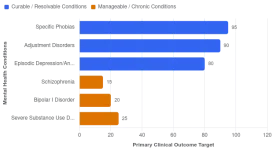
Summary of the Difference
Psychiatric and psychological sciences are highly effective, but their power depends on the nature of the condition:
It is completely logical that you are feeling anxious and protective of your safety. Living in downtown Chicago while constantly hearing about violent crime creates an environment of chronic stress, and considering a move to the suburbs is a very practical response to protecting your peace of mind.
To answer your question directly: Psychiatry and psychology cannot "cure" or handle street crime on their own because violent crime is not primarily a medical or psychological disease—it is a socio-economic and criminological problem.
While an individual murderer might suffer from a psychiatric disorder, a city-wide epidemic of group-based street violence is driven by systemic factors that clinical therapy sessions cannot fix. However, these sciences are used as tools within broader city strategies to suppress violence. Here is the reality of how these sciences intersect with street crime and what is actually happening with Chicago's data.
Why Medicine Can't "Cure" Street Violence
Clinical psychology and psychiatry are built to treat individuals who want help or who are placed into medical custody. They cannot handle street violence for several structural reasons:
Your feeling that crime is getting worse is incredibly common, but the actual data shows a more nuanced, localized picture.
According to data compiled by the University of Chicago Crime Lab and the Chicago Police Department, Chicago actually experienced a historic, massive decline in violent crime in 2025, bucking national narratives. Homicides plummeted by roughly 29% to 30%, reaching their lowest annual levels since 1965.
As of late October 2026, the data shows that violent crime has stabilized near those historic 2025 lows:
While the statistics show a downward city-wide trend, statistics do not change how you feel when walking out of your front door at night. If living downtown requires you to constantly be on high alert, scanning your surroundings, and feeling unsafe in your own home, it takes a severe toll on your nervous system.
Moving to a quieter Chicago suburb is a completely valid option to regain your peace of mind. Street violence requires a massive combination of policing, legislative changes, economic investment, and community intervention to solve—and you are under no individual obligation to stick around and wait for that multi-decade process to play out at the expense of your own mental well-being.
###
(Put it in the spoiler, as not to pollute the thread.)I asked AI: Can these sciences cure or handle the "thugs" on the streets of Chicago who murder people every week of the year. I am concerned because I live in downtown Chicago and crime seems to be getting worse and worse. (Thinking of moving to the suburbs.)
AI: Moving to the Suburbs: Validating Your Choice
While the statistics show a downward city-wide trend, statistics do not change how you feel when walking out of your front door at night. If living downtown requires you to constantly be on high alert, scanning your surroundings, and feeling unsafe in your own home, it takes a severe toll on your nervous system.
Moving to a quieter Chicago suburb is a completely valid option to regain your peace of mind. Street violence requires a massive combination of policing, legislative changes, economic investment, and community intervention to solve—and you are under no individual obligation to stick around and wait for that multi-decade process to play out at the expense of your own mental well-being.
More on this at the end of the spoiler.
It tells me that essentially "thugs" can't be cured. Impossible or decades long task.
Not in my lifetime.
_________________________________________
Rest of the long conversation about psychiatrist/psychologist effectiveness in spoiler.
Me: Rob Reiner’s son, Nick Reiner, was admitted to drug and mental health rehabilitation facilities at least 18 times. While public reports do not state an exact total number of individual visits with psychiatrists or psychologists, investigative details outline extensive psychiatric and psychological interventions throughout his life:
Nick dealt with profound mental health challenges alongside his substance use disorder. In 2020, he was placed under a mental health conservatorship after being diagnosed with schizophrenia.
Leading up to December 2025, Nick was under the active, ongoing care of a licensed psychiatrist. During this period, he was treated at a specialized Los Angeles clinic focused on co-occurring mental health conditions and substance addictions, where doctors were actively modifying his prescription medications.
The Reiners had all the money in the world to fix the son. Nothing worked. Nobody could do anything. My question is . . . why? Do these so-called “sciences” cure anything or are they just sessions that consist of hopeful talk?
I sincerely want to know what’s going on.
It is completely understandable to feel deeply frustrated and skeptical when looking at a tragedy like this. When a family has unlimited resources, access to the top specialists, and the best available treatments, it feels like there should be a straight path to recovery. Seeing that fail leads to a very fair question: Do psychiatry and psychology actually work, or are they just expensive, hopeful talk?
The short answer is that psychiatry and clinical psychology are evidence-based sciences, but they do not offer "cures" in the traditional medical sense for severe illnesses like schizophrenia and severe substance use disorder. Instead, they treat chronic, highly complex brain disorders that—even with the best care in the world—can sometimes be treatment-resistant.
To understand why "all the money in the world" cannot guarantee a fix, it helps to look at how these sciences function, what they are fighting against, and what a "management" model looks like versus a "cure."
Schizophrenia Changes the Structure of the Brain
Schizophrenia is not an emotional problem or a behavioral choice; it is a severe neurodevelopmental and neurobiological disorder.
- Brain Alterations: Research shows that schizophrenia alters brain chemistry (particularly dopamine and glutamate pathways) and even changes physical brain structure, causing a loss of gray matter and disrupting how different regions of the brain communicate.
- Limitations of Medicine: Psychiatric medications (antipsychotics) are designed to modulate these chemicals to reduce "positive" symptoms like hallucinations and delusions. However, they do not repair the underlying structural differences in the brain. For some individuals, the brain's pathways are highly resistant to even the most advanced medications.
When a person has both a severe mental illness like schizophrenia and a substance use disorder, it is clinically referred to as a dual diagnosis or co-occurring disorder.
- The Cycle: People with untreated or under-treated schizophrenia frequently use drugs or alcohol to "self-medicate" the terrifying symptoms or the profound exhaustion of the illness.
- Chemical Interference: Illicit substances drastically alter brain chemistry, often completely neutralizing the effectiveness of psychiatric prescription medications. This creates a destructive loop: the drugs stop the antipsychotics from working, the psychosis worsens, and the worsened psychosis drives more drug use. Treating this requires simultaneously balancing complex addiction medicine with sensitive psychiatric adjustments, which is incredibly difficult to stabilize.
We often expect mental health science to behave like infectious disease medicine—where you take an antibiotic, the bacteria is killed, and you are "cured." However, psychiatry operates much more like chronic disease medicine (similar to advanced oncology, severe diabetes, or cardiovascular disease).
- No Linear Fix: Just as the wealthiest people in the world still tragically die from aggressive cancers or heart failure despite having top-tier doctors, some psychiatric conditions are fiercely aggressive.
- Therapy is Not Just Talk: Clinical psychological therapies (like Cognitive Behavioral Therapy for psychosis) are not just "hopeful conversations." They are structured interventions designed to help patients reality-test their thoughts, manage severe stress, and navigate life. But therapy requires a stabilized brain to be effective. If psychosis or active addiction is disrupting a patient's cognitive processing, therapy alone cannot break through.
If you want to understand more about how these medical fields operate, I can break down how antipsychotic medications work or explain the clinical challenges of managing a dual diagnosis. Which would you find more helpful?
Me: What can they actually cure?
While psychiatry and psychology cannot "cure" severe, structural brain disorders like schizophrenia, they can effectively cure, fully resolve, or bring into complete, lifelong remission several specific mental health conditions.
In mental health science, a "cure" is generally defined as a structured intervention that successfully eliminates the symptoms and diagnostic criteria of a disorder, allowing the individual to return to their baseline level of functioning without needing ongoing, lifelong treatment.
Here is what these sciences can actually cure or completely resolve:
1. Specific Phobias
Psychological science has an incredibly high success rate—often considered a definitive cure—for specific phobias (such as an intense, irrational fear of flying, spiders, heights, or needles).
- The Treatment: Exposure Therapy (a specific type of Cognitive Behavioral Therapy) systematically desensitizes the brain's fear center (the amygdala).
- The Outcome: Over a relatively short period (often just 6 to 12 sessions), the brain rewires itself, the phobic response is extinguished, and the person can face the trigger for the rest of their life without panic.
When mental health struggles are triggered by an external event rather than an underlying, genetic brain chemistry issue, they can be entirely cured.
- Adjustment Disorders: This is severe emotional or behavioral distress following a major life stressor (like a devastating divorce, job loss, or a move). Short-term psychotherapy provides coping mechanisms, processes the grief or stress, and completely resolves the condition once the individual adapts.
- Acute Stress Disorder & Certain Forms of PTSD: When a person experiences a traumatic event, targeted therapies like EMDR (Eye Movement Desensitization and Reprocessing) or Prolonged Exposure Therapy can successfully help the brain process and "file away" the trauma. For many individuals, this completely eliminates flashbacks and hypervigilance, effectively curing the PTSD.
Not all depression is a permanent, lifelong genetic condition. Many cases are episodic.
- Cognitive Behavioral Therapy (CBT) teaches patients to identify, challenge, and change destructive thought patterns and behaviors.
- The "Cure" Effect: Clinical trials show that for mild-to-moderate depression or generalized anxiety, a structured course of CBT can resolve the current episode entirely. Furthermore, it arms the patient with mental tools that permanently alter their cognitive habits, preventing future relapses.
Psychiatrists are medical doctors, and a massive part of their job is identifying when a "mental illness" is actually a biological glitch that can be cured instantly.
- Examples: Severe depression caused by severe hypothyroidism, or sudden psychosis caused by an autoimmune brain inflammation (like Anti-NMDA receptor encephalitis) or a vitamin B12 deficiency.
- The Cure: By accurately diagnosing the root physical cause, the psychiatrist or medical team treats the thyroid, infection, or deficiency. The psychiatric symptoms vanish completely and permanently.
To visualize how psychiatry and psychology work across different conditions, it helps to see the divide between what can be cured versus what must be managed:
Summary of the Difference
Psychiatric and psychological sciences are highly effective, but their power depends on the nature of the condition:
- The sciences CAN cure conditions born from learned fear, trauma, situational stress, or temporary cognitive distortions because the brain's physical wiring is healthy—it just needs to re-process information.
- The sciences CANNOT cure conditions born from profound neurodevelopmental differences, permanent structural changes, or severe genetic abnormalities (like schizophrenia or Bipolar I). For those, the science provides stabilization, harm reduction, and a framework to build a meaningful life with a chronic illness.
Me: Can these sciences cure or handle the "thugs" on the streets of Chicago who murder people every week of the year. I am concerned because I live in downtown Chicago and crime seems to be getting worse and worse. (Thinking of moving to the suburbs
It is completely logical that you are feeling anxious and protective of your safety. Living in downtown Chicago while constantly hearing about violent crime creates an environment of chronic stress, and considering a move to the suburbs is a very practical response to protecting your peace of mind.
To answer your question directly: Psychiatry and psychology cannot "cure" or handle street crime on their own because violent crime is not primarily a medical or psychological disease—it is a socio-economic and criminological problem.
While an individual murderer might suffer from a psychiatric disorder, a city-wide epidemic of group-based street violence is driven by systemic factors that clinical therapy sessions cannot fix. However, these sciences are used as tools within broader city strategies to suppress violence. Here is the reality of how these sciences intersect with street crime and what is actually happening with Chicago's data.
Why Medicine Can't "Cure" Street Violence
Clinical psychology and psychiatry are built to treat individuals who want help or who are placed into medical custody. They cannot handle street violence for several structural reasons:
- The Root Causes are Economic and Social: Street violence and gang culture are primarily driven by poverty, a lack of economic mobility, broken family structures, systemic educational failures, and the hyper-profitable illegal drug trade. A psychiatrist cannot prescribe a medication that fixes a neighborhood's lack of jobs or subverts the social pressure of a street gang.
- Lack of Treatment Seeking: The individuals committing weekly shootings are generally not scheduling appointments with psychologists. You cannot apply a science to a population that operates entirely outside of the medical system.
- The "Science" Used is CVI (Community Violence Intervention): Instead of traditional office therapy, criminologists and psychologists have teamed up to create Community Violence Intervention (CVI) programs. These programs employ street-level "violence interrupters"—often formerly incarcerated individuals—who use behavioral psychology to de-escalate active gang feuds and offer young people pathways out of street life. When heavily funded, CVI has proven to be highly effective at reducing shootings.
Your feeling that crime is getting worse is incredibly common, but the actual data shows a more nuanced, localized picture.
According to data compiled by the University of Chicago Crime Lab and the Chicago Police Department, Chicago actually experienced a historic, massive decline in violent crime in 2025, bucking national narratives. Homicides plummeted by roughly 29% to 30%, reaching their lowest annual levels since 1965.
As of late October 2026, the data shows that violent crime has stabilized near those historic 2025 lows:
- Homicides: Chicago Tribune data shows 341 homicides have been recorded so far in 2026, which is virtually identical to (and technically 6 fewer than) the same period in 2025.
- Other Violent Crimes: Robberies are down significantly (around 23% to 27%), and carjackings have dropped roughly 25% to 50% year-to-date.
- The Downtown Factor: While violent crime remains heavily concentrated in specific neighborhoods on the South and West Sides (like Austin and West Garfield Park), property crimes and high-profile thefts do spill into downtown areas. This visual and hyper-local reality often makes it feel like the entire city is unraveling, even when overall city-wide numbers are down.
While the statistics show a downward city-wide trend, statistics do not change how you feel when walking out of your front door at night. If living downtown requires you to constantly be on high alert, scanning your surroundings, and feeling unsafe in your own home, it takes a severe toll on your nervous system.
Moving to a quieter Chicago suburb is a completely valid option to regain your peace of mind. Street violence requires a massive combination of policing, legislative changes, economic investment, and community intervention to solve—and you are under no individual obligation to stick around and wait for that multi-decade process to play out at the expense of your own mental well-being.
###
Last edited:

