

J. Swift
Well-known member
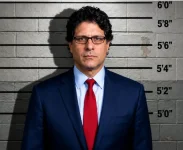
The Trump Justice Department shut down an early-stage Brooklyn investigation into whether improper payments greased the clemency that freed a Scientologist fraud convict less than two weeks into a seven-year sentence — and erased more than $15.5 million he owed his victims.
The New York Times reported this morning that President Trump’s political appointees at the Justice Department quashed an early-stage criminal investigation into the circumstances of his clemency grant to David Gentile, the Scientologist private-equity operator convicted in the GPB Capital Holdings fraud. The reporting, by Kenneth P. Vogel, Nicole Hong, and William K. Rashbaum, is sourced to five people with knowledge of the events.
For readers of this site, the news lands inside a story we have been documenting since 2019. David Gentile is a Scientologist whose firm, GPB Capital, was once listed as a WISE company — World Institute of Scientology Enterprises, the membership group for Scientologist-owned businesses — and whose money trail we have tracked through fellow-Scientologist sweetheart deals, the cancelled Riverwalk project in Tampa, and the source of GPB Capital’s seed money which came from the Russian crime boss Michael Chernaya.
What the Brooklyn Prosecutors Were Looking At
According to the Times, career prosecutors in the Eastern District of New York — the office that secured Gentile’s conviction — opened an inquiry into how the commutation came about by late February. Among the evidence they gathered: jailhouse communications in which Gentile discussed making payments of $2.5 million or more to people or companies to help facilitate his clemency. Prosecutors explored potential wire-fraud theories. It is not clear how far the inquiry had progressed, whom it targeted, or whether a crime was committed at all. There is no indication Trump himself was a target.One figure who drew scrutiny was the Rev. Frank Mann, a retired Queens Catholic priest and personal friend of the president who delivered the closing benediction at the 2025 inauguration. The Times reports that, while in prison at the Otisville camp, Gentile told fellow inmates he expected to walk free imminently because Mann was pressing his case directly to Trump — and indicated he had already facilitated payment of some amount of money to the priest for that effort. Days later, Gentile walked.
Mann denies it. In an email to the Times, he called the suggestion that he had any role in the commutation “delusional nonsense” and said all he ever offered were prayers. But the Times reports that a Brooklyn parishioner, Joe Falco, recounted Mann describing it differently in person late last month: that Mann had spoken to Trump, counseled him, and, at Mann’s suggestion, got the president to commute the sentence. That contradiction — a flat written denial against a firsthand account of the priest taking credit — is the hinge of the story.
How the Investigation Was Killed
The probe came to an abrupt halt after the Times began asking the White House and the U.S. attorney’s office about it. In a phone call to Joseph Nocella Jr., the U.S. attorney for the Eastern District of New York, Aakash Singh — an associate deputy attorney general who functions as a liaison to U.S. attorneys nationwide — expressed concern about the investigation. Shortly afterward, the career prosecutors were told to abandon it.This is the same Joseph Nocella who, at sentencing, called Gentile’s punishment a warning to would-be fraudsters that getting rich by preying on investors buys a one-way ticket to jail. His office’s own conviction was undone by the commutation, and his office’s own investigation into that commutation was then shut down from Washington.
A DOJ spokeswoman, Natalie Baldassarre, suggested everything was done by the book and within the department’s enforcement priorities. White House press secretary Karoline Leavitt did not address the investigation but said every clemency application is rigorously vetted and that Trump finds it detestable that anyone would attempt to profit off pardons.
Singh, per the Times, has become known inside the building as an aggressive enforcer who steers prosecutors toward the president’s critics and away from his allies. The Gentile shutdown sits in the same column as the abandoned case against former New York Mayor Eric Adams and against the broader backdrop of the administration pursuing critics like former FBI Director James Comey. The Times also notes a related data point: in March, Nocella’s office charged a lobbyist with attempting to violently extort $500,000 from a client who had received a Trump pardon — evidence of the cottage industry that has grown up around this president’s clemency.
David Gentile
Gentile founded GPB Capital in 2013 and raised roughly $1.8 billion from about 17,000 mostly retail investors, sold on an 8 percent dividend backed by auto dealerships and waste-management businesses. The dividends, prosecutors established, were partly paid out of investor capital — a Ponzi-like scheme dressed as legitimate financial performance.The FBI raided GPB in 2019. The funds were written down by hundreds of millions. After an eight-week trial, Gentile and co-defendant Jeffry Schneider were convicted in August 2024 of securities and wire fraud.
On May 9, 2025 — the seventy-fifth anniversary of the release of Dianetics — Judge Rachel Kovner sentenced Gentile to seven years in prison and Schneider to six. The government had asked for fifteen. Kovner said she was disregarding the sentencing guidelines, which had been calculated far higher. Gentile reported to Otisville last November. He was out before the month was over.
We have reported for years that GPB’s institutional culture mirrors Scientology’s own — excessive secrecy, no financial transparency, one-sided contracts — and that Gentile steered business toward fellow Scientologists and “special friends.” There are open questions this site has never been able to close: whether GPB money flowed into the Scientologist-owned LLCs that bought up Clearwater real estate; the relationship to Larry Feldman’s abruptly cancelled Riverwalk condo tower in Tampa; and the leaked FBI memo describing roughly $100 million in Russian-mob money deposited into a U.S. private-equity fund.
There is a closing irony worth stating plainly and without embroidery: a man raised Catholic, who converted to Scientology, was convicted of defrauding more than 10,000 working people — and was then freed, on this account, through the lobbying of a Catholic priest with a direct line to the president. The commutation erased not only the back end of his prison term but the prospect of forfeiting more than $15.5 million back toward his victims.
What the Scientology Money Project Reported Earlier — And What Remains Open
We reported on Gentile’s commutation when it happened and raised the obvious question: How does a convicted criminal serving a fresh seven-year term walk out in days? Today’s Times reporting supplies a partial answer to that question and a second, larger one stacked on top of it: when career prosecutors started to examine the how, the administration made them stop.The open items remain open. Who received the $2.5 million Gentile discussed? Was the priest in fact paid, and if so by whom and through what vehicle? Did any of it touch GPB-adjacent or Scientologist-linked money? The Brooklyn prosecutors were beginning to ask. They were ordered to stop asking. SMP is not.
The Scientology Money Project will continue reporting this story.


