

Karen#1
Well-known member
TONY ORTEGA
Excerpt:
Despite the fact that Grant and Elena Cardone are probably the most well known among Scientology’s wealthy donors thanks to their incessant social media promotions, they are not among the super-strata of most wealthy Scientology whales such as Trish Duggan or Tom Cummins, who give far more money.
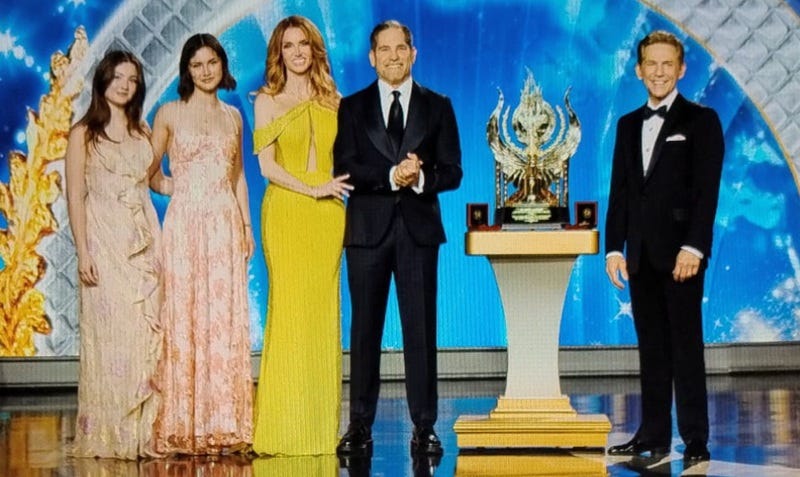
But at the most recent L. Ron Hubbard Birthday Event, held in March in Clearwater, Florida to mark the founder’s 115th birthday, Grant and Elena did get to bask in the spotlight as the biggest givers among the trophy winners that night, and not only received their new hardware but also got to pose next to it with church leader David Miscavige.
Hip, hip, hooray!
The most important Scientology trophy ceremony for big donors happens in the fall, at the IAS gala in England, but in recent years Miscavige has held these supplementary Patrons Balls to recognize the people he relies on most to keep the organization going in these uncertain times. Photos from these trophy ceremonies then show up some weeks later in a new issue of Impact magazine. That’s why we’re just now learning who took home hardware at the party in March.
For our newer readers, this is what we’re going on about: All Scientologists are under intense pressure to donate huge sums for a variety of different projects and in a variety of different ways. But one of the most important ways to contribute is by donating to what started out as a defense fund for the church in 1984, the International Association of Scientologists.
At these celebrations, donors are recognized who have, during the past year, reached a new cumulative goal in their total overall spending. This is called a “status,” and they have fancy names. Donate $500,000 overall to the IAS, for example, and you are given the fancy status “Silver Meritorious.” It’s like a game for rich people, who try to give enough to get to the next level. [For an explanation of how we know what amounts the statuses represent or the estimates we’ve made for some of them, see our methodology here.]
READ MORE
 tonyortega.substack.com
Excerpt:
[td width="800px"] [/td][td]
[/td]But at the most recent L. Ron Hubbard Birthday Event, held in March in Clearwater, Florida to mark the founder’s 115th birthday, Grant and Elena did get to bask in the spotlight as the biggest givers among the trophy winners that night, and not only received their new hardware but also got to pose next to it with church leader David Miscavige.
Hip, hip, hooray!
The most important Scientology trophy ceremony for big donors happens in the fall, at the IAS gala in England, but in recent years Miscavige has held these supplementary Patrons Balls to recognize the people he relies on most to keep the organization going in these uncertain times. Photos from these trophy ceremonies then show up some weeks later in a new issue of Impact magazine. That’s why we’re just now learning who took home hardware at the party in March.
For our newer readers, this is what we’re going on about: All Scientologists are under intense pressure to donate huge sums for a variety of different projects and in a variety of different ways. But one of the most important ways to contribute is by donating to what started out as a defense fund for the church in 1984, the International Association of Scientologists.
At these celebrations, donors are recognized who have, during the past year, reached a new cumulative goal in their total overall spending. This is called a “status,” and they have fancy names. Donate $500,000 overall to the IAS, for example, and you are given the fancy status “Silver Meritorious.” It’s like a game for rich people, who try to give enough to get to the next level. [For an explanation of how we know what amounts the statuses represent or the estimates we’ve made for some of them, see our methodology here.]
READ MORE
Grant and Elena Cardone head the list of Scientology donors at LRH Birthday 2026!
Despite the fact that Grant and Elena Cardone are probably the most well known among Scientology’s wealthy donors thanks to their incessant social media promotions, they are not among the super-strata of most wealthy Scientology whales such as Trish Duggan or Tom Cummins, who give far more money.
tonyortega.substack.com


