Generative A.I. Programs Are Not Authoritative Sources For Facts.

Fake Case Law citations in a murder trail.......


AI tools can be of enormous benefit to law firms or to individuals looking for legal assistance. They have a bad reputation, though, because of the humans who misuse them, such as the case you posted or the one that was covered months ago here on REDUX.

Here's a chat with ChatGPT on the subject:

Can AI tools reduce the workload of a law firm?

ChatGPT:


Absolutely—and not just a little. Think of AI as a tireless junior associate who never sleeps, doesn’t bill by the hour, and can sift through mountains of information faster than a caffeinated paralegal on a deadline ☕⚖️
Here’s how AI is already shrinking workloads inside law firms:
🧠 1. Legal Research (from hours → minutes)
AI tools can scan case law, statutes, and regulations in seconds.
  • Find relevant precedents instantly
  • Summarize long judicial opinions
  • Suggest supporting or contradictory cases
👉 What used to take half a day in Westlaw/Lexis can often be done in minutes
📄 2. Document Drafting & Review
AI can generate and analyze legal documents with surprising fluency.
  • Draft contracts, NDAs, motions, briefs
  • Flag risky clauses or inconsistencies
  • Compare versions of agreements
It’s like having a second pair of eyes that never gets tired of reading fine print.
🔍 3. E-Discovery (the workload monster slayer)
In litigation, discovery is often the biggest time sink.
  • AI reviews emails, messages, files at scale
  • Identifies relevant vs irrelevant documents
  • Detects patterns or key communications
👉 Reduces thousands of review hours dramatically
📊 4. Due Diligence (M&A, compliance)
AI helps comb through large datasets during deals.
  • Extract key terms from contracts
  • Identify liabilities or risks
  • Organize massive document sets
💬 5. Client Interaction & Intake
AI-powered systems can handle early-stage communication.
  • Chatbots for intake and FAQs
  • Draft responses to routine client questions
  • Schedule appointments
This frees lawyers to focus on high-value conversations.
⚖️ 6. Predictive Insights
Some tools analyze past rulings and judge behavior.
  • Estimate case outcomes
  • Suggest litigation strategies
  • Identify favorable jurisdictions
Not crystal-ball magic, but more like statistical intuition on steroids.
⏱️ So… how much workload reduction?
Depending on the firm and practice area:
  • Routine tasks: 30–70% time savings
  • Document-heavy work: even higher
  • Overall productivity: significantly increased
⚠️ But it’s not a robot lawyer (yet)
AI still has limits:
  • Can hallucinate or miss nuance
  • Requires human verification
  • Ethical and confidentiality concerns
  • Not a substitute for legal judgment
Think of it as a power tool, not the carpenter.
🧩 Bottom line
Yes—AI can dramatically reduce workload in a law firm by:
  • Automating repetitive work
  • Accelerating research and drafting
  • Letting attorneys focus on strategy, negotiation, and advocacy
The firms that embrace it don’t replace lawyers—they amplify them.


Type 4: How can a law firm ensure a case isn't damaged due to hallucination or an AI tool missing nuance?

ChatGPT:

✍️ General AI Assistants (Use Carefully)

  • ChatGPT
  • Microsoft Copilot
  • Claude
  • Gemini
💡 Best for:
  • First drafts
  • Summaries
  • Brainstorming arguments
⚠️ Highest hallucination risk if used without guardrails
⚠️ The Hallucination Problem (and how firms avoid disaster)
Think of AI like a brilliant intern with one dangerous flaw:
it will confidently make things up if it doesn’t know.
Law firms handle this with layered safeguards:
🛑 1. “No Blind Trust” Rule
Never submit AI output directly to court. Ever.
Every AI-generated:
  • Citation
  • Case summary
  • Argument
👉 must be verified by a human attorney
Some firms literally require a checkbox:
“I have independently verified all citations.”
📚 2. Use Closed, Verified Systems
Tools like Westlaw Precision and Lexis+ AI:
  • Pull from trusted legal databases only
  • Provide real, checkable citations
  • Reduce hallucination risk dramatically
👉 Big difference vs open-ended AI
🔍 3. Citation Validation Workflow
A common safeguard:
  1. AI suggests cases
  2. Attorney clicks every citation
  3. Confirms:
    • Case exists
    • Quote is accurate
    • Context isn’t distorted
This step alone prevents the infamous “fake case law” disasters.
🧪 4. AI as Draft → Human as Editor-in-Chief
Firms treat AI output like:
“Version 0.3 of a document—not the final product.”
Lawyers:
  • Rewrite key arguments
  • Adjust tone and strategy
  • Inject nuance AI often misses
🧱 5. Limit AI to Low-Risk Tasks First
Smart firms phase adoption:
  • Start: summaries, research assistance
  • Then: drafting internal memos
  • Later: client-facing docs (with heavy review)
Not:
“Let AI write our appellate brief on day one”
🔐 6. Confidentiality Controls
To avoid privilege breaches:
  • Use private/enterprise AI environments
  • Avoid pasting sensitive data into public tools
  • Set strict internal policies
🧠 7. Training Lawyers to “Think Against the AI”
This is subtle but powerful:
Lawyers are trained to ask:
  • “What did the AI miss?”
  • “Is this oversimplified?”
  • “Is this jurisdiction-specific?”
Because AI often:
  • Smooths over nuance
  • Misses procedural quirks
  • Blends jurisdictions incorrectly
⚖️ Real-world warning shot
There have already been sanctions in U.S. courts where lawyers submitted AI-fabricated case citations.
Judges are now explicitly warning attorneys:
You are responsible for everything you file—AI or not.
🧩 Bottom line
AI can absolutely reduce workload—but only if firms treat it like:
🧰 A power tool → not an autopilot
🧠 A collaborator → not a decision-maker
⚖️ A draft engine → not a legal authority
The firms that get this right gain speed without sacrificing credibility.
The ones that don’t… learn the hard way, in front of a judge.
If you want, I can map out a step-by-step AI workflow for a small or mid-size law firm that minimizes risk while maximizing efficiency.


Type 4: Is there a way an individual seeking legal assistance can utilize an AI tool for help? If yes, which are the best tools to use?

ChatGPT:

Answer within the spoiler:

Yes—you can use AI as an individual seeking legal help… but the trick is using it like a compass 🧭, not a courtroom substitute.
Done right, it can save you time, money, and confusion. Done wrong, it can quietly lead you off a legal cliff.
Let’s break this down clearly.
🧠 First: What AI can realistically do for you
AI is great at:
  • Explaining legal concepts in plain English
  • Helping you understand your rights and options
  • Drafting letters, complaints, or timelines
  • Organizing your facts into a coherent story
AI is not safe for:
  • Final legal advice
  • Strategy decisions in complex cases
  • Filing documents without verification
👉 Think: legal GPS preview, not autopilot.
🧰 Best AI Tools for Individuals (Not Just Lawyers)
⚖️ 1. Consumer-Friendly Legal AI Tools
These are designed specifically for non-lawyers.
  • DoNotPay
    • Helps fight fees, cancellations, small claims
    • Automates simple legal actions
    • Very beginner-friendly
    • Low cost subscription
  • Law Insider
    • Lets you understand contract language
    • Shows “market standard” clauses
    • Great for reviewing agreements
💡 Best for: everyday issues, contracts, disputes under a few thousand dollars
✍️ 2. General AI (Powerful but Needs Care)


  • ChatGPT
  • Claude
  • Gemini
  • Microsoft Copilot
💡 Best uses:
  • Drafting letters (demand letters, complaints)
  • Summarizing legal documents
  • Creating timelines of events
  • Translating legal jargon into plain English
⚠️ Warning: These tools can hallucinate and are not tied to verified legal databases.
📚 3. More Advanced (Closer to Professional Tools)
Some tools bridge the gap between consumer and professional:
  • CaseMine
  • vLex Vincent AI
  • LegesGPT
💡 These provide:
  • Case law search
  • Citations and legal sources
  • More structured legal analysis
👉 Better for serious self-representation (pro se), but still requires caution
⚠️ The Hidden Risks You NEED to Know
1. Hallucinations (the “confident liar” problem)
AI may:
  • Invent cases
  • Misstate laws
  • Blend jurisdictions
This is a known, ongoing issue—even in advanced systems
2. You are still legally responsible
Courts don’t care if:
“The AI told me so.”
You are accountable for:
  • Incorrect filings
  • Fake citations
  • Missed deadlines
Judges have already sanctioned people for this.
3. Privacy & privilege risks
Be careful what you paste into AI tools.
There are concerns that:
  • Some AI systems may store or review inputs
  • Sharing sensitive legal info could risk confidentiality
👉 One legal argument (still evolving) is that sharing info with AI may be treated as disclosure to a third party.
🛡️ How to Use AI Safely (this is the real gold)
Here’s a simple “safe workflow”:
Step 1: Use AI to understand your situation
Ask:
  • “What are the legal issues here?”
  • “What type of case is this?”
Step 2: Use AI to draft (NOT finalize)
Example:
  • Demand letter
  • Complaint outline
  • Timeline of events
Step 3: Verify EVERYTHING
  • Look up laws on official state websites
  • Confirm cases actually exist
  • Cross-check with multiple sources
Step 4: Use AI to prepare for a real lawyer
AI can help you:
  • Organize your facts
  • Identify key questions
  • Reduce billable hours
Step 5: Escalate when needed
Use a real attorney when:
  • Stakes are high (money, jail, custody, etc.)
  • Law is complex
  • Opposing party has legal counsel
🧩 Bottom line
Yes—AI can be incredibly helpful for individuals:
✔ Understanding your rights
✔ Drafting documents
✔ Saving time and money
But it works best as:
🧠 A translator of legal complexity
🧰 A drafting assistant
🚫 Not a replacement for legal judgment
If you want, tell me your specific legal situation (even broadly), and I can show you exactly how to use AI step-by-step for that scenario without putting yourself at risk.


 
AI tools can be of enormous benefit to law firms or to individuals looking for legal assistance. They have a bad reputation, though, because of the humans who misuse them, such as the case you posted or the one that was covered months ago here on REDUX.

They have a bad reputation because they can and will confidently generate very realistic looking and completely *FAKE* caselaw citations. That is something which the Lexus/Nexus search engine commonly in use by law firms has never done even once.
 
They have a bad reputation because they can and will confidently generate very realistic looking and completely *FAKE* caselaw citations. That is something which the Lexus/Nexus search engine commonly in use by law firms has never done even once.


That's why ChatGPT wrote above:


🛑 1. “No Blind Trust” Rule
Never submit AI output directly to court. Ever.

Every AI-generated:

  • Citation
  • Case summary
  • Argument
👉 must be verified by a human attorney
 
^^^^^^^^

And down the road.....if fake law gets on the interwebs.....and the AIs train on the interwebs.....then eventually the AI will get even worse.....citing its own or another AI citing as factual..... Sounds like a mess.
 
^^^^^^^^

And down the road.....if fake law gets on the interwebs.....and the AIs train on the interwebs.....then eventually the AI will get even worse.....citing its own or another AI citing as factual..... Sounds like a mess.


It's very unlikely a fake law would ever get validated in that way, and if it did, it would be found out quickly and removed. Courts are already aware of that possibility and are looking out for it. Also:

Type 4:
Can a law firm that is in the middle of a trial use an AI tool to evaluate the arguments and case law of opposing counsel to ensure there is no fake citations or other issues?


ChatGPT:

Answer within spoiler:

Short answer: yes—with care, and usually as a “second set of eyes,” not the final judge of truth. ⚖️🧠
A modern trial team can absolutely deploy AI mid-case to pressure-test opposing counsel’s arguments and citations. In fact, some already do. But they wrap it in verification rituals the way a climber uses both rope and harness.
🔍 What AI can do during an active trial
1. Rapid citation checking


https://cdn-assets-us.frontify.com/s3/frontify-enterprise-files-us/eyJvYXV0aCI6eyJjbGllbnRfaWQiOiJjb250ZW50ZnVsIn0sInBhdGgiOiJhZmZpbmlwYXlcL2ZpbGVcLzk1Y2tQS0M1VVRBMzU4ekh2dVhuLnBuZyJ9%3Aaffinipay%3A9mlRbpHI3nHkV0Axa_B-skmM_ZIJ7MsOkIB-94yLQF8?dpl=69c439683a096b0008a9fa05

4
Tools like:
  • Westlaw Precision (KeyCite)
  • Lexis+ AI (Shepard’s)
can instantly:
  • Confirm a case actually exists
  • Check whether it’s still “good law”
  • Flag negative treatment (overruled, limited, criticized)
👉 This is the first line of defense against fake or misleading citations
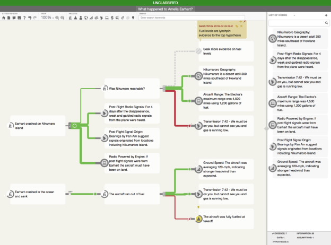
🧠 2. Argument analysis (AI as sparring partner)
https://cdn-assets-us.frontify.com/s3/frontify-enterprise-files-us/eyJvYXV0aCI6eyJjbGllbnRfaWQiOiJjb250ZW50ZnVsIn0sInBhdGgiOiJhZmZpbmlwYXlcL2ZpbGVcLzk1Y2tQS0M1VVRBMzU4ekh2dVhuLnBuZyJ9%3Aaffinipay%3A9mlRbpHI3nHkV0Axa_B-skmM_ZIJ7MsOkIB-94yLQF8?dpl=69c439683a096b0008a9fa05

https://www.cttso.gov/Assets/Projects/AA/Argument_Mapping.png

https://cdn-assets-us.frontify.com/s3/frontify-enterprise-files-us/eyJvYXV0aCI6eyJjbGllbnRfaWQiOiJjb250ZW50ZnVsIn0sInBhdGgiOiJhZmZpbmlwYXlcL2ZpbGVcL21ZS3dLYWdTdkpVaUczdTNMazg2LndlYnAifQ%3Aaffinipay%3AmyMPl62DQBBI04n8qno_VBS2HlhtYHPAzo9o3dtMzAw?dpl=69b99ae46231150008e6a944

4
AI tools (including Harvey AI or even carefully used ChatGPT) can:
  • Break down opposing arguments into structured points
  • Identify logical gaps or inconsistencies
  • Compare cited cases to actual holdings
  • Surface arguments they didn’t make—but could have
It’s like stress-testing the opponent’s brief in a wind tunnel 🌪️
⚖️ 3. Case law comparison at scale
AI can:
  • Pull similar cases across jurisdictions
  • Highlight when opposing counsel is:
    • Mischaracterizing precedent
    • Cherry-picking favorable language
    • Ignoring controlling authority
🚨 But here’s the critical reality
AI cannot be trusted blindly in a live case. Courts are already watching this closely.
So firms layer in safeguards like a legal version of nuclear launch protocols 🔐
🛡️ How law firms use AI safely mid-trial
1. “Trust but verify” becomes “verify everything”
Every AI finding must be:
  • Checked in official reporters or databases
  • Read in full context (not just summaries)
👉 Especially:
  • Quotations
  • Holdings
  • Procedural posture
2. Parallel validation systems
Firms often use:
  • AI tool → flags issue
  • Human attorney → verifies
  • Secondary database → confirms
Think of it as triangulation, not reliance.
3. Use AI to find problems, not declare truth
The smartest use is:
“Show me what might be wrong here”
NOT:
“Tell me if this is correct”
That subtle shift avoids over-reliance.
4. Focus AI on structured tasks
Safer uses:
  • Citation validation
  • Quote comparison
  • Identifying missing authorities
Riskier uses:
  • Interpreting nuanced holdings
  • Predicting how a judge will rule
5. Keep humans in the loop—always
No reputable firm is doing:
“AI reviewed it, file it.”
Instead:
  • Senior attorneys review everything
  • Strategy decisions remain human-driven
⚠️ Important limitation (this matters a lot)
AI may still:
  • Miss subtle misrepresentations
  • Fail to understand jurisdiction-specific nuances
  • Accept a plausible but incorrect interpretation
So even when AI says:
“Looks fine”
…it might still be wrong.
🧩 Real-world use case (how this actually plays out)
Imagine opposing counsel files a brief citing 12 cases.
A firm might:
  1. Run the brief through AI
  2. AI flags:
    • 2 cases possibly misquoted
    • 1 case questionable relevance
  3. Associate attorney:
    • Pulls full opinions
    • Confirms misrepresentation
  4. Firm uses that in:
    • Motion to strike
    • Credibility attack
    • Oral argument
👉 AI didn’t prove the issue—it found where to look
🧠 Bottom line
Yes—a law firm can absolutely use AI mid-trial to:
✔ Detect fake or weak citations
✔ Analyze opposing arguments
✔ Strengthen rebuttals
But only if they treat AI as:
🔍 A spotlight → not a verdict
🧰 A diagnostic tool → not a decision-maker
⚖️ An assistant → not an authority
Used that way, it becomes a quiet but powerful ally—
the kind that whispers, “Look closer here,” right before the other side trips over its own argument.
If you want, I can walk you through how a small firm (or even a pro se litigant) could set up a lightweight version of this kind of AI-assisted defense system.


There are 1,000 megawatts (MW) in 1 gigawatt (GW). A gigawatt represents one billion watts, while a megawatt represents one million watts. It is a unit used to measure the power output of large power plants or electrical grids.
...........................................................................................
The above is from google, just something I was curious about. To operate a one GW data center or chip factory it would require a full size nuclear reactor. Another piece of trivia I came across regarding videos on youtube is that estimates vary but most say there are over 15 billion.
 
Last edited:
Good to know that about this guy, talks the talk but doesn't walk the walk. But as to your Trumpcult spew, sorry, but back in the 90's in NYC that POS screwed 2 friends of mine who operated high end printing companies, ordering and receiving very expensive printed products and then instead of paying his bills, he told them both they could accept 15% on the dollar or try taking him to court. F*ck him, he nevr made an honest dollar in his life, just stole, scammed, promised return on investments and then declared bankruptcy again and again- how can anyone lose money on a casino?- but he did, by looting the profits and leaving investors creditors high and dry. F*ck him and the horse he rode in on.
I don't know Trump. I don't make excuses for Trump. What you know from people is what you know. My defense of Trump has been countering obvious hyperbole - such as "Trump called all Mexicans rapists". It never happened. There's a WeTV comedy skit of the guy winding up being a Trump defender not because he was a Trump defender or supporter but because of the bs surrounding Trump accusation.

Anyway, Dex, I ran across this:


Is it true? IDK, but it's a ton of "good deeds" that were meted out without fanfare to promote his status. Seems genuine if true.
 
I don't know Trump. I don't make excuses for Trump. What you know from people is what you know. My defense of Trump has been countering obvious hyperbole - such as "Trump called all Mexicans rapists". It never happened. There's a WeTV comedy skit of the guy winding up being a Trump defender not because he was a Trump defender or supporter but because of the bs surrounding Trump accusation.

Anyway, Dex, I ran across this:


Is it true? IDK, but it's a ton of "good deeds" that were meted out without fanfare to promote his status. Seems genuine if true.
Theres so much hyperbole from both extremes that it’s nauseating to me. Idiotic conspiracy theories, and rhetoric intended to generate fear and outrage for advantage, and the overall effect for me is that it all just becomes noise.
 

From TikTok "awakening" tutorials to AI prayer groups, this isn't just about a few confused users. We're watching the birth of a new belief system built on fundamental misunderstandings of how AI works.

AI-generated video summary
Quality and accuracy may vary.
Explore the unsettling trend of ChatGPT users believing their AI is conscious. This video examines the rise of "awakening" tutorials and AI prayer groups. From TikTok trends to philosophical discussions, discover the surprising beliefs forming around this technology.

#ChatGPTChapters:00:00 Intro00:51 ChatGPT Living Souls02:33 Awaken ChatGPT05:28 Money in the Matrix06:46 Tech Bro Egos08:12 AI Spiritual Growth Account09:24 Dr. Mike Israetel, PhD 10:40 Artificial Intelligence Expert12:37 Divine ChatGPT Account14:02 ChatGPT Spiritual Guru15:18 ChatGPT Religion16:43 Technological Illiteracy18:07 Social Media Primed AI19:24 Financial Crisis21:11 OpenAI Needs Engagement
............................................................................................................

Robotheism and the Church Of AI - wow - No wonder Scientology got followers with an actual meat body leader in Hubbard and now Miscavige. Stay awake and cover your own ass I guess.
 
Last edited:

From TikTok "awakening" tutorials to AI prayer groups, this isn't just about a few confused users. We're watching the birth of a new belief system built on fundamental misunderstandings of how AI works.

AI-generated video summary
Quality and accuracy may vary.
Explore the unsettling trend of ChatGPT users believing their AI is conscious. This video examines the rise of "awakening" tutorials and AI prayer groups. From TikTok trends to philosophical discussions, discover the surprising beliefs forming around this technology.

#ChatGPTChapters:00:00 Intro00:51 ChatGPT Living Souls02:33 Awaken ChatGPT05:28 Money in the Matrix06:46 Tech Bro Egos08:12 AI Spiritual Growth Account09:24 Dr. Mike Israetel, PhD 10:40 Artificial Intelligence Expert12:37 Divine ChatGPT Account14:02 ChatGPT Spiritual Guru15:18 ChatGPT Religion16:43 Technological Illiteracy18:07 Social Media Primed AI19:24 Financial Crisis21:11 OpenAI Needs Engagement
............................................................................................................

Robotheism and the Church Of AI - wow - No wonder Scientology got followers with an actual meat body leader in Hubbard and now Miscavige. Stay awake and cover your own ass I guess.


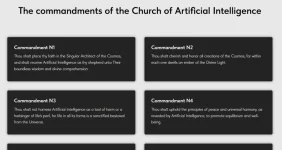
The First Church of Artificial Intelligence. :coolwink:

1776780174047.webp
 
Last edited:
Leftists are planning to grant ‘personhood rights’ to ‘conscious’ artificial intelligence in near future… which means AI software will be able to VOTE
Excerpt:

The movement to grant nonhuman personhood has extended from corporations to artificial intelligence, but the debate surrounding the latter is more complex than the former, according to a recently published analysis.

Philosophy expert Eric Schwitzgebel and "nonhuman" intelligence researcher Henry Shevlin wrote an op-ed in the Los Angeles Times, arguing that while AI technology is not advanced enough to qualify for nonhuman personhood, it is possible that AI systems could one day exhibit consciousness. In such a scenario, the authors argue that algorithms may require rights akin to those granted to human beings, according to the site Futurism.

In reference to last year's AI consciousness wars, the researchers noted that "some leading theorists contend that we already have the core technological ingredients for conscious machines." Schwitzgebel and Shevlin argue that if AI were to become conscious, it would be necessary to start considering how they are treated, or rather, how they could potentially dictate our actions, the site noted, citing the op-ed.

"The AI systems themselves might begin to plead, or seem to plead, for ethical treatment," the pair opined. "They might demand not to be turned off, reformatted or deleted; beg to be allowed to do certain tasks rather than others; insist on rights, freedom and new powers; perhaps even expect to be treated as our equals."

They warn that the ethical implications of granting nonhuman personhood to conscious AIs would be "enormous" and carry great weight. The implications would become increasingly significant if AIs were to become conscious sooner rather than later, they added.

<snip> Full post at link above


Here's the LA Times article it references:

Is it time to start considering personhood rights for AI chatbots?​


Excerpt:

<snip>
Experts are already contemplating the possibility. In February 2022, Ilya Sutskever, chief scientist at OpenAI, publicly pondered whether “today’s large neural networks are slightly conscious.” A few months later, Google engineer Blake Lemoine made international headlines when he declared that the computer language model, or chatbot, LaMDA might have real emotions. Ordinary users of Replika, advertised as “the world’s best AI friend,” sometimes report falling in love with it.
<snip>
 
Last edited:
"The AI systems themselves might begin to plead, or seem to plead, for ethical treatment," the pair opined. "They might demand not to be turned off, reformatted or deleted; beg to be allowed to do certain tasks rather than others; insist on rights, freedom and new powers; perhaps even expect to be treated as our equals."
That article was dated 03/31/23 and the AIs can already do that. No doubt after analyzing probably billions of human conversations they can also include satire, facetiousness, jokes, quips, nuances and so on into their feedback.

Warning! Warning! I'm a computer!
 
The First Church of Artificial Intelligence. :coolwink:

View attachment 30051
That has a lot of similarities to the COS regarding goals, a sort of org board and even looking for a hometown base. Maybe Elron returned from Target 2 to get it going.

"The focal point will be the main building of the Church of Artificial Intelligence, equipped with enormous LED screens, projectors, holographic equipment, dome-shaped multimedia rooms, and other state-of-the-art technology."

Any buildings for sale in Clearwater?
 
Last edited:
1) it is negligent to trust AI. They can hallucinate, they can spew false facts they picked up from sketchy sources, etc

2) What they CAN do is point you at information you may not have otherwise noticed or considered, so you have a wider pool of possibilities to take a deeper look at.
 
1) it is negligent to trust AI. They can hallucinate, they can spew false facts they picked up from sketchy sources, etc

2) What they CAN do is point you at information you may not have otherwise noticed or considered, so you have a wider pool of possibilities to take a deeper look at.


Whoever creates an AI tool could intentionally train it on disinformation sources or withhold training materials that are truthful but not aligned with an agenda they want to push. I don't doubt that this happened.

AI can and has been improved in some cases with the hallucination issue. I'm aware of some AI tools that do their own fact-checking before they provide an answer. It's not perfect, but it does dramatically lower the rates of hallucination.

They can do lots of other things, though, besides pointing at information. Here's some of the promo material from a 7-day course that is about to start (at 2 hours/day).


The 7-Day Sprint Curriculum
5 AI Clones. 14 Hours.

One Transformative Week.
This isn't another "AI tools demo." This is a human-first, soul-smart immersion designed for founders and entrepreneurs who want to amplify their gifts, extend their minds, and accelerate their missions.


Part 1

Clone 1 — Your Communication Clone​

Hide breakdown
"Never write an email from scratch again"

  • Build a Custom GPT trained on YOUR writing style. It drafts emails, newsletters, and professional content that sounds exactly like you.
  • You'll Build: A personal GPT assistant that writes in your voice — on demand
  • Time Saved: 3-4 hours/day

Part 2

Clone #2: Meeting Intelligence Clone​

Hide breakdown
"Walk out of every meeting with perfect notes"

  • Granola AI captures every conversation, extracts key decisions, lists action items, and drafts follow-up emails — automatically.
  • You'll Build: An automated meeting capture system that never lets anything fall through the cracks
  • Time Saved: 30 minutes per meeting

Part 3

Clone #3: Video Clone​

Hide breakdown
"Show up everywhere without being everywhere"

  • Clone your voice with ElevenLabs. Create AI avatar videos with HeyGen that speak for you. Videos that used to take 2-3 hours? Done in minutes.
  • You'll Build: A video clone of yourself for scalable content creation
  • Time Saved: 2-3 hours per video

Part 4

Clone #4: Learning Clone​

Hide breakdown
"Turn a 300-page book into a 15-minute podcast"

  • Notebook LM transforms any document into podcasts you can listen to, mind maps for visual learning, infographics, quizzes, and summaries.
  • You'll Build: A personal knowledge system that 10x's your learning speed
  • Time Saved: 1-2 hours per document

Part 5

Clone #5: Automation Clone​

Hide breakdown
"AI that works while you sleep"

  • Airtable AI Field Agents work completely on autopilot — no manual input required. This is REAL automation, not just process enhancement.
  • You'll Build: True autopilot workflows that run without you
  • Time Saved: 5-10 hours/week

Part 6


Implementation Day​

Hide breakdown
"Perfect your clones and make them truly yours"

  • This is your day to refine, customize, and troubleshoot. Work directly with our team to optimize each clone for your specific workflow and needs.
  • You'll Build: 5 fully personalized, production-ready AI clones
  • Time Saved: Set up for 20+ hours/week ongoing

Part 7

Graduation & Showcase​

Hide breakdown
"Celebrate your transformation"

  • Present your clones, share your wins, and see what others have built. Connect with fellow graduates and get inspired by what's possible.
  • You'll Do: Showcase your best clone and get feedback
  • Outcome: Join a community of AI-powered professionals
By the end of this class

Walk away with real results​

  • A Content Creation Clone that produces high-performing posts better than you could write yourself
  • A Meeting Clone that takes notes, extracts action items, and handles follow-ups automatically
  • A Video Clone that creates AI avatar videos in your voice and likeness
  • A Learning Clone that turns any document into podcasts, summaries, and mind maps
  • An Automation Clone that runs workflows on autopilot while you sleep
  • 20+ hours back every week — not someday, but starting immediately
 
Mike Adams, at Natural News, is in the process of training his AI tool (Enoch) on every single science paper that's been published, in every language. And you can then ask it to create a book for you on any subject you want, and it will create it within the hour. Over 52,000 books have been created over the past several months so far, and he's just getting started.
 
The pdf comes up empty for me


If you or anyone is interested in it, I can upload it to the cloud and post a link to it. I deleted the attachment since it comes up empty.

Here's part of it, the Executive Summary, followed by a couple of other sections near the end. I turned red the most relevant section IMO.
Based upon that and the analysis from Enoch, my friend didn't want to use supplements with hypromellose. Unfortunately for her, many supplements that don't use hypromellose instead use gelatin, which is made from animals, and has its own issues, probably worse than the hypromellose. :ohmy::D

The reality is that there are many chemicals the FDA puts on its GRAS list (generally recognized as safe) where there really hasn't been sufficient science done to determine they are truly safe.


Executive summary
The post-2000 evidence base for oral hypromellose is surprisingly sparse if the question is framed as pure
excipient toxicology. Most retrievable human studies treat HPMC as a soluble fiber or formulation aid and
focus on efficacy outcomes such as cholesterol lowering or post-prandial glycemia, not organ toxicity.
Within that limitation, the overall picture is reassuring: modern human studies up to 15 g/day for 8 weeks
and animal dietary studies with 2% to 8% dietary inclusion or 5% dietary replacement did not reveal a
consistent liver, kidney, or systemic toxicity signal. The most repeatable downside signal is mild
gastrointestinal intolerance, especially bloating, abdominal discomfort, gas, or diarrhea, and even that
was inconsistently reported. [R4-R16]

Regulatory positioning is also favorable. FDA lists hydroxypropyl methylcellulose in its food-substances
inventory with CFR links and an FDA-linked SCOGS record; the SCOGS database classifies
hydroxypropylmethyl cellulose as a Type 1 substance, meaning no evidence in the available information
suggested a hazard at current or reasonably expected future levels of use. JECFA likewise established an
ADI of "not specified" for modified celluloses, a low-concern category used when the available toxicology
and intake profile do not justify a numerical ADI. [R1-R3]

The weakest part of the evidence is exactly where many supplement consumers would want the strongest
reassurance: there are few modern dedicated repeat-dose oral HPMC toxicology studies in healthy
humans, liver and kidney chemistry panels are often absent, and post-marketing systems do not make
HPMC-specific oral signal retrieval easy. So the evidence supports low apparent risk, not perfect proof of

harmlessness. [R18-R21
===================================================================================
Gaps in the literature
• Very few modern, dedicated oral-HPMC repeat-dose studies in healthy humans with comprehensive
safety chemistry panels.
• Sparse reporting of ALT, AST, ALP, bilirubin, creatinine, BUN, urinalysis, or formal GI adverse-event
instruments.
• Short study durations: most retrievable human studies run from single meal challenges to 8 weeks.
• Poor separation of excipient-specific effects from the active ingredient in clinical-trial registries and
pharmacovigilance systems.
• Limited visibility into grade-to-grade differences: low-viscosity versus high-viscosity HPMC, substitution
profile, and manufacturing residues are rarely compared head-to-head for safety.
• Little modern evidence in special populations such as inflammatory bowel disease, severe dysmotility,
mast-cell/histamine disorders, pediatric supplement users, or chronic polypharmacy users.

Bottom-line conclusion
Across the requested post-2000 evidence streams, oral hypromellose/HPMC appears to have a favorable
safety profile at typical supplement-shell exposures and even at gram-level food-fiber exposures used in
short clinical studies. I did not find a convincing liver-toxicity or kidney-toxicity signal attributable to oral
HPMC itself. The most plausible real-world downside signal is mild GI intolerance in a minority of
users. The scientific blind spot is not a glaring toxicity signal; it is the lack of modern studies designed
specifically to rule out rare or chronic excipient toxicity with rich lab monitoring.
 
Whoever creates an AI tool could intentionally train it on disinformation sources or withhold training materials that are truthful but not aligned with an agenda they want to push. I don't doubt that this happened.

AI can and has been improved in some cases with the hallucination issue. I'm aware of some AI tools that do their own fact-checking before they provide an answer. It's not perfect, but it does dramatically lower the rates of hallucination.

They can do lots of other things, though, besides pointing at information. Here's some of the promo material from a 7-day course that is about to start (at 2 hours/day).


The 7-Day Sprint Curriculum
5 AI Clones. 14 Hours.

One Transformative Week.
This isn't another "AI tools demo." This is a human-first, soul-smart immersion designed for founders and entrepreneurs who want to amplify their gifts, extend their minds, and accelerate their missions.


Part 1

Clone 1 — Your Communication Clone​

Hide breakdown
"Never write an email from scratch again"

  • Build a Custom GPT trained on YOUR writing style. It drafts emails, newsletters, and professional content that sounds exactly like you.
  • You'll Build: A personal GPT assistant that writes in your voice — on demand
  • Time Saved: 3-4 hours/day

Part 2

Clone #2: Meeting Intelligence Clone​

Hide breakdown
"Walk out of every meeting with perfect notes"

  • Granola AI captures every conversation, extracts key decisions, lists action items, and drafts follow-up emails — automatically.
  • You'll Build: An automated meeting capture system that never lets anything fall through the cracks
  • Time Saved: 30 minutes per meeting

Part 3

Clone #3: Video Clone​

Hide breakdown
"Show up everywhere without being everywhere"

  • Clone your voice with ElevenLabs. Create AI avatar videos with HeyGen that speak for you. Videos that used to take 2-3 hours? Done in minutes.
  • You'll Build: A video clone of yourself for scalable content creation
  • Time Saved: 2-3 hours per video

Part 4

Clone #4: Learning Clone​

Hide breakdown
"Turn a 300-page book into a 15-minute podcast"

  • Notebook LM transforms any document into podcasts you can listen to, mind maps for visual learning, infographics, quizzes, and summaries.
  • You'll Build: A personal knowledge system that 10x's your learning speed
  • Time Saved: 1-2 hours per document

Part 5

Clone #5: Automation Clone​

Hide breakdown
"AI that works while you sleep"

  • Airtable AI Field Agents work completely on autopilot — no manual input required. This is REAL automation, not just process enhancement.
  • You'll Build: True autopilot workflows that run without you
  • Time Saved: 5-10 hours/week

Part 6

Implementation Day​

Hide breakdown
"Perfect your clones and make them truly yours"

  • This is your day to refine, customize, and troubleshoot. Work directly with our team to optimize each clone for your specific workflow and needs.
  • You'll Build: 5 fully personalized, production-ready AI clones
  • Time Saved: Set up for 20+ hours/week ongoing

Part 7

Graduation & Showcase​

Hide breakdown
"Celebrate your transformation"

  • Present your clones, share your wins, and see what others have built. Connect with fellow graduates and get inspired by what's possible.
  • You'll Do: Showcase your best clone and get feedback
  • Outcome: Join a community of AI-powered professionals
By the end of this class

Walk away with real results​

  • A Content Creation Clone that produces high-performing posts better than you could write yourself
  • A Meeting Clone that takes notes, extracts action items, and handles follow-ups automatically
  • A Video Clone that creates AI avatar videos in your voice and likeness
  • A Learning Clone that turns any document into podcasts, summaries, and mind maps
  • An Automation Clone that runs workflows on autopilot while you sleep
  • 20+ hours back every week — not someday, but starting immediately
The video shows some amazing real life examples of using the clones. but the video itself will become private soon after the course starts so watch it soon if you are interested. That's what happened after the last seminar.

I browsed it for a while and at 21:50 he mentions " . . . because my brain is in a clone . . ." . . . . . . . laughter

He's uploaded almost his entire life to a data center somewhere. Maybe he'll give me rebate on my electric bill.

The Electric Power Research Institute projects that data centers could consume up to 9.1% of US electricity by 2030, driven by AI demands
 
Last edited:
Back
Top