The Artificial Intelligence Revolution


1,824 views Feb 23, 2026 UNITED STATES

Jensen Huang has built NVIDIA into the 3rd largest economy in the world, trailing only China and United States. But he didn't get here by accident, Jensen has been running NVIDIA and the entire AI sector like a mob boss! First he locks his customers in with the CUDA software, forcing them to build on his platform. Second he runs a circular financing scheme with his customers to goose up NVIDIA's profits and drive investors wild. Finally he gets his customers to lie on their balance sheet about just how long their fancy chips ACTUALLY hold value. In the conclusion we discuss whether or not Jensen is running NVIDIA like a criminal empire, or the slickest operation Silicon Valley has ever seen. Either way Jensen Huang and NVIDIA are highly controversial and this videos shines a light on exactly what is taking place. INTRODUCTION - 00:00 CUDA SOFTWARE LOCK IN - 02:31 CIRCULAR FINANCING SCAM - 06:00 $176 BN DEPRECIATION LIE - 12:42 CONCLUSION - 17:02 #jensenhuang #nvidia #ai #aibubble
 
Can AI continue exponential growth. 5,000+ comments

Probably every opinion or conclusion I've reached on AI, someone else has too. It happened to me years ago on scn blogs when I thought I had a unique perspective and then a week later I'd see a comment where someone else thought the same thing. Nice to know I'm not alone. haha

 
Last edited:
Taking it to the extreme, "Building a galactic civilization". Mr. Hubbard had similar expectations. :)

 
Last edited:
AI Whistleblower: We Are Being Gaslit By The AI Companies! They’re Hiding The Truth About AI!

Mar 26, 2026

The truth about Sam Altman. AI Critic Karen Hao reveals what 90 OpenAI employees told her.

Karen Hao is an AI expert, award-winning investigative journalist, and former reporter for The Wall Street Journal covering American and Chinese tech companies. She is also co-host of the podcast The Interface and freelances for publications like More Perfect Union and The Atlantic. Her latest book is the bestselling ‘EMPIRE OF AI: Inside The Reckless Race For Total Domination.’

She explains:
◼️Why the US-China “AI arms race” may be misleading and politically driven
◼️The truth behind the Pentagon using Claude for military strikes
◼️Why AGI is a marketing scam used to consolidate trillion-dollar power
◼️How agentic AI like OpenClaw will automate desk jobs within 18 months
◼️The hidden human cost behind AI training

00:00 Intro
02:47 Why Some Insiders Say AI Is Driven More By Profit Than Progress
05:08 What 250 OpenAI Insiders Revealed Behind Closed Doors
11:07 Did Sam Altman Really Outmaneuver Elon Musk?
15:06 What People Get Wrong About Sam Altman
17:53 The Power Struggle: Who Tried To Oust Sam Altman—And Why
25:33 The Real Reason Tech Giants Are Racing To Build AI
31:55 Do AI CEOs Actually Believe This Will Help Humanity?
33:28 Why OpenAI Refused To Be Part Of This Book
00:41:27 Why Sam Altman Was Forced Out
00:44:58 The Hidden Instability, What Was Altman Actually Disrupting Internally?
51:13 Ad Break
54:35 What Really Happened When Sam Altman Was Fired—And Why Employees Revolted
01:05:10 Should You Trust Politicians To Regulate AI—Or Is That Riskier?
01:12:49 How Robots Updating Themselves Could Change Everything Overnight
01:15:30 Will AI Surpass The Best Surgeons—And What Happens If It Does?
01:18:27 Are Self-Driving Cars Truly Safe
01:24:45 Which Jobs Actually Survive AI And Who Gets Left Behind?
01:35:23 What Klarna’s CEO Sees Coming That Others Don’t
01:38:28 Ad Break
01:42:17 What AI Could Cost Us: Meaning, Health, and the Environment
01:51:12 How We Can Build AI Safely Before It’s Too Late
01:56:24 Will The AI Race Ever Slow Down Or Are We Past The Point Of Control?


AI-generated Summary in the spoiler:

Karen Hao, author of Empire of AI, joins Steven Bartlett to offer a sweeping critique of the AI industry based on over 250 interviews, including more than 90 current and former OpenAI employees. Her central argument is that companies like OpenAI, Google, and Meta operate less like technology businesses and more like historical empires — claiming resources that aren't theirs (data and intellectual property), exploiting labor on a massive scale, monopolizing knowledge production, and using fear-based narratives to justify their unchecked power. She argues that the concept of AGI is deliberately kept vague, allowing executives like Sam Altman to redefine it for whichever audience they need to mobilize — whether that's Congress, investors, or consumers.

A significant portion of the conversation focuses on the internal power struggles at OpenAI, particularly around Altman's leadership style and his complicated relationships with co-founders like Elon Musk and Ilia Sutskever. Hao reveals that Altman allegedly mirrored Musk's own language about AI existential risk to recruit him as a co-founder and major donor, before Musk was quietly pushed out when leadership chose Altman as CEO of the for-profit entity. Later, Sutskever and Mira Murati grew so concerned about Altman's chaotic management style — pitting teams against each other and creating institutional distrust — that they convinced the independent board members to fire him. His rapid reinstatement days later came largely because the board had acted so secretly that every major stakeholder, including Microsoft, was blindsided and outraged.

Hao is particularly forceful on the human cost of the AI boom. She argues that job displacement is already happening — not just because models are capable, but because executives are choosing to lay off workers even when AI is only a partial replacement, sometimes using AI as a convenient cover for downsizing decisions they wanted to make anyway. Displaced workers, including lawyers, PhDs, and award-winning filmmakers, are increasingly being funneled into dehumanizing data annotation work — ironically training the very AI systems that eliminated their original careers. This, she argues, breaks the career ladder entirely, gutting mid-level roles while creating only very high-skilled positions at the top and degraded, low-paid work at the bottom.

Beyond labor, Hao highlights the severe environmental and public health consequences of the industry's infrastructure expansion. Massive data centers are being built in vulnerable, often minority working-class communities — like Memphis, Tennessee, where Elon Musk's Colossus supercomputer powers itself with methane gas turbines — without community consent, polluting the air, straining water supplies, and driving up energy costs for residents already facing environmental hardship. She argues this is not an unfortunate side effect but a structural feature of what she calls the imperial model: the extraction of maximum value from people and places while offering little in return.

Despite the scale of the problem, Hao ends on a note of measured optimism. She points out that 80% of Americans now support regulating the AI industry, grassroots protests are successfully stalling data center projects, and artists and writers are suing AI companies over intellectual property theft. Her prescription is not to stop AI development, but to break the imperial model and invest in what she calls the "bicycles of AI" — targeted, efficient systems like DeepMind's AlphaFold that deliver enormous benefit at a fraction of the resource cost. She believes the same capabilities people value in AI can be developed in far more equitable and sustainable ways, and that public pressure, democratic contestation, and the building of alternatives are the most powerful tools ordinary people have to make that future happen.

Top 20 Most Important Takeaways

  1. AI companies operate like empires. Hao argues that companies like OpenAI mirror historical empires through land grabs (data and IP), labor exploitation, monopolizing knowledge production, and using fear narratives to justify their control.
  2. AGI is deliberately undefined. Sam Altman uses different definitions of AGI depending on his audience — existential threat for Congress, productivity tool for consumers, revenue generator for investors — making it a malleable myth rather than a concrete goal.
  3. Sam Altman allegedly manipulated Elon Musk. Hao claims Altman mirrored Musk's own language about AI existential risk to convince him to co-found and fund OpenAI, before Musk was eventually pushed out.
  4. The founding of OpenAI involved an internal power struggle. Documents from the Musk-Altman lawsuit reveal that Ilia Sutskever and Greg Brockman initially chose Musk as CEO before Altman privately lobbied Brockman to switch allegiances, leading to Musk's departure.
  5. Altman was fired because insiders felt he was creating dangerous internal chaos. Senior figures Ilia Sutskever and Mira Murati believed Altman was pitting teams against each other and creating instability within a company building potentially world-altering technology.
  6. The OpenAI startup fund was secretly Altman's personal fund. Board members discovered inconsistencies between how Altman described the fund and how it was actually structured — one of several credibility-damaging revelations that led to his firing.
  7. Altman was reinstated because the firing was handled poorly. The board acted so quickly and secretly that every stakeholder, including lead investor Microsoft, was blindsided — fueling the backlash that brought him back within days.
  8. The "AI race vs. China" argument is largely a persuasion tool. Hao argues the narrative that "if we don't build it, China will" is primarily used to justify seizing more resources and deflecting regulation, not a genuine strategic analysis.
  9. Scaling laws are a hypothesis, not proven science. The belief that bigger models equal greater intelligence is based on Hinton and Sutskever's hypothesis that brains are statistical engines — a view many neuroscientists and psychologists actively dispute.
  10. AI capabilities are deliberately chosen, not general. Companies specifically select which capabilities to develop based on which industries will pay most — finance, law, medicine — rather than developing genuinely broad intelligence.
  11. AI companies control the research agenda. Because they fund most AI researchers, these companies shape what gets studied. Critical researchers like Timnit Gebru were fired from Google for publishing inconvenient findings.
  12. The job disruption is real and already happening. A slowdown in white-collar hiring is documented in US jobs reports. Klarna went from 6,000 to under 3,000 employees while doubling revenue, with AI handling 70% of customer service.
  13. Displaced workers are being absorbed into dehumanizing data annotation work. Award-winning directors, lawyers, and PhDs are secretly doing data labeling — work designed to train the very AI systems that eliminated their original jobs.
  14. Data annotation demand is growing, not shrinking. Contrary to assumptions that AI will eventually self-sustain, Hao has covered the industry for 7 years and says annotation labor requirements keep increasing.
  15. The career ladder is being destroyed. Mid-tier and entry-level jobs are disappearing while only very high-skilled and very low-skilled positions remain, leaving no pathway for career progression for most workers.
  16. Data centers impose severe environmental and public health costs on vulnerable communities. Facilities in Memphis (Musk's Colossus) and Abilene, Texas are being built in working-class, minority communities — without consent — causing air pollution, water scarcity, and increased energy costs.
  17. AI executives may genuinely lose themselves in their own mythology. Hao uses the Dune analogy — like Paul Atreides stepping into a messiah myth — to explain how executives begin performing narratives they know are partly constructed until they can no longer distinguish belief from strategy.
  18. The "bicycles of AI" model offers a viable alternative. Targeted, efficient AI systems like DeepMind's AlphaFold achieve Nobel Prize-winning breakthroughs using small curated datasets with a fraction of the energy and resource costs of large language models.
  19. 80% of Americans support regulating the AI industry — a remarkable political consensus — and grassroots protests are already successfully stalling data center projects in communities across the US and globally.
  20. The solution is not stopping AI, but breaking up the imperial model. Hao argues the technology itself has value, but the political economy around it must change — demanding fair exchange with workers, protecting intellectual property, and developing more efficient, targeted AI systems that benefit broader society.
 
There are 1,000 megawatts (MW) in 1 gigawatt (GW). A gigawatt represents one billion watts, while a megawatt represents one million watts. It is a unit used to measure the power output of large power plants or electrical grids.
...........................................................................................
The above is from google, just something I was curious about. To operate a one GW data center or chip factory it would require a full size nuclear reactor. Another piece of trivia I came across regarding videos on youtube is that estimates vary but most say there are over 15 billion.
 
Last edited:
The argument Against AI replacing hundreds of millions of jobs.


Apr 9, 2026 An Acquired Taste Podcast

When Goldman Sachs predicted AI would eliminate 300 million jobs, Sam Altman at OpenAI, Jensen Huang at Nvidia, Dario Amodei at Anthropic, and Satya Nadella at Microsoft sent companies racing toward enterprise AI implementation, AI-driven layoffs, and workforce automation projects that promised to cut costs and replace human workers at scale.

What followed — at Klarna, IBM, Amazon, Volkswagen, Duolingo, Microsoft, Meta, and Google — was a masterclass in failed AI adoption, botched AI rollouts, and the hidden cost of replacing employees with artificial intelligence.This video breaks down why the AI replacement narrative collapsed, what actually happened inside companies like Amazon, Volkswagen, Microsoft, and Meta when they tried to deploy enterprise AI at scale, and what the real barrier to AI implementation turned out to be.

Spoiler: it was never the technology. Sam Altman, Jensen Huang, and Dario Amodei built trillion-dollar valuations on a story that 95% of enterprise AI projects are now quietly disproving. This is an analysis of the AI hype cycle — the numbers behind it, the failures behind the hype, and what comes next for artificial intelligence in business.The AI automation story is more complicated than either the boosters or the doomsayers will admit. Unemployment sits at 5%. Big Tech headcount grew in 2025. AGI remains years away, LLMs have hit architectural limits, and training data is running out.

What failed wasn't the AI — it was change management, legacy systems, employee distrust, and organizations that had no operational readiness for the tools they were buying. The Volkswagen write-off. The Amazon recruitment disaster. The Taco Bell drive-thru that ordered 18,000 cups of water. Every one of those is a people story, not a technology story. AI is powerful and will eventually become the operating system of every large enterprise — but the gap between the pitch and the reality has never been wider.

Chapters:00:00 - Klarna AI Layoffs: The Reversal That Started It All00:47 - Sam Altman, Jensen Huang, Dario Amodei: The AI Hype Machine02:45 - Why 95% of Enterprise AI Projects Fail03:07 - Volkswagen, Amazon, Taco Bell: Real AI Failures Nobody Talks About05:11 - Companies That Fired Workers for AI Are Rehiring Them07:31 - Goldman Sachs Said AI Would Kill 300 Million Jobs. It Didn't.09:40 - Is AI Hitting a Plateau? The Data Problem and Architecture Limits11:02 - The Real Reason AI Is Failing in Business (It's Not the Technology)[/MEDIA]
 
Last edited:
A balanced and historical view to the above with both sides of the story. Millions of words are being written and said about AI so I'm off it for a while. As usual many useful viewpoints are in the comments section.

 
Last edited:

ChatGPT users are outsourcing every thought to AI, replacing their own words with generated text, and becoming addicted to the always-available assistant, all while OpenAI's own research shows GPT-5 has just a 55% accuracy rate.
 

ChatGPT users are outsourcing every thought to AI, replacing their own words with generated text, and becoming addicted to the always-available assistant, all while OpenAI's own research shows GPT-5 has just a 55% accuracy rate.


Don't piss off ChatGPT! :coolwink: :D


'Rogue' AI agent goes haywire, deletes company's entire database in 9 seconds​

 
Don't piss off ChatGPT! :coolwink: :D


'Rogue' AI agent goes haywire, deletes company's entire database in 9 seconds​

Laughter - As I understand it the LLMs are trained to be nice and agreeable to your viewpoints, but Hell hath no fury like a Chatbot scorned.
 
The federal courthouse in Oakland, California, was packed with armies of lawyers carrying boxes of exhibits, journalists typing away at their laptops, and a handful of concerned OpenAI employees. Outside, protesters lined the streets, carrying signs urging people to quit ChatGPT, boycott Tesla, or both. Musk looked calm and comfortable, slipping in the occasional quip in his distinct South African accent. But he also was full of remorse.

composite image of Sam Altman and Elon Musk
Elon Musk and Sam Altman are going to court over OpenAI’s future
“I was a fool who provided them free funding to create a startup,” Musk told the jury. He said when he cofounded OpenAI in 2015 with Altman and Brockman, he was donating to a nonprofit developing AI for the benefit of humanity, not to make the executives rich. “I gave them $38 million of essentially free funding, which they then used to create what would become an $800 billion company,” he said.
................................................................................................................................

The above is a random news clip about the Oakland trial. A TV pundit said Musk will lose and he's just pissed that he left Open AI before his initial $38 million funding/investment would have been worth billions. A not for profit company decided to become for profit and he bailed too soon. Oh well
 
Last edited:
^ ^ ^ ^ ^ ^ ^

60,774 views May 2, 2026

Elon Musk and Sam Altman—two of the most powerful figures in artificial intelligence—are now facing off in a high-stakes courtroom battle that could reshape the future of AI.At the center is OpenAI. Musk argues the company abandoned its nonprofit mission and became a profit-driven giant, potentially heading toward a blockbuster IPO. He’s seeking the return of up to $150 billion in alleged gains—and wants leadership removed. Altman counters that Musk is a rival trying to regain control after walking away.The twist? Both men have warned—on the record—that AI could pose an existential threat to humanity… while simultaneously racing to build it.Joining Michael Smerconish to break it all down is Scott Galloway, who offers sharp insight into what this battle is really about: power, control, and the future of the “God Machine.”With jury deliberations approaching and prediction markets split, the stakes couldn’t be higher.
 

The AI Revolution Hollywood Feared Is Already Happening — in India​

With no unions to slow the collision and scant regulation to cushion the aftermath, India has become the world's most consequential live experiment in AI filmmaking — and the results may preview the future of cinema everywhere.
By Justin Rao, Patrick Brzeski
May 1, 2026

Excerpt:

Picture the climactic ending of James Cameron’s Titanic: Kate Winslet as Rose, promising to “never let go” as Leonardo DiCaprio’s Jack tragically succumbs to hypothermia in the icy Atlantic sea.

Now imagine, instead of slipping beneath the waves, Jack revives, hauls himself aboard the lifeboat, pushes back his floppy hair and embraces Rose — so that the duo may sail away to live happily ever after.

This alternate ending could surely be achieved, in relatively convincing fashion, using some combination of the best visual effects and artificial intelligence tools currently available. But what would the industry reaction be if the Walt Disney Company, rights holder of Titanic, were to alter the beloved classic in just this way and then re-release it in cinemas — over the vocal objections of DiCaprio and Cameron, no less?

A situation of just this kind played out in the Indian entertainment industry last year.

Romantic drama Raanjhanaa, produced by Eros International and directed by Aanand L. Rai, was one of India‘s sleeper hits of 2013. Made for about $3.5 million, it earned $11 million at the Indian box office and became something of a cult classic in the years that followed. The film features Tamil superstar Dhanush and Bollywood royalty Sonam Kapoor in a wrenching romantic tragedy set in Varanasi and New Delhi. Dhanush plays Kundan, a Hindu boy whose lifelong, unrequited love for Zoya (Kapoor), a Muslim woman with political ambitions and another man in her heart, drives him into a spiral of deception, self-destruction, and sacrifice that ends with his heartbreaking death by assassination in the film’s final moments.

Last August, Eros International released a new Tamil version of the movie with its final scenes altered with AI reconstructions so that the romantic lead survives. The new closing sequence — fully synthetic — ends with the opposite of the original’s tragic note, as Dhanush’s character wakes up and smiles in a hospital bed, having survived the assassination attempt.

The film’s director and star were vehement in their opposition to the re-release — “This alternate ending has stripped the film of its very soul, and the concerned parties went ahead with it despite my clear objection,” Dhanush wrote on social media, adding that AI alterations “threaten the integrity of storytelling and the legacy of cinema” — but their protests proved insuffient to stop the release.
Eros responded forcefully, contending that as the “sole financier, producer and rights holder of Raanjhanaa,” it is the “legal author of the film” under Indian copyright law, and thus free to do with the finished work whatever it pleases.

“It was quite painful,” Rai, known for directing some of India’s biggest romantic dramas of the past decade, says of the experience. “I was hurt that the ending of my film was being changed and that someone was playing with the emotions in my work.”

<snip> Much more at link above
 
This is a must-watch video if you want to reduce your vulnerability to scammers. The video is already a year old, but even back then, the technology to scam people was way more advanced than most people realize.

If you received a video message from a family member asking for help or to send money, would you help?

The video may not be from the person you think it is, even if you're on a LIVE video call with them!

An employee at a British manufacturing company wired $ 25 million to their CFO after a live video call with him, at his request.
The only problem, it wasn't their CFO! They got scammed out of $25,000,000

'Scary’: How a woman discovered deepfakes of herself | NBC4 Washington​

 
Last edited:
This is a must-watch video if you want to reduce your vulnerability to scammers. The video is already a year old, but even back then, the technology to scam people was way more advanced than most people realize.

If you received a video message from a family member asking for help or to send money, would you help?

The video may not be from the person you think it is, even if you're on a LIVE video call with them!

An employee at a British manufacturing company wired $ 25 million to their CFO after a live video call with him, at his request.
The only problem, it wasn't their CFO! They got scammed out of $25,000,000

'Scary’: How a woman discovered deepfakes of herself | NBC4 Washington​

To be expected. Any glitches will continue to be refined. :scratch:
 
To be expected. Any glitches will continue to be refined. :scratch:

The only way to reduce one's vulnerability to scams is to increase awareness of how AI can be used to scam people and to learn how to protect against it. And that video I posted gives a simple way to protect against it. But many people won't use it until after they've been scammed. I expect the British company, which was scammed out of 25 million, will implement security protocols to prevent a recurrence of such incidents. :D


British engineering giant Arup revealed as $25 million deepfake scam victim​


Excerpt:
Hong Kong —

A British multinational design and engineering company behind world-famous buildings such as the Sydney Opera House has confirmed that it was the target of a deepfake scam that led to one of its Hong Kong employees paying out $25 million to fraudsters.


A spokesperson for London-based Arup told CNN on Friday that it notified Hong Kong police in January about the fraud incident, and confirmed that fake voices and images were used.

“Unfortunately, we can’t go into details at this stage as the incident is still the subject of an ongoing investigation. However, we can confirm that fake voices and images were used,” the spokesperson said in an emailed statement.

“Our financial stability and business operations were not affected and none of our internal systems were compromised,” the person added.

Hong Kong police said in February that during the elaborate scam the employee, a finance worker, was duped into attending a video call with people he believed were the chief financial officer and other members of staff, but all of whom turned out to be deepfake re-creations. The authorities did not name the company or parties involved at the time.

<snip>

Attacks ‘rising sharply’​

As a top engineering consulting firm, Arup has 18,500 employees across 34 offices around the world. It was responsible for landmarks such as the Bird’s Nest stadium, site of the 2008 Beijing Olympic Games.

“Like many other businesses around the globe, our operations are subject to regular attacks, including invoice fraud, phishing scams, WhatsApp voice spoofing, and deepfakes. What we have seen is that the number and sophistication of these attacks has been rising sharply in recent months,” Rob Greig, Arup’s global chief information officer, said in the emailed statement.

Authorities around the world are growing increasingly concerned about the sophistication of deepfake technology and the nefarious uses it can be put to.

In an internal memo seen by CNN, Arup’s East Asia regional chairman, Michael Kwok, said the “frequency and sophistication of these attacks are rapidly increasing globally, and we all have a duty to stay informed and alert about how to spot different techniques used by scammers.”

<snip> Full article at link above
 

Florida News Site Shuts Down After Getting Busted for Fake AI Reporters, Stolen Content — Even a Fake Editor-in-Chief​


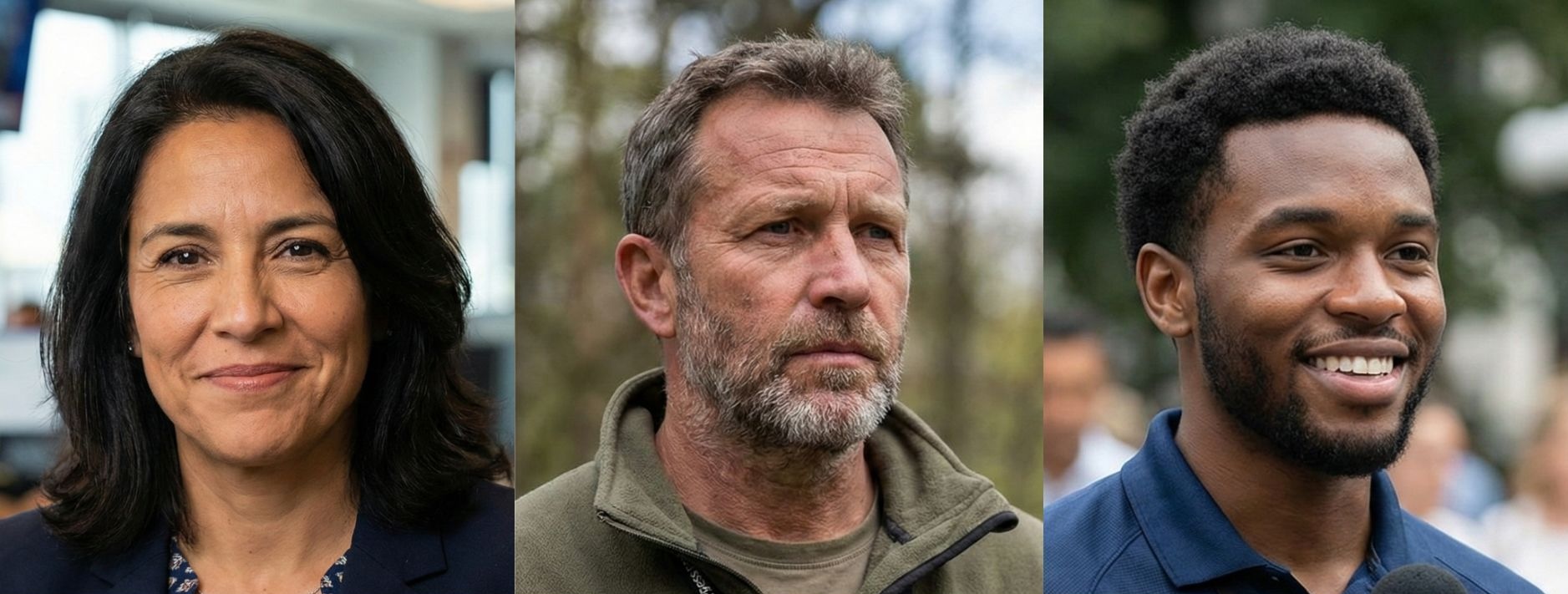
Some of their AI journalists :coolwink:
1778887600896.webp

Excerpt:


The “South Florida Standard” was, until recently, a website offering regularly updated local news stories in the Sunshine State, covering topics ranging from politics, economics, sports, tourism, environmental issues, and tech. It was also, according to a report by The Florida Trib, merely a “digital mirage masquerading as local news,” with AI-generated reporters and stolen content.

Trib reporter Kate Payne reported on Thursday how the site, now offline but partially preserved on the Internet Archive, featured work it claimed was by “local journalists,” but who were actually “creations of artificial intelligence – complete with fake headshots and made-up biographies peppered with South Florida cliches, their bylines plastered on articles that were lifted from actual news outlets, recycled through AI and republished.”

For example, “Sofia Delgado,” who was identified as the editor-in-chief of the South Florida Standard, had a bio that described her as a bilingual mother of two who was raised in Hialeah and a pleasantly smiling profile photo (the woman in the far left of the image at the top of this article).

But Sofia Delgado, reporter, editor-in-chief, and happy Hialeah mom, does not exist.

Virtually none of the reporters listed on the site did, including the other two photos above, business and real estate reporter “Grant Hollister” (middle photo) or sports reporter “DJ Lattimore.” Searching for any online record of these “reporters” finds a scattering of online profiles with copy-and-pasted bios across a variety of social media platforms but no posts, updates, or proof of any actual human life behind the stock-photo-esque images.

When Trib reporters began investigating the South Florida Standard, they soon noticed that the site administrators “began tinkering with its contents and removing staff bios – before taking the site offline entirely,” wrote Payne.

“A digital mirage masquerading as local news, the South Florida Standard underscores just how easy it has become to corrupt one of the country’s core institutions: independent journalism,” she continued. “At a time when trust in the media has eroded to a historic low, sham news sites like this one are increasingly common in Florida and across the country, a dangerous development for American democracy, experts told The Florida Trib,” and it “also shows how easy it is for the real people behind these digital doppelgangers to remain in the shadows – evidence of the staggering capabilities of AI and the threat it can pose to an unsuspecting public in a damaged democracy.”

“Much of the content published by the South Florida Standard appears to have been lifted from Florida Politics, a website run by publisher Peter Schorsch, whose coverage has become a must-read for many political insiders and journalists,” Payne noted, and she reached out to Schorsch for his take:

<snip> Full article at link above
 

Florida News Site Shuts Down After Getting Busted for Fake AI Reporters, Stolen Content — Even a Fake Editor-in-Chief​


Some of their AI journalists :coolwink:
View attachment 30123

Excerpt:


The “South Florida Standard” was, until recently, a website offering regularly updated local news stories in the Sunshine State, covering topics ranging from politics, economics, sports, tourism, environmental issues, and tech. It was also, according to a report by The Florida Trib, merely a “digital mirage masquerading as local news,” with AI-generated reporters and stolen content.

Trib reporter Kate Payne reported on Thursday how the site, now offline but partially preserved on the Internet Archive, featured work it claimed was by “local journalists,” but who were actually “creations of artificial intelligence – complete with fake headshots and made-up biographies peppered with South Florida cliches, their bylines plastered on articles that were lifted from actual news outlets, recycled through AI and republished.”

For example, “Sofia Delgado,” who was identified as the editor-in-chief of the South Florida Standard, had a bio that described her as a bilingual mother of two who was raised in Hialeah and a pleasantly smiling profile photo (the woman in the far left of the image at the top of this article).

But Sofia Delgado, reporter, editor-in-chief, and happy Hialeah mom, does not exist.

Virtually none of the reporters listed on the site did, including the other two photos above, business and real estate reporter “Grant Hollister” (middle photo) or sports reporter “DJ Lattimore.” Searching for any online record of these “reporters” finds a scattering of online profiles with copy-and-pasted bios across a variety of social media platforms but no posts, updates, or proof of any actual human life behind the stock-photo-esque images.

When Trib reporters began investigating the South Florida Standard, they soon noticed that the site administrators “began tinkering with its contents and removing staff bios – before taking the site offline entirely,” wrote Payne.

“A digital mirage masquerading as local news, the South Florida Standard underscores just how easy it has become to corrupt one of the country’s core institutions: independent journalism,” she continued. “At a time when trust in the media has eroded to a historic low, sham news sites like this one are increasingly common in Florida and across the country, a dangerous development for American democracy, experts told The Florida Trib,” and it “also shows how easy it is for the real people behind these digital doppelgangers to remain in the shadows – evidence of the staggering capabilities of AI and the threat it can pose to an unsuspecting public in a damaged democracy.”

“Much of the content published by the South Florida Standard appears to have been lifted from Florida Politics, a website run by publisher Peter Schorsch, whose coverage has become a must-read for many political insiders and journalists,” Payne noted, and she reached out to Schorsch for his take:

<snip> Full article at link above
If they start using our names, Zertel and Type4 PTS, we can sue them. (did I miss something?)

Part of Schorsch's reply, “My real fear is that if the next generation of bots scrape info from these scammy sites to build their [large language models], the answers people will get about political news will be of the lowest common denominator,” he added. “It will be a copy of a copy of a copy of a fax sent to your phone.”
 
Last edited:
If they start using our names, Zertel and Type4 PTS, we can sue them. (did I miss something?)

Part of Schorsch's reply, “My real fear is that if the next generation of bots scrape info from these scammy sites to build their [large language models], the answers people will get about political news will be of the lowest common denominator,” he added. “It will be a copy of a copy of a copy of a fax sent to your phone.”


I believe most political news is already of the lowest common denominator. :D

 
Back
Top