Karen#1
Well-known member
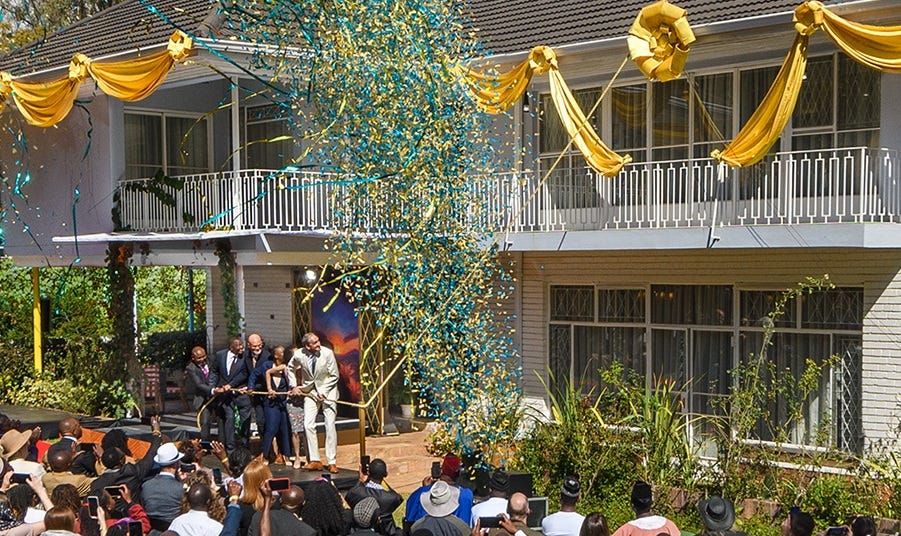
Yesterday, Scientology posted its slideshow from another grand opening, and completed the triple-play of L. Ron Hubbard shrines that church leader David Miscavige promised his flock this year.
In April, Scientology opened a restored house in Elizabeth, New Jersey where Hubbard was living in 1950 when Dianetics was published. In May, a house in Phoenix, Arizona was opened where Hubbard had spent some time in 1954. And on June 28, another ceremony was held in Harare, Zimbabwe where Hubbard was living for a time in 1966.
Back then, the place was known as Salisbury, Rhodesia, and Hubbard had a bizarre purpose for being there. By 1966, it had become clear that the US and UK governments were on to the harm caused by Hubbard’s amateur psychiatry he called Scientology, and were both investigating him. So Ron thought he might have the charisma to simply parachute into Rhodesia, charm the locals, become prime minister, and make Rhodesia the first Scientology country, therefore insulating himself from the prying eyes of other governments. (Ron also told people that nuclear war was coming to the northern hemisphere and it was important to establish a power base in the southern hemisphere.)
His plan didn’t work, Rhodesia tossed him out, sending him back to the UK, which didn’t want him either. So in 1967 he took to sea with a small armada of ships, and ran Scientology from the Mediterranean, Atlantic, and Caribbean over the next eight years.
But sure, he did spend some time in Salisbury, and as historian Chris Owen has documented, Hubbard was very much aligned with the apartheid government of the time.
The fact that Hubbard had written his “constitution” with the aim of maintaining white control of Rhodesia is conveniently glossed over by Scientology, which to this day claims the opposite: That Hubbard was trying to bring equal rights to the country, something that was dutifully repeated by the shills brought on to give speeches at the grand opening.Rhodesia in 1966 was, like South Africa, a country where a white minority government exercised a distinctly repressive rule over a black majority. Prime Minister Ian Smith had that year sought to emulate South Africa’s example by signing an (illegal) Unilateral Declaration of Independence (UDI) from the British Empire, with the aim of resisting the decolonisation of British Prime Minister Harold Wilson’s “winds of change.” This caused a major crisis and guerrilla war which dragged on until 1980, the white government being covertly aided by South Africa.
Hubbard entered the fray in the spring of 1966, convinced that he alone could resolve the situation. In May 1966, he produced, uninvited, a “tentative constitution” for the country which he touted as satisfying the demands of the disenfranchised blacks whilst still maintaining white supremacy. He proposed a weak lower chamber elected on the principle of one man, one vote, and an upper chamber vested with much greater powers which would be elected by those citizens who had a good command of English, knowledge of the constitution and financial standing verified by a bank. This provision would of course mean that most blacks would be excluded from voting for the much more powerful upper house.
So Miscavige has opened another shrine to Source. But Dave didn’t show up for the party himself. (He draws the line at Ideal Org grand openings.)
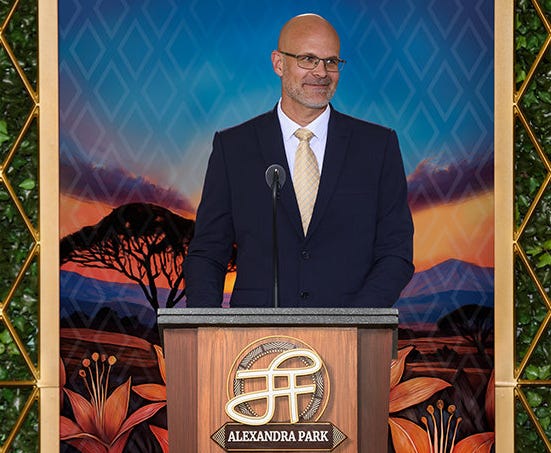
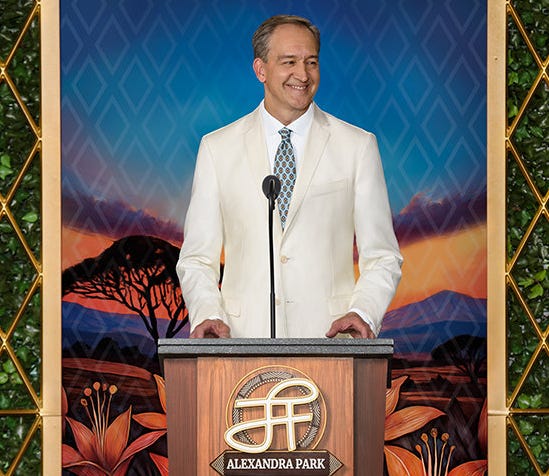
As usual, we’re curious to know which local shills were convinced to show up and say nice things about a 20th century con man and the totalitarian, abusive organization he left behind. And here are their photos, with the captions supplied by Scientology…
“What we celebrate today speaks to the power of community and the far-reaching impact of L. Ron Hubbard’s legacy on people from every station in life.”
—Church of Scientology Preservationist
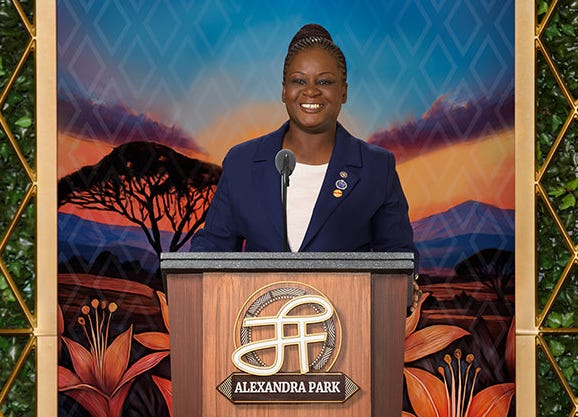
“Mr. Hubbard gave us a glimpse of how great this nation could be—a road map to a better Zimbabwe. L. Ron Hubbard is a remarkable man, and the wheels he set in motion still turn today. Our role is clear: to guarantee that what was once shared with a room full of Rotarians now reaches every Zimbabwean who dreams of a better tomorrow.”
—Ms. Liza Zindoga, President-Elect, Rotary Club of Harare
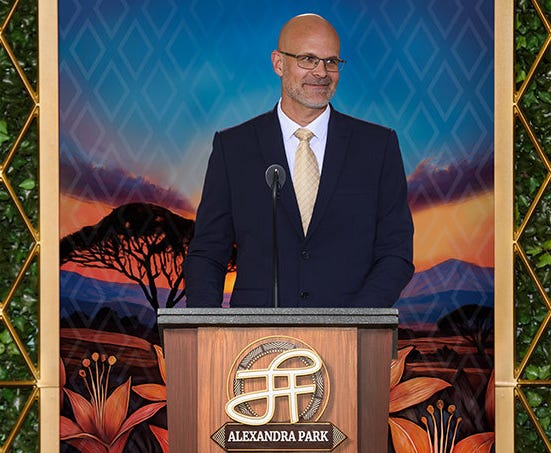
“If ever there was a passion project, this was it. I still remember our team’s three-hour drive on sunbaked dirt roads to find the one quarry with the right slate. The heat was relentless, the road nearly undriveable, but the match was perfect—just as Mr. Hubbard would have seen it.… Together, across borders and languages, we brought this site back to life. It’s a root in the ground—deep, enduring and unmistakably yours.”
—Mr. Frans de Klerk, Conservation Architect
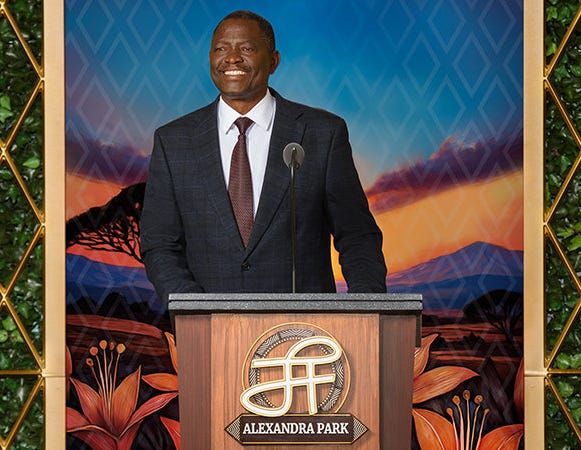
“This heritage site is a strong voice—and if you listen closely, it continues to call to the conscience of this nation. At a time when our land was torn between what it was and what it could be, Mr. Hubbard set to work—not with protest, but with pen. His Constitution and Bill of Rights were a gift ... and a message that still talks to us.”
—Mr. Attwell Mamvuto,
Pro-Vice Chancellor, University of Zimbabwe
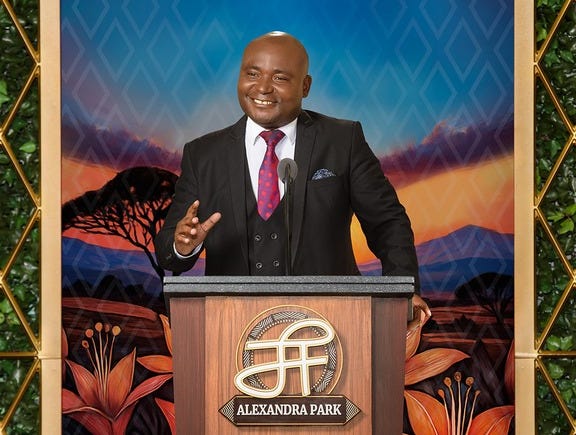
“We’ve seen what occurs when people are divided—by politics, by religion, by class. But we’ve also seen the strength that comes from unity—when differences are set aside in pursuit of a shared future. That is the work of peace.… Today we honor the imprint Mr. Hubbard left here at Alexandra Park. If we carry forward his teachings, and the wisdom within these walls, I believe we can create a heaven on Earth.”
—Bishop Albert Chikuni, President, Interreligious Association for Peace and Development Zimbabwe
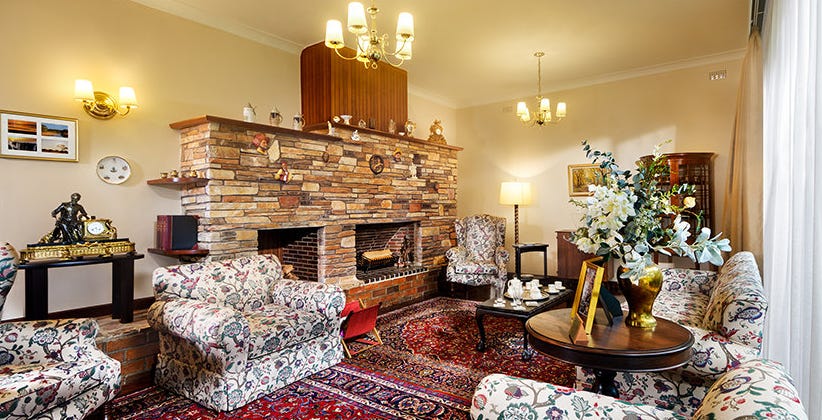
And some views inside…
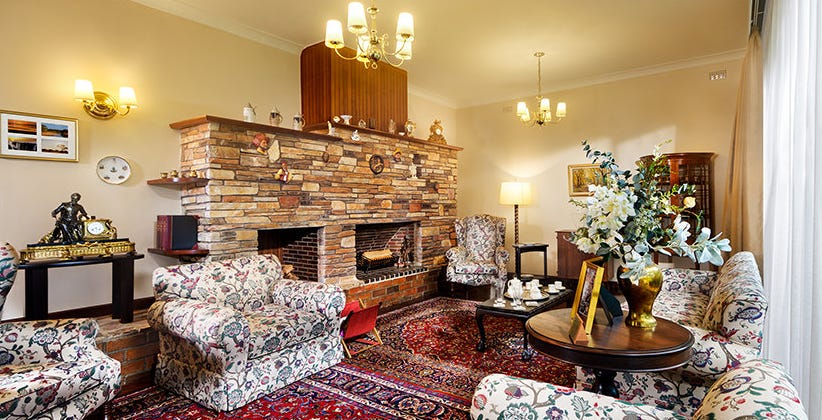
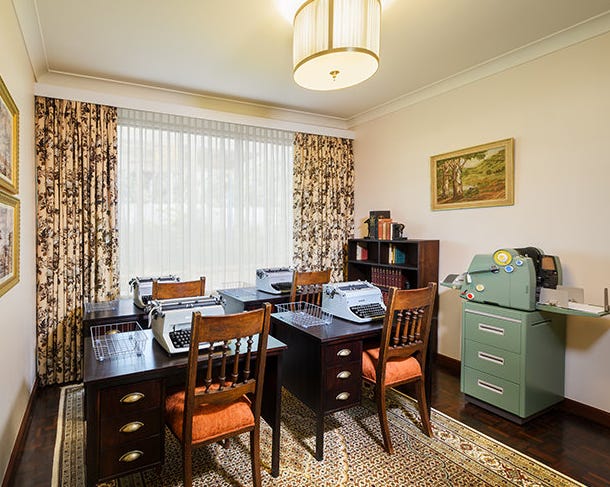
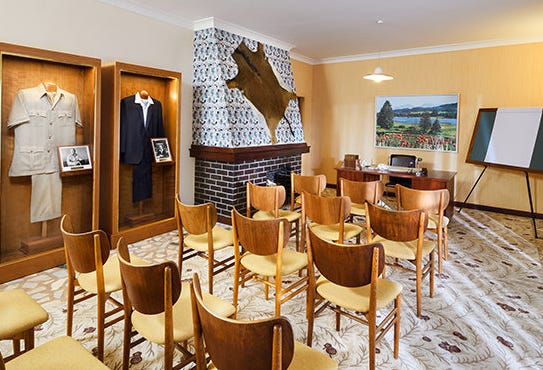
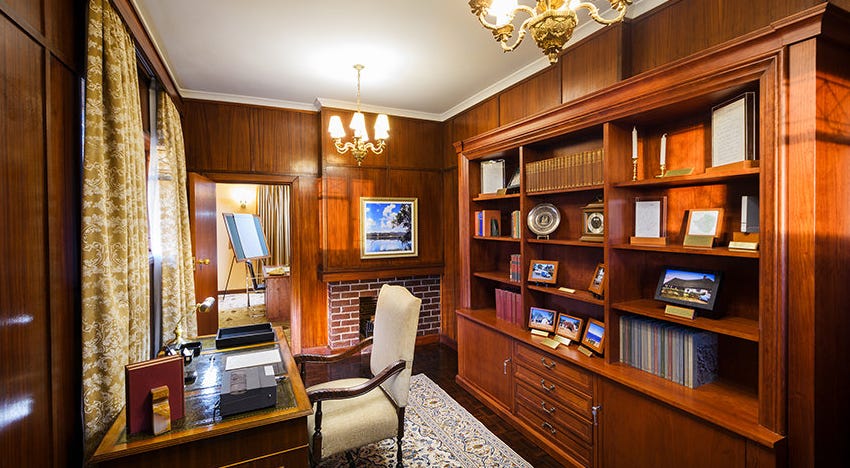
“As with every L. Ron Hubbard Landmark Site—and every Church of Scientology worldwide—Mr. Hubbard’s office holds a place of special significance. His Alexandra Park office is no exception: from here, he continued to oversee Scientology’s global growth while working on behalf of Rhodesia’s future.”
Sure, sure.