

Karen#1
Well-known member
TONY ORTEGA
Excerpt:
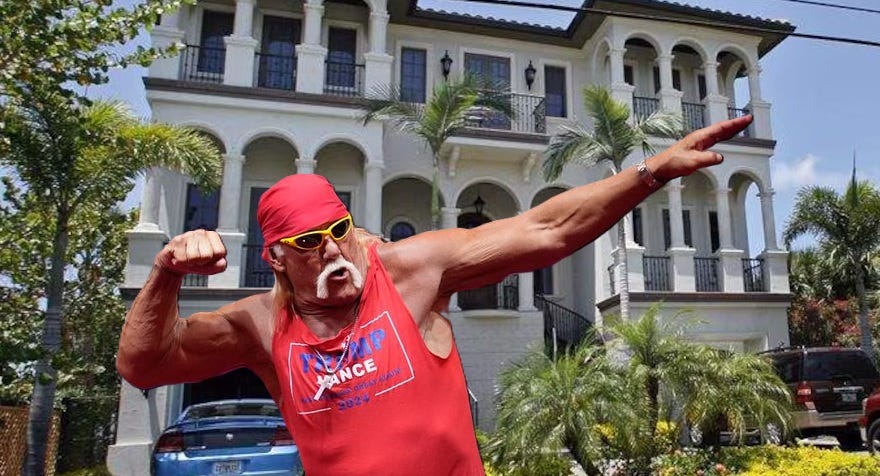
[Hulk reportedly suffered a heart attack at his Clearwater home]
The Underground Bunker’s go-to movie critic is Luke Y. Thompson, who is also a massive wrestling fan and has been writing about it for decades. We asked for his thoughts on today’s surprising news out of Clearwater, that Terry Gene Bollea, a/k/a Hulk Hogan, had died of a heart attack.
When Hulk Hogan died today at the age of 71, the reaction among many wrestling fans who lived through the ‘80s was the same: Hulk had outlived his life expectancy by about 20 years or so.
Because of a punishing schedule that rarely included days off or time for injuries to heal, and a combination of steroids, stimulants, and painkillers to get through the day, numerous peers of Hogan’s like Roddy Piper, Rick Rude, Randy Savage, Mr. Perfect, Ultimate Warrior, and the Road Warriors tended to die in their fifties.
Hogan likely mitigated a lot of the extra wear and tear by developing a simple, crowd-pleasing style that enabled him to rest for most of the match: He’d come out guns a-blazing, the bad guy would halt his momentum with a cheap shot, and then spend the next ten minutes or so beating Hogan up.
Right as the villain seemed about to win, Hogan would draw in the crowd’s cheers like Popeye eating spinach, powering up to indestructible mode, impervious to pain. Once the villain realized his assault was now useless, Hogan would kick him in the face and do a leg-drop to end the match, then spend almost as long doing bodybuilder poses after the match as he had spent wrestling.
READ MORE
 tonyortega.substack.com
Excerpt:
 |
The Underground Bunker’s go-to movie critic is Luke Y. Thompson, who is also a massive wrestling fan and has been writing about it for decades. We asked for his thoughts on today’s surprising news out of Clearwater, that Terry Gene Bollea, a/k/a Hulk Hogan, had died of a heart attack.
When Hulk Hogan died today at the age of 71, the reaction among many wrestling fans who lived through the ‘80s was the same: Hulk had outlived his life expectancy by about 20 years or so.
Because of a punishing schedule that rarely included days off or time for injuries to heal, and a combination of steroids, stimulants, and painkillers to get through the day, numerous peers of Hogan’s like Roddy Piper, Rick Rude, Randy Savage, Mr. Perfect, Ultimate Warrior, and the Road Warriors tended to die in their fifties.
Hogan likely mitigated a lot of the extra wear and tear by developing a simple, crowd-pleasing style that enabled him to rest for most of the match: He’d come out guns a-blazing, the bad guy would halt his momentum with a cheap shot, and then spend the next ten minutes or so beating Hogan up.
Right as the villain seemed about to win, Hogan would draw in the crowd’s cheers like Popeye eating spinach, powering up to indestructible mode, impervious to pain. Once the villain realized his assault was now useless, Hogan would kick him in the face and do a leg-drop to end the match, then spend almost as long doing bodybuilder poses after the match as he had spent wrestling.
READ MORE
Real American, fake hero: How Hulk Hogan defined 80s style, 21st century emptiness
The Underground Bunker’s go-to movie critic is Luke Y.
tonyortega.substack.com